The Nigerian automobile sector is entering 2026 with a mix of cautious optimism and familiar frustrations. Industry players have labelled the past year as one of unfulfilled promises, yet a strong hope persists that the new year could finally mark a turning point for growth and development.
Unfulfilled Promises and the Crucial NAIDP Act
Reflecting on 2025, the industry largely remained stagnant. Key government programmes failed to materialise, maintaining a pattern seen in previous years. The most significant disappointment was the non-passage of the Nigeria Automotive Industry Development Programme (NAIDP) Act. Despite assurances from the Minister of Industry, Trade, and Investment, Dr. Jumoke Oduwole, and the Director-General of the National Automotive Design and Development Council (NADDC), Oluwemimo Osanipin, the bill was not signed into law.
The administration of President Bola Tinubu had pledged to curb the influx of used imported vehicles, boost local production and assembly, and increase the acquisition of Nigeria-made vehicles. In May 2025, the Senate passed a bill compelling ministries, departments, and agencies (MDAs) to use locally manufactured vehicles. However, a consistent failure to enforce such pronouncements undermined progress.
Similarly, initiatives to promote electric vehicles (EVs) and compressed natural gas (CNG) vehicles were hampered by a lack of critical infrastructure. Insufficient charging ports and CNG filling stations, coupled with high conversion costs, limited their adoption despite soaring prices of Premium Motor Spirit (PMS).
Expert Insights: From Rhetoric to Action in 2026
Experts argue that 2026 demands a decisive shift from talk to tangible action. Dr. Emmanuel Mogaji, an associate professor of marketing at Keele University, UK, noted that the enthusiasm around EVs in 2025 should not be ignored by policymakers. He stated that momentum must be supported by deliberate investments in charging networks, maintenance capacity, and coherent policies.
Mogaji also highlighted that 2025 exposed the limits of market-driven adoption without strong government coordination. EV uptake remained modest, constrained by infrastructure gaps and unclear standards and incentives. On a positive note, he observed growing visibility for electric tricycles, buses, and shared transport models, which offer social and environmental benefits for urban and rural communities.
A critical issue raised was the continued dominance of Lagos in mobility innovation, with most pilot schemes and investments concentrated there. Mogaji insisted that transport service provision must extend beyond Lagos to stimulate nationwide innovation and balanced development.
Structural Challenges and Glimmers of Progress
Mobility expert and former NADDC director, Luqman Mamudu, identified the absence of the NAIDP Act as the sector's major setback in 2025. He described the act as the critical prerequisite for attracting foreign direct investment.
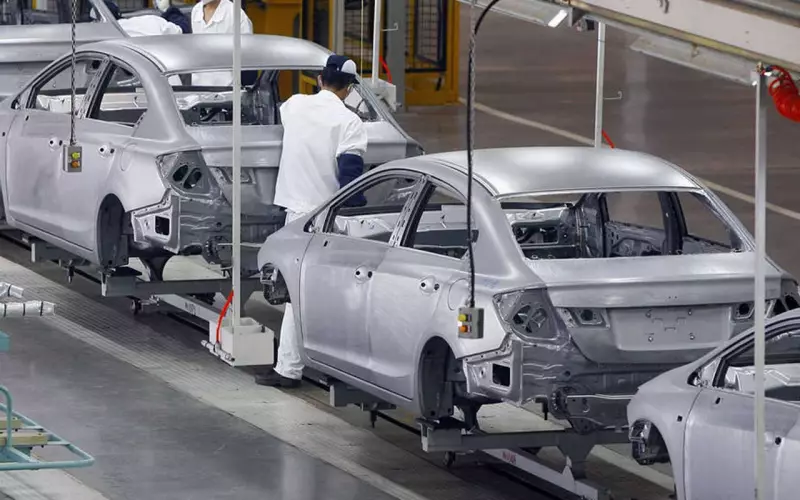
Despite the challenges, Mamudu acknowledged measurable gains by local assemblers. By 2025, the industry had transitioned to Semi-Knocked Down (SKD) operations with an installed capacity exceeding 500,000 vehicles yearly, creating a foundation for Complete Knocked Down (CKD) manufacturing.
Persistent structural problems, however, include unchecked imports of used vehicles dominating the market, limited access to new vehicles, a lack of incentives for local manufacturers, and no long-term investment security.
On alternative fuels, Mamudu pointed to the Presidential Initiative on CNG-powered vehicles as a impactful development. As fuel costs rose, CNG gained traction as a cheaper, cleaner alternative, especially among commercial operators. While adoption grew in 2025, it was constrained by inadequate refuelling infrastructure. The generated momentum, however, raises expectations that with sustained government commitment, these gaps could be addressed in 2026.
Similarly, early EV adoption, though modest, was encouraging and demonstrated that a supportive policy environment could unlock rapid growth.
The Road Ahead for Policy and Inclusion
Stakeholders are united in their 2026 expectations. The paramount priority remains the passage of the NAIDP Act, which is seen as the key to unlocking FDI, strengthening local manufacturing, and managing used vehicle imports.
Experts assert that 2026 should be the year Nigeria moves from experimentation to structured development through clear incentives, charging infrastructure rollout, and standards that build investor and consumer confidence.
Additionally, recycling and end-of-life vehicle management are expected to gain prominence. Mamudu advocated for stronger policy enforcement, with recycling costs embedded into vehicle pricing. Properly de-licensing old vehicles is vital for national security, environmental sustainability, and growing a waste-to-wealth recycling industry.
In many ways, 2025 served as a groundwork year, testing ideas and revealing weaknesses. Whether 2026 becomes a breakthrough year hinges entirely on how decisively the government aligns policy with market realities. The path forward for EVs, CNG, inclusive transport, and local manufacturing is clear. What is needed now is the political and institutional resolve to turn momentum into measurable transformation on Nigerian roads.