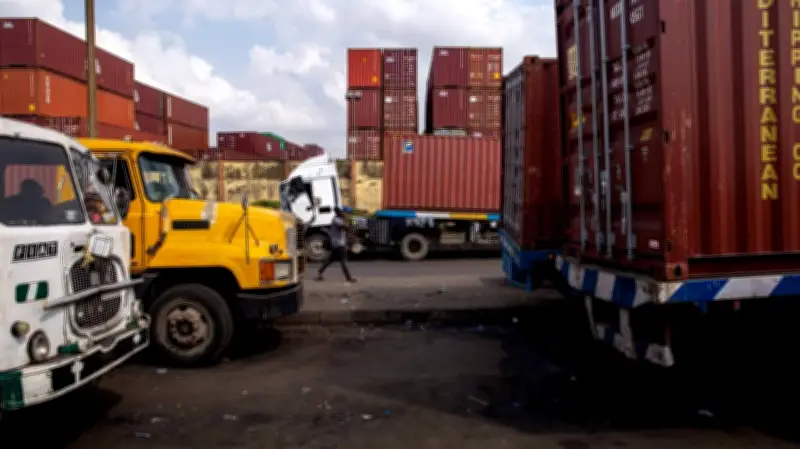
There are growing concerns over the continuous underutilisation of approved truck transit parks at the Lagos port access roads by truck operators, contributing to the persistent traffic congestion across the country's maritime corridor.
Background of the ETO System
The Nigerian Ports Authority (NPA) introduced the Electronic Truck Call-Up System (ETO) in 2021 and designated several transit parks and pre-gates for trucks to pass in accessing the ports, to eliminate the notorious gridlock that had crippled economic activities around the Apapa and Tin Can ports corridor for decades.
Stakeholder Allegations
Stakeholders, however, alleged that many of these facilities are underutilised and bypassed entirely by some truck operators, contributing to the persistent traffic congestion around the Lagos port corridor. Major parks include the Lilypond Container Terminal in Ijora, which serves as a central pre-gate and staging facility for trucks and other facilities referenced as holding and transit points along the Orile–Ijora axis, Oshodi–Apapa corridor, Mile 2 axis and privately operated parks in Kirikiri, Ojo, and Amuwo-Odofin areas, which are used as waiting zones for trucks before being scheduled into the ports.
Calls for Audit
Stakeholders in the logistics chain are calling for a comprehensive audit of all approved truck transit parks and pre-gates, including a verification of their capacities, utilisation levels and compliance with operational guidelines.
LASTCOC Chieftain's View
Chieftain of the Lagos State Truck and Cargo Operators Committee (LASTCOC), Seyi Adekanbi, said the state has more truck transit parks, yet many remain practically unused. He stressed that truck operators knowingly bypass these facilities to get to the ports, creating gridlock. According to him, while authorities continue to approve new facilities, several of the existing parks receive truck bookings electronically without the trucks physically entering the premises.
“When the transit park system started, only a few parks existed and trucks were properly controlled. Today, there are hundreds of approved parks, but many are not being utilised. Trucks are booked into these facilities on paper, but they never enter them,” he alleged. The LASTCOC Chieftain alleged that some truck operators merely select a transit park on the electronic platform, obtain the necessary clearance and proceed towards the ports without stopping at the designated location. “The question is not whether transit parks exist. The real question is whether the trucks are actually using them. Many are not,” he stated. Adekanbi further claimed that some facilities approved as transit parks lacked the capacity to accommodate the volume of trucks assigned to them, raising questions about the criteria used for their approval.
AMATO's Perspective
Also expressing concerns on compliance, the General Secretary of the Association of Maritime Truck Owners (AMATO), Bala Muhammad, stated that existing truck parks are adequate for current operations, but argued that enforcement failures and abuse of standard operating procedures remain major challenges. According to him, some truck operators circumvent approved transit parks by obtaining what industry players describe as “direct call-ups,” enabling them to proceed directly to the ports without passing through the designated holding facilities.
Muhammed stressed that such practices discourage compliance among truckers who spend days waiting in approved transit parks and pre-gates. “When operators see others accessing the ports directly without following the approved process, they naturally begin looking for ways to do the same. That is where the problem starts,” he said. Muhammad stressed that the issue is no longer a shortage of truck parks but the inability of regulators to ensure strict compliance with established procedures. “We have enough transit parks. The problem is not infrastructure but enforcement. If the standard operating procedures are strictly followed, you won’t see trucks littering the port corridors,” he maintained.