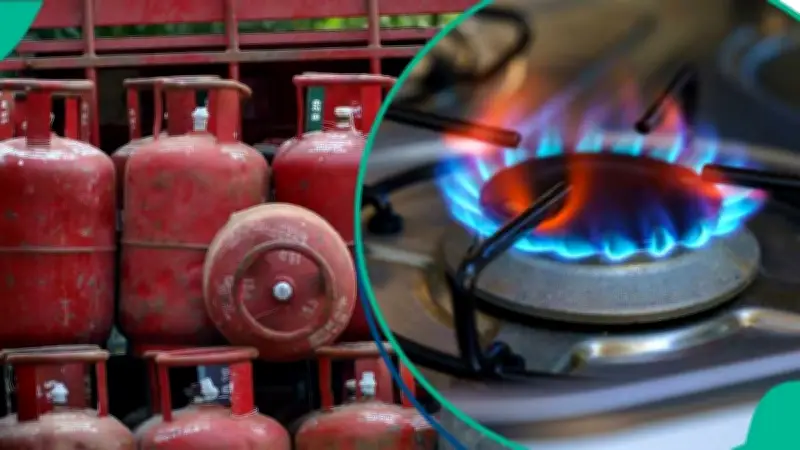
The Nigerian Midstream and Downstream Petroleum Regulatory Authority (NMDPRA) reported that total Liquefied Petroleum Gas (LPG) supply rose to 5.332 kilotonnes per day (KT/D) in July 2026, up from 5.164 KT/D in June. This increase in supply has led to a notable drop in cooking gas prices across major cities including Lagos, Kano, Enugu, Ibadan, and Calabar.
Supply Outpaces Consumption
According to the NMDPRA July 2026 sector factsheet, domestic sources accounted for 4.373 KT/D, representing 82 per cent of total supply, while imports contributed 0.958 KT/D, or 18 per cent. The July figure was significantly above the estimated 3.9 KT/D consumption benchmark, indicating improved market availability.
The NLNG/SEPNU consortium remained the largest contributor, supplying 2.031 KT/D, equivalent to 38.1 per cent of total volume through vessel deliveries. Dangote Refinery supplied 0.829 KT/D, representing 15.5 per cent, while other domestic processing plants contributed 1.513 KT/D, or 28.4 per cent.

Retail Prices Fall in Major Cities
Daily consumption increased to 4.4 KT/D in July from 4.1 KT/D in June. However, supply remained ahead of demand, helping to ease pressure on the market. The improved supply quickly translated into lower retail prices in several parts of the country.
In Lagos, the average price of cooking gas fell to about N1,235 per kilogramme in July from approximately N1,776/kg in June, representing a decline of nearly 30 per cent. Ibadan also recorded a notable reduction, with prices dropping from N1,775/kg to N1,540/kg. In Calabar, the average price fell from N1,550/kg to N1,410/kg.
Mixed Trends Across Regions
Kano recorded a smaller decline, from N1,575/kg to N1,550/kg, while Enugu dropped from N1,625/kg to N1,550/kg. Sokoto was the only city listed in the data to record an increase, with prices rising slightly from N1,550/kg to N1,575/kg.
The latest price correction follows a period of severe volatility in the LPG market. Cooking gas prices climbed as high as N2,500/kg in some parts of Nigeria by mid-June, compared with N1,500 to N1,700/kg around May 25.
Government Intervention and Market Recovery
In response, Minister of State for Petroleum Resources (Gas), Ekperikpe Ekpo, directed marketers to increase imports and tasked NMDPRA with intensifying discussions with producers, importers and marketers. An emergency stakeholders’ meeting in Abuja subsequently helped improve supply conditions. National LPG supply sufficiency reportedly increased from around 11 days to 22 days.
The July figures suggest Nigeria’s LPG market is gradually recovering from the disruptions experienced in April and May. With NLNG/SEPNU and Dangote Refinery together accounting for more than half of total supply, domestic production is becoming increasingly important to market stability.
However, volatility remains a concern. Domestic supply declined by about 10 per cent month-on-month in June, while part of Nigeria’s gas production continues to be directed towards exports. Further investment in gas production, aggregation and processing will therefore remain crucial to maintaining adequate supply and preventing another sharp rise in cooking gas prices.
Legit.ng earlier reported that Nigeria’s record LPG supply reached 5,332 tonnes per day in July 2026. The report examines why retail cooking gas prices remain between N1,300 and N1,600 per kilogramme despite stronger domestic availability. NLNG has accused some marketers of buying LPG for as little as N800 to N900 per kilogramme and selling it to consumers for up to N2,400. The allegation has intensified scrutiny of the distribution chain and raised questions about when households will benefit from increased supply.