
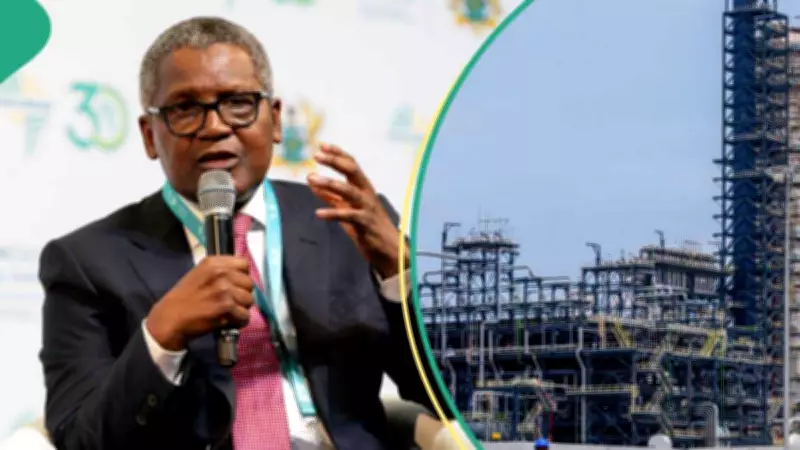
Africa's richest businessman, Aliko Dangote, has disclosed the fierce opposition he encountered while constructing his $20 billion refinery in Nigeria. He stated that influential individuals profiting from the country's longstanding fuel import and subsidy system attempted to sabotage the project.
Dangote Exposes Oil Mafia
In an interview with Nicolai Tangen, Dangote described a powerful group of traders, shippers, and other beneficiaries of petrol subsidies and fuel imports as an oil "mafia." He explained that these vested interests feared losing billions of naira in profits if the refinery succeeded.
Dangote claimed the mafia used various tactics to delay the project, including making it difficult to secure land. Obtaining land took about five years, with one site delayed for three and a half years and another for over a year due to efforts to frustrate development.
"All this would have been blocked by what you call the mafia in oil business to make sure that we don't come and address these issues," Dangote said. Despite the obstacles, he remained determined to complete the refinery.
Billions Spent on Subsidy and Imports
Dangote criticized Nigeria's dependence on imported petroleum products despite being a major crude oil producer. He noted that the fuel subsidy program consumed nearly $10 billion annually, benefiting fuel traders, shipping companies, and individuals receiving product allocations.
"So these are the people that are not agreeing for us to settle down because they believe that no, we are coming here to displace them. Of course, that's what we have done now," he said. The refinery has significantly reduced the influence of those relying on imports and subsidies.
Refinery Expansion and Growing Crude Supply
The construction required massive supporting infrastructure, including a new port, roads, and water systems. At peak construction, the project employed around 67,000 workers. Dangote admitted the refinery became more complex than expected but abandoning it was never considered.
The refinery now sources over half of its crude oil from Nigeria, with additional supplies from Angola, Libya, and the United States. It purchases about 21 cargoes of crude monthly in Nigeria, and plans are underway to expand operations further.
Dangote revealed the facility is expected to reach a refining capacity of 1.4 million barrels per day within the next 30 months.




