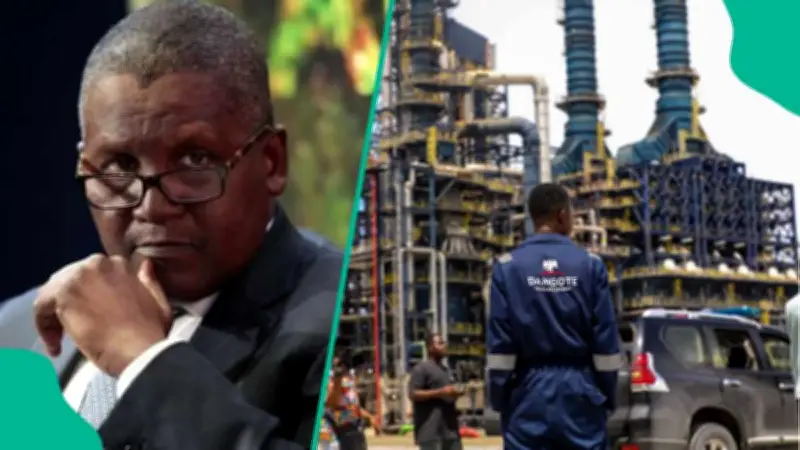
Aliko Dangote's plan to build a 700,000-barrel-per-day refinery in Lamu, Kenya, is facing significant obstacles, particularly over crude supply in a country that currently has no commercial-scale oil production. The proposed project comes less than three years after Dangote launched Africa's largest refinery in Nigeria, despite difficulties including rising construction costs, challenging terrain, and poor infrastructure.
Funding Strategy and Financial Hurdles
A Dangote Group executive said in July that the Kenyan refinery would be financed through the company's internal cash flow, bonds, and an initial public offering (IPO). The funding could also include equity from Dangote, commercial bank loans, and support from development finance institutions such as Afreximbank.
However, analysts say raising the required funds could be difficult because Dangote Group is pursuing several major energy projects at the same time. Kaase Gbakon, a petroleum economist and former official of Nigeria's state-owned oil company, said the group could require about $40 billion between 2025 and 2030 for its announced energy investments, including Lamu.

Potential Regional Investment and Stake Sales
Dangote has also suggested that Rwanda, South Sudan, Tanzania, and Uganda could collectively acquire as much as a 30% stake in the refinery. Such investments could provide another source of funding while giving regional governments a direct interest in the project. However, no firm agreements have been announced.
The proposed refinery would be located within the Lamu Port-South Sudan-Ethiopia Transport (LAPSSET) special economic zone near Lamu Port.
Crude Supply Uncertainties and Infrastructure Gaps
Securing enough crude could prove even more challenging. Kenyan media have quoted President William Ruto's chief economic adviser as saying the refinery could source up to 600,000 barrels of crude per day from East Africa, including Kenya, Uganda, and South Sudan.
However, the region faces significant supply constraints. Kenya has proven oil reserves but has yet to achieve commercial production, although limited output is expected later this year. A proposed pipeline connecting South Sudan's oil fields and Kenya's Lokichar Basin to Lamu Port has also made limited progress. South Sudan's oil exports have been disrupted by insecurity in neighbouring Sudan, while Uganda currently sends its crude to Tanzania through the East African Crude Oil Pipeline.
The alternative would be importing crude by sea, with the Middle East being the nearest major source. However, disruptions linked to the Iran war are creating additional uncertainty around regional oil supplies.
Lamu Port itself also lacks operational crude storage facilities. Although the LAPSSET project includes plans for 1 million to 1.5 million barrels of oil storage and marine facilities capable of handling Suezmax vessels, much of the infrastructure is yet to be built.