Dangote Group Commences Crude Oil Production to Bolster Refinery Operations
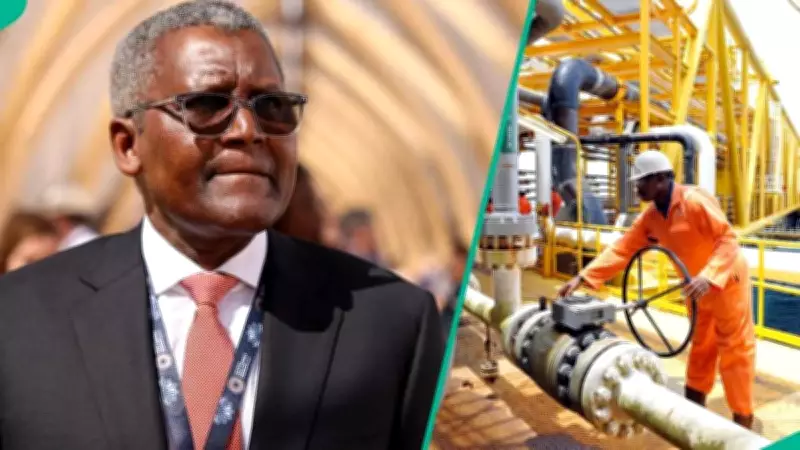
In a significant development for Nigeria's energy sector, the Dangote Group has officially begun crude oil production from its upstream assets located in the Niger Delta region. This strategic move is poised to substantially reduce the conglomerate's reliance on the Nigerian National Petroleum Company Limited (NNPC) for feedstock supply to its massive refinery.
Initial Production and Future Expansion Plans
The company has successfully recorded its first oil extraction and is currently conducting standard well testing, which is expected to be completed within the next three to four weeks. Initial output from the Kalaekule field on Oil Mining Lease (OML) 72 stands at approximately 4,500 barrels per day (bpd). Dangote plans to ramp up production to 15,000 bpd in the near term as operations scale up across the asset.
Devakumar Edwin, Vice President of Dangote's oil and gas division, confirmed these details in an interview with S&P Global's Platts on April 17. He emphasized that following the testing phase, commercial production will commence alongside fresh drilling campaigns to enhance output.
Joint Venture Structure and Operational Framework
Dangote operates these upstream assets through a joint venture where it holds a majority stake. Specifically, Dangote owns an 85% stake in WAEP, which has a 45% working interest in OML 71 and 72. The Nigerian National Petroleum Company Limited retains the remaining stake, while First E&P manages the operational aspects of the assets.
Boosting the Dangote Refinery's Supply Chain
This upstream expansion is a critical component of Dangote's broader strategy to create a fully integrated oil business, encompassing production, transportation, and refining. The Dangote Refinery, which recently achieved its full nameplate capacity of 650,000 bpd, has been heavily dependent on foreign crude supplies. Although Nigerian crude constituted a significant portion of its intake in early 2025, imports from international markets have supplemented it.
David Bird, CEO of Dangote's refining business, highlighted that the company is also investing in shipping infrastructure to reduce logistics costs and improve supply stability. However, he noted that crude supply decisions will remain commercially driven, stating, "The refinery will take the crude if it makes sense."
Implications for Nigeria's Energy Landscape
Despite this new production initiative, the Nigerian National Petroleum Company Limited is expected to continue supplying a portion of the refinery's crude. This development marks a pivotal step in Dangote's energy integration strategy, potentially enhancing Nigeria's self-sufficiency in oil refining and reducing import dependencies.
The move comes amid fluctuating global oil prices, with Brent crude recently surging above $103 per barrel due to geopolitical tensions. By securing its own crude supply, Dangote aims to mitigate such market volatilities and ensure a more reliable feedstock for its refinery operations.
This advancement underscores Dangote Group's commitment to strengthening Nigeria's energy infrastructure and fostering economic resilience through diversified oil production and refining capabilities.