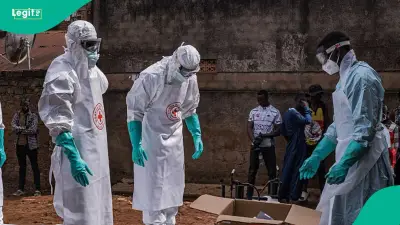
Cross River State Reports COVID-19 Outbreak, Activates Emergency Response Centre
The Cross River State Ministry of Health has officially confirmed a new case of coronavirus disease (COVID-19) within the state, marking the first reported instance since 2022. This development has prompted the immediate activation of the state's emergency response mechanisms to contain any potential spread.
Details of the Confirmed Case
State Commissioner for Health, Dr. Henry Ayuk, disclosed the information during a press briefing at the ministry's headquarters in Calabar on Tuesday. He revealed that the case was confirmed on April 17, 2026, involving a Chinese national employed by Lafarge. The individual arrived in Nigeria from China on March 17 and began exhibiting symptoms on April 10.
"We are, however, happy to report that he is doing well," Dr. Ayuk stated, noting that the patient's condition initially worsened at a local medical facility before being transferred to the University of Calabar Teaching Hospital (UCTH). At UCTH, samples were collected following established protocols, confirming the COVID-19 diagnosis.
State's Preparedness and Response Measures
Dr. Ayuk emphasized that the Ministry of Health has been strategically repositioned by the current administration to effectively manage disease outbreaks. "I wish to assure residents of the state that we have been beefing up our preparedness capabilities since the confirmation of this case and we will use all the resources made available by the government to respond to this case," he affirmed.
He further explained that while silent infections and sporadic cases have occurred, the state is committed to ensuring no public alarm. "The state will do well in terms of surveillance or containment of an outbreak. Whatever it is, we will do our best to contain it. So, there is no alarm," Dr. Ayuk reassured.
Activation of Emergency Response and Contact Tracing
In response to the case, State Epidemiologist Dr. Inyang Ekpenyong announced the activation of the state emergency response unit. Contact tracing and line listing of individuals who may have interacted with the Chinese national are currently underway.
Dr. Ekpenyong highlighted that the incubation period for COVID-19 typically ranges from two to 14 days, but the patient's symptoms appeared well beyond this window, suggesting possible local transmission. "This is well beyond the 14-day incubation period. Like I said, we are doing the line listing of those he may have come in contact with, as part of our containment efforts," she noted.
Rapid response teams have been deployed to Akamkpa, where the victim works, to bolster containment efforts. "There is no way we can stop this disease, but we can stop the disease outbreak. It will be wrong not to contain or manage it by ensuring that people do not die," Dr. Ekpenyong asserted.
Public Health Advisory and WHO Perspective
Residents are advised to adhere to preventive measures, including:
- Regularly washing hands with soap and water or using alcohol-based hand sanitizers.
- Maintaining a distance of at least 1.5 meters (5 feet) from individuals coughing or sneezing.
- Practicing good respiratory hygiene by covering the mouth and nose with a tissue or elbow when coughing or sneezing.
- Individuals with persistent coughs or sneezes should stay home or maintain social distance.
Dr. Yewande Olatunde, the World Health Organisation Coordinator in Cross River, reiterated that COVID-19 remains a persistent threat, underscoring the importance of continued vigilance and adherence to health guidelines.