
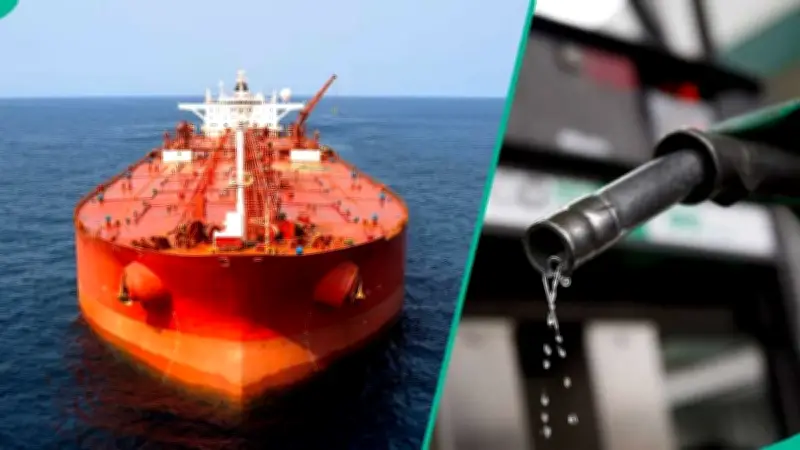
Nigerian fuel importers are confronting an increasingly difficult commercial environment as surging international petrol prices and steeper freight charges tighten the economics of bringing Premium Motor Spirit (PMS) into the country, while Dangote Petroleum Refinery's pricing strategy limits their ability to recover those costs.
Dangote Prices Cap Import Returns
The core of the problem, according to S&P Global Commodity Insights, is that Dangote Refinery has effectively set the price ceiling for petrol in Nigeria. A Daily Refined Products Commentary published by the firm says market participants have grown more concerned about the widening gap between what it costs to import petrol and what can realistically be charged in the Nigerian market.
Traders told the commodity intelligence firm that premiums for Ghanaian-specification petrol have climbed above Nigerian-specification cargoes precisely because domestic prices remain anchored to the refinery's output rates. As one trader quoted in the report put it: "Prices are capped by Dangote prices."
The report also noted that petrol values in Lomé, Togo, have risen above Dangote Refinery's coastal sales prices, eliminating what had previously been a viable arbitrage route for marketers importing into Nigeria. S&P Global stated: "Lome values have risen above Dangote sales prices, which has shut the arbitrage, but this is not necessarily the case in Ghana."
Despite expectations among traders that the refinery would raise its coastal prices in response to the international rally, Dangote held its prices steady even after introducing dollar-denominated sales. The report noted, citing two market participants: "Although traders expected a Dangote price hike, the coastal sales price remained unchanged day over day."
Freight Costs Add to the Pressure
Beyond the pricing dynamics, shipping costs have worsened the outlook for importers. According to Platts data cited in the report, the Clean UKC-West Africa 37,000-metric-tonne freight rate climbed to $37.12 per metric tonne, up sharply from $29.70 per metric tonne recorded on June 30. The jump reflects tighter vessel availability and directly inflates the landed cost of imported fuel.
On pricing benchmarks, S&P Global assessed the FOB West Africa gasoline price at $1,053 per metric tonne and the STS Lomé gasoline price at $1,078 per metric tonne, representing a $58-per-metric-tonne premium over Eurobob balmo. FOB Northwest Europe-West Africa gasoline cargoes were placed at $1,005 per metric tonne, with a CIF net forward value of $1,042.25 per metric tonne. For diesel, the STS Lomé price stood at $1,173.50 per metric tonne while the FOB West Africa diesel price reached $1,233.50 per metric tonne.
Market analysts say importers now face a three-way choice: absorb the higher costs, cut import volumes, or hold back and wait for more favourable conditions. Without a retreat in international fuel prices or a shift in domestic pricing dynamics, they say Dangote Refinery's benchmark will continue to dictate Nigeria's fuel import economics and keep profitability under strain.
Dangote Refinery Opens Petrol Sales
Earlier, Dangote Petroleum Refinery opened the sale of Premium Motor Spirit (PMS), also known as petrol, to all licensed marketers, ending its previous consortium marketing arrangement. The refinery said all qualified marketers can now purchase products directly from its loading gantry, widening access to locally refined petrol and allowing more participants to source fuel without going through intermediary arrangements. The decision comes alongside a reduction in the refinery's ex-gantry price of petrol to N1,075 per litre from N1,125.




