
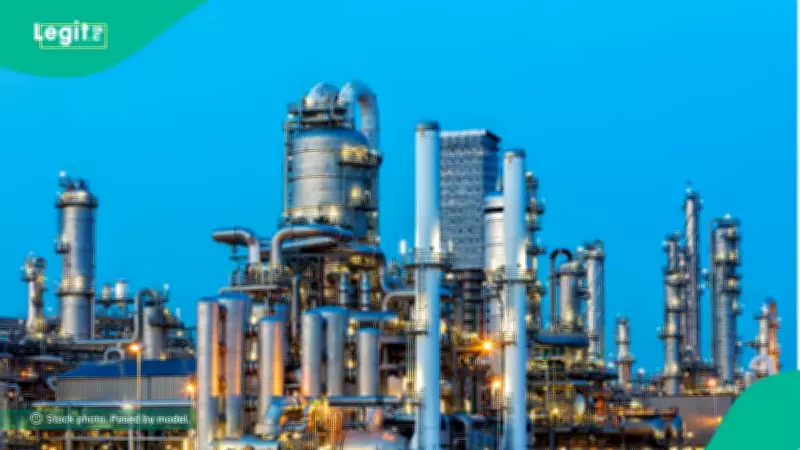
The Nigerian National Petroleum Company Limited (NNPC Ltd) has signed a new agreement with two Chinese industrial firms to revive the long-troubled Port Harcourt and Warri refineries. This move is seen as one of the strongest efforts yet to restore Nigeria's state-owned refining assets.
The deal comes after the two refineries reportedly consumed over $2.4 billion in public funds over the years without delivering significant refined fuel output.
NNPC Takes Steps to Revive Refineries
NNPC signed the memorandum of understanding (MoU) with Sanjiang Chemical Company Limited and Xinganchen (Fuzhou) Industrial Park Operation and Management Co., Ltd. in Jiaxing City, China. A prior report indicated that the national oil firm was in talks with the Chinese firms for the refineries.
The agreement is expected to create a Technical Equity Partnership (TEP) aimed at completing ongoing rehabilitation works, improving operations, and ensuring long-term profitability for both refineries.
Port Harcourt and Warri Refineries Face Fresh Push
The Port Harcourt refinery in Rivers State and the Warri refinery in Delta State were once major pillars of Nigeria's domestic fuel supply chain. Combined, both facilities have the capacity to significantly reduce Nigeria's heavy dependence on imported petroleum products if fully operational. However, years of failed rehabilitation efforts, abandoned contracts, and repeated budget allocations have left the facilities largely inactive.
NNPC Group Chief Executive Officer, Bashir Bayo Ojulari, signed the agreement alongside Sanjiang Chairman Guan Jianzhong and Xinganchen Chairman Bill Bi. According to Ojulari, all parties involved see strong opportunities for long-term profitability and sustainable development of the refining assets.
What the New Deal Covers
Under the new arrangement announced on Monday, May 4, 2026, the Chinese firms are expected to support the completion of outstanding engineering and construction work at both refinery sites. The partnership will also focus on operations and maintenance to ensure what NNPC described as "best-in-class, sustainable performance."
In addition, the agreement includes plans to upgrade both facilities to meet cleaner fuel standards and improve product quality in line with global market demands. NNPC also said the partnership could expand into petrochemical production and the development of gas-based industrial hubs around both refinery locations. This model, widely used in China's industrial zones, is expected to improve profitability and support broader industrial development in the Niger Delta region.
Pressure from Dangote Refinery
The deal comes at a time when Nigeria's refining sector is facing major competition from the Dangote Refinery in Lagos, Africa's largest refinery with a capacity of 650,000 barrels per day. The private refinery has already started reshaping Nigeria's fuel market and increasing pressure on state-owned refineries to become commercially viable.
Industry observers say the success of this latest agreement will depend on whether it moves beyond paperwork to actual execution. Many previous refinery revival announcements failed to deliver results, making investors and consumers cautious. Attention will now shift to key milestones such as equipment mobilisation, financing terms, regulatory approvals, and clear commissioning timelines for both plants.
NNPC Reacts to Reports of Selling Refinery Parts
NNPC has dismissed claims that it is selling scrap materials from its refineries, cautioning the public against fraudulent schemes linked to such reports. In a statement issued in Abuja on Friday, April 24, Andy Odeh, the company's Chief Corporate Communications Officer, said the national oil firm had not authorised any sale of refinery scrap or equipment. According to the statement, some individuals have been impersonating representatives of NNPC Limited, falsely claiming they can facilitate the purchase of scrap materials and refinery components.




