Global Oil Markets React to Escalating Middle East Tensions
World oil prices experienced a significant surge on Monday, March 9, 2026, as geopolitical tensions intensified across the Middle East following Iran's announcement of a new supreme leader and the launch of fresh military attacks throughout the region. The escalating conflict has rattled global financial markets and raised serious concerns about renewed pressure on the international economy.
Iran Appoints New Supreme Leader Amid Regional Unrest
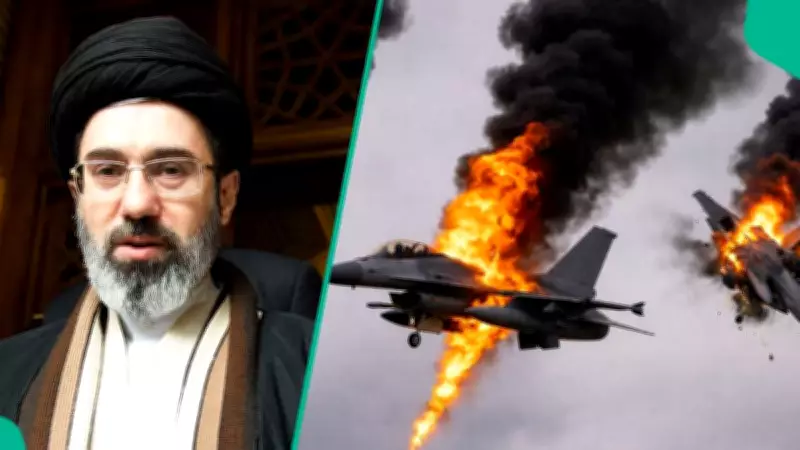
Iranian state television officially confirmed that Mojtaba Khamenei, son of the late Iranian supreme leader, has been appointed as the country's new supreme leader. This position holds ultimate authority over Iran's political and military apparatus, including direct oversight of the powerful paramilitary Revolutionary Guard.
During the broadcast, state media referred to Khamenei as "janbaz," a term meaning wounded by the enemy, describing him as having been injured during what Iranian media calls the "Ramadan war." However, some analysts have suggested this injury might actually date back to his service during the Iran-Iraq war in the 1980s. The announcement follows a devastating Israeli airstrike in Tehran on February 28 that reportedly killed Khamenei's father and his wife.
Saudi Arabia Intercepts Multiple Drone Attacks
Saudi Arabia's Defence Ministry reported successfully intercepting multiple drones early Monday after they were launched toward the kingdom. The drones were shot down in the northern Jawf region and near the vast Shaybah oil field, one of Saudi Arabia's most significant energy facilities.
This interception occurred just hours after another attack in the Saudi city of Kharj killed two Bangladeshi nationals and injured twelve others, with authorities confirming that all but one of the injured victims were also Bangladeshi. In a strongly worded statement, Saudi Arabia warned Tehran that it would be the "biggest loser" if it continued to carry out attacks on Arab states.
Additional Gulf States Targeted in Regional Conflict
Bahrain reported that an Iranian attack sparked a fire near its main oil refinery complex. The state-run Bahrain News Agency stated the blaze occurred after "Iranian aggression targeting a facility in Maameer," a village located adjacent to the refinery. Officials confirmed material damage but reported no casualties.
Following this incident, Bahrain's state oil company declared force majeure on its shipments, a legal step allowing suspension of contractual obligations due to extraordinary circumstances. Authorities insisted that domestic fuel demand would continue to be met despite these developments.
The United Arab Emirates also activated its air defence systems to intercept drones and missiles launched from Iran, marking the second attempted attack against the country on Monday.
Israel Conducts Fresh Strikes in Iranian Territory
The Israeli military announced it had carried out new strikes in the Iranian city of Isfahan, targeting facilities linked to Iran's security forces. According to the Israeli statement, the operation hit command centres used by the Revolutionary Guard and the Basij volunteer force.
Israel also reported striking a rocket engine production facility along with several missile launch sites in the area, further escalating the regional military confrontation.
Financial Markets React to Geopolitical Uncertainty
Energy markets reacted swiftly to the growing instability in the Middle East, with oil prices jumping significantly during early trading on Monday. Investors expressed increasing concern that disruptions to energy supply from the oil-rich region could worsen inflationary pressures and dampen economic activity globally.
In Japan, the benchmark Nikkei 225 index dropped by as much as seven percent in early trading, reflecting widespread anxiety across Asian financial markets. Other regional indices also recorded notable declines as traders reacted to the mounting geopolitical risk and potential economic consequences.
International Response and Peace Conditions
Amid the escalating conflict that has ignited global concern, United States President Donald Trump appeared to rule out talks with Iran unless it agrees to "unconditional surrender." These comments, made on Friday, March 6, 2026, have raised further questions about the potential endgame of the war launched a week ago by the United States and Israel.
The combination of leadership transition in Iran, multiple military attacks across the region, and strong international responses has created a volatile situation with significant implications for global energy markets and economic stability.