
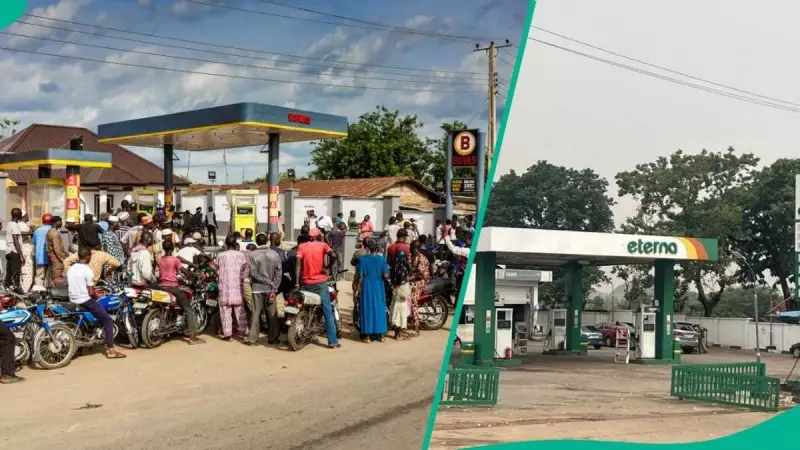
The Federal Government of Nigeria has initiated a stringent enforcement of a 0.5% levy on the wholesale price of petroleum products and natural gas, a move that industry stakeholders predict will trigger another round of increases in pump prices for consumers across the country.
New Regulations Tighten Grip on Downstream Sector
This enforcement is anchored in the newly released Midstream and Downstream Petroleum Operations Regulations, 2025. Under this framework, fuel suppliers are now legally mandated to collect and remit the levy from their wholesale customers at designated points of sale. Compliance is directly linked to their licensing and operational continuity within Nigeria's petroleum sector, making adherence compulsory.
The regulation draws its authority from Section 47 of the Petroleum Industry Act (PIA), which empowers the Nigerian Midstream and Downstream Petroleum Regulatory Authority (NMDPRA) to maintain an Authority Fund. This fund, used to finance the regulator's operations, is to be sourced partly from "0.5 per cent of the wholesale price of petroleum products sold in Nigeria." Although this provision has existed for years, its enforcement had been inconsistent until now.
Industry Pushback and Regulatory Clarification
In December 2024, fuel traders challenged the NMDPRA, arguing that the PIA did not designate them as tax collectors and that the levy would impose significant administrative and financial burdens. Some stakeholders questioned if it should be treated like Value Added Tax (VAT).
The NMDPRA rejected these arguments, clarifying a critical distinction. The law specifies "0.5 per cent of" the wholesale price, not "0.5 per cent on." This means the levy is an embedded component of the wholesale price, not a separate add-on charge. To eliminate confusion, the 2025 regulations explicitly assign the responsibility of collection and remittance to suppliers for both imported and locally refined products.
Double Levy and Strict Compliance Rules
Operators face an additional financial obligation. Beyond the 0.5% for the NMDPRA Authority Fund, they must also remit another 0.5% of the wholesale price to the Midstream and Downstream Gas Infrastructure Fund. This brings the total levy obligation on wholesale petroleum transactions to one percent.
The regulator has established strict reporting rules. Suppliers must:
- Remit the levies within 21 days after the month of sale.
- Include the charges in all purchase agreements, invoices, and receipts.
- Submit monthly reports detailing volumes sold, prices, and customers.
Failure to comply carries severe penalties. Defaulters will pay an administrative penalty of 10% of the unpaid levy for each month of non-payment. In more severe cases, the NMDPRA may suspend operating licenses or shut down facilities until all outstanding levies and penalties are settled.
Implications for Consumers and Market Reaction
Despite being imposed at the wholesale level, financial analysts and industry watchers uniformly caution that the additional cost will inevitably be passed down the supply chain. This raises the strong likelihood of higher petrol pump prices in the coming weeks, placing fresh pressure on households and businesses already grappling with high living and energy costs.
Financial expert Osas Igho captured the public sentiment, stating, "This is stress at the pumps. Nigerians should not be burdened with any more levy, not on petroleum products. Already, fuel subsidy removal two years ago drilled holes in Nigerians' pockets that have yet to be filled."
This development coincides with reports of rising petrol prices at private depots nationwide, with rates exceeding N800 per litre in some locations. Market operators attribute this to a shift from spot-driven pricing to anticipatory risk valuation, further compounding the pricing pressure initiated by the new levy enforcement.




