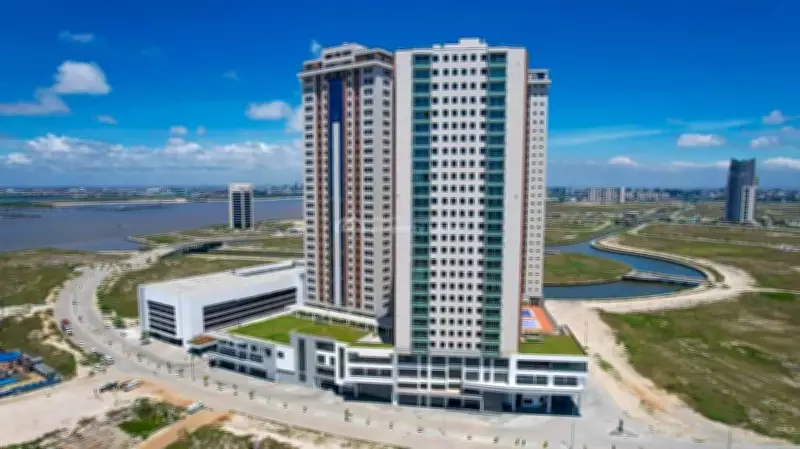
Nigeria's urban skyline is rapidly changing as developers increasingly build upwards in response to mounting pressure on land, housing demand and economic activity in major cities. From Lagos and Abuja to Port Harcourt, tall residential and commercial buildings are gradually replacing the traditional low-rise pattern that once defined urban development.
The transformation is being driven by population growth, rising land prices, urban congestion and the need to maximise scarce space in prime locations. Yet, while vertical development is emerging as a practical response to rapid urbanisation, experts warn that inadequate infrastructure, weak regulation and poor safety culture could undermine the benefits if urgent reforms are not implemented.
Population Pressure and Housing Deficit
With Nigeria's population projected by the United Nations to hit about 400 million by 2050, pressure on urban centres is intensifying. In Lagos alone, authorities estimate that nearly 6,000 people move into the city daily in search of economic opportunities, putting enormous strain on housing, transportation, water supply and other infrastructure. The country's affordable housing deficit is estimated at between 16 million and 23 million units, leaving millions of urban residents in overcrowded, inadequate housing.
As horizontal expansion continues to consume land and stretch public utilities, developers and policymakers are increasingly embracing vertical development as an alternative model for accommodating urban growth. Urban planners describe vertical development as the construction of tall buildings for residential, commercial or mixed-use purposes, often with floors rising more than 75 feet above the lowest point accessible to emergency response vehicles.
Globally, countries such as the United States, China, the United Arab Emirates, Saudi Arabia, Malaysia and the United Kingdom have adopted high-rise developments to manage population growth, preserve land and create iconic skylines. In some of these countries, skyscrapers rise between 94 and 163 floors, serving not only as housing and commercial centres but also as tourist attractions and symbols of economic strength.
Rising Land Prices as an Opportunity for Vertical Construction
In Nigeria, the increasing cost of land in major urban locations has become one of the strongest drivers of vertical construction. Developers argued that building upwards has become necessary to ensure that the value of the completed project aligns with the huge cost of acquiring land. Findings by The Guardian showed that land prices in premium locations across Lagos, Abuja and Port Harcourt have risen sharply over the past year.
In Eko Atlantic City, a plot of land can cost as much as N2 billion. In Ikoyi, land measuring between 600 and 1,000 square metres ranges from N300 million to over N1 billion, while plots in Victoria Island cost between N300 million and N850 million. In Banana Island, land prices average between N1.4 million and N3.6 million per square metre, while plots in Lekki now exceed N500,000 depending on the location. In Abuja, the cost of 2,500 square metres in Guzape exceeds N1.6 billion, while a 1,000-square metre plot in Maitama or Asokoro can cost around N500 million. In Durumi, a 1,500-square-metre plot costs over N500 million, while land prices in Wuye and Gwarinpa range from N27 million upward, depending on size and location. Port Harcourt is also witnessing a similar trend. In areas such as GRA Phase 8, Peter Odili Road, Woji and Trans-Woji, land prices range between N40 million and N200 million.
Industry stakeholders stated that such rising costs are forcing developers to maximise available land through high-rise developments rather than low-density projects. The Guardian survey further revealed that at least eight out of every 10 private developers are now investing in premium residential and commercial high-rises in areas such as Ikoyi, Victoria Island and Eko Atlantic to offset the rising cost of land and meet growing demand. Data from real estate intelligence firm, Estate Intel, showed that private developers in Lagos delivered about 1,000 luxury residential units between 2020 and 2025, compared to about 1,200 units delivered between 2000 and 2019. The report also projected that more than 655 additional luxury units would be completed in 2026, largely driven by private sector investments in Banana Island and Eko Atlantic. Most of these developments are high-rise structures.
Government and Private Sector Embracing High-Rise Housing
Government agencies are also increasingly adopting vertical housing models to address land scarcity and growing urban demand. In Lagos, several public housing schemes now feature multi-storey developments in locations such as Surulere/Iponri, Adeniji Adele, Abraham Adesanya and Ilubirin. Private sector developers have equally intensified investment in high-rise projects across Lekki, Ikoyi, Victoria Island and Eko Atlantic, while Abuja's Central Business District has witnessed growing concentrations of vertical residential and commercial structures.
Architects and urban planners said the attraction to vertical development extends beyond land optimisation. High-rise buildings support mixed-use developments where residential, office and recreational facilities coexist within the same structure, thereby reducing commuting pressure and improving land-use efficiency. The Managing Partner of Sowunmi Williams and Associates, Mr Sowunmi Williams, an architect, said the rising cost of land in urban areas has made horizontal development economically unsustainable in many prime locations.
According to him, land in Banana Island costs between N2.5 million and N3 million per square metre, making it impractical to develop only a few units on such expensive land. “Supposing you want to build horizontally, if you build a bungalow on it now, it can contain about five bungalows. On the assumption of 50 per cent land coverage, you can have five units. But if you go vertical and planning regulations allow 10 floors, you can have 50 units on the same land,” he explained. Williams noted that spreading development costs across more housing units significantly reduces unit cost through economies of scale. “It's cheaper in high-price land areas to go vertical than horizontal because the more units you develop, the lower the cost per unit,” he said. He added that vertical development also reduces certain construction costs because developers can share foundations, walls and infrastructure systems among multiple units instead of constructing separate systems for each building.
Benefits and Emerging Urban Realities
Urban experts said vertical development offers several advantages beyond increasing housing supply. Tall buildings help reduce uncontrolled urban sprawl, preserve land and support efficient use of public infrastructure. The Managing Partner of Durarch Limited, Durojaiye Ale, described vertical buildings as a response to density, economics and urban survival rather than merely a design trend. According to him, modern skyscrapers are made possible by innovations such as steel frame systems, reinforced concrete structures, high-speed elevators and smart building technologies. “Building upward allows cities like Lagos to accommodate more people on limited land and reduce uncontrolled urban sprawl,” he said.
Ale added that in flood-prone cities such as Lagos, vertical buildings can free up ground space for drainage systems, water retention and green areas. He also noted that government policies in areas such as Eko Atlantic and Ikoyi now encourage multiple-storey structures, with some developments permitted to rise beyond 20 floors. Industry players noted vertical developments also contribute to urban appeal and help cities project a modern image capable of attracting investment and tourism.
Safety and Infrastructure Challenges Persist
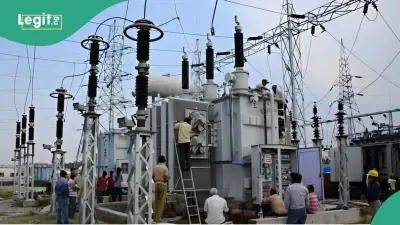
Despite the growing popularity of vertical construction, experts warn that Nigeria still lacks sufficient technological capacity, skilled manpower and regulatory enforcement needed to sustain large-scale high-rise development safely. One of the major concerns is infrastructure. High-rise buildings depend heavily on stable electricity, water supply, drainage networks and transportation systems, many of which remain inadequate in Nigerian cities. Maintenance culture also poses a challenge. Tall buildings require regular servicing of elevators, fire systems, power installations and mechanical equipment, but experts say maintenance practices remain poor across many developments.
Fire safety has become a particularly sensitive issue following several incidents involving high-rise buildings globally and locally. Challenges associated with evacuation, emergency response and rescue operations in tall structures have heightened concerns among professionals and regulators. Elevator failures have also become increasingly common, with occupants sometimes trapped for hours due to poor maintenance or power failures. Experts attribute many of these incidents to weak compliance with safety standards, poor emergency preparedness and inadequate enforcement of regulations.
Director General of the Lagos State Safety Commission, Lanre Mojola, stressed the need for regular risk assessments and stronger safety awareness in high-rise buildings. Mojola said accidents in high-rise buildings often result in avoidable fatalities, injuries and property loss. According to him, risk assessments should cover fire outbreaks, elevator failures, explosions arising from hazardous materials, disease outbreaks and other emergencies associated with high-rise facilities. Experts believe routine inspections and proper maintenance of elevators are essential to preventing accidents and improving public confidence in high-rise buildings.
The Future of Vertical Urban Development
Professionals in the built environment insist that vertical development will continue to expand in Nigeria as urbanisation intensifies and land becomes more expensive. However, they warn that success will depend largely on the government's ability to enforce planning regulations, strengthen building control systems and invest in infrastructure capable of supporting dense urban populations. Williams said while Lagos State has taken important steps through elevator certification and safety enforcement, developers and facility managers must also become more proactive in ensuring compliance with standards. “The challenge with going vertical is that you need highly skilled professionals to handle it. Fire safety is another major issue because escaping from a high-rise building is more complicated than from a bungalow,” he said.
Ale also warned that only a few contractors in Nigeria currently possess the technical capacity to undertake very tall structures, especially projects exceeding 50 floors. According to him, many medium-scale contractors lack the expertise, specialised equipment and technologies required for complex vertical developments. He added that tall buildings also come with high energy consumption due to elevators, cooling systems and backup power requirements. “During hot weather, occupants rely heavily on cooling systems, which increases energy costs. Vertical transportation bottlenecks can also occur during peak hours when residents are going to work or returning home,” he explained.