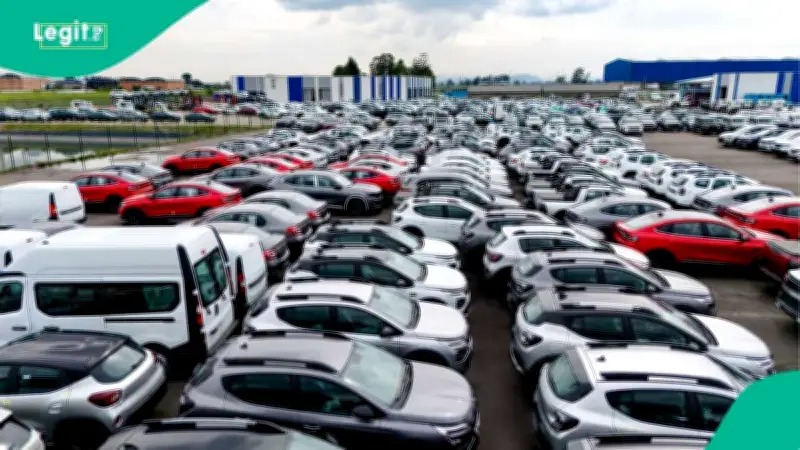
The Nigerian used-car market still offers several models below ₦10 million, according to a review of current listings on major automobile platforms. Toyota Corolla, Toyota Camry, Honda Accord, and Hyundai Elantra are among the brands with advertised prices within this budget, though buyers will find more Nigerian-used vehicles than foreign-used Tokunbo options.
Market Overview: What’s Available Below ₦10 Million
Current listings reviewed across Cars45 and Autochek show that the budget can still get buyers behind the wheel, but choices are limited. Cars45’s inventory includes 239 vehicles advertised below ₦3.5 million and another 958 between ₦3.5 million and ₦7 million. This indicates that affordable options exist, but they are predominantly Nigerian-used cars.
For example, Toyota Corolla models from 2004 to 2015 are listed between ₦3.49 million and ₦9.56 million. Toyota Camry models from 2003 to 2011 range from ₦2.81 million to ₦9.56 million. Honda Accord models from 2003 to 2009 are priced between ₦2.28 million and ₦7.28 million, while Hyundai Elantra models from 2009 to 2016 are advertised from ₦3.26 million to ₦9.98 million. Kia Rio selected older models are around ₦5 million and above.

Toyota Corolla and Camry: Still Within Reach
For Toyota buyers, the Corolla remains accessible. Cars45 listings include a locally used 2004 Corolla at about ₦3.49 million, a 2007 model at ₦5.06 million, and a 2011 model at ₦5.63 million. A 2015 Nigerian-used Corolla was advertised at ₦7.33 million, while another 2011 model was listed at ₦9.56 million. Autochek also lists locally used Corollas, including a 2009 model at ₦5.5 million and a 2010 model at ₦7.7 million.
However, newer Tokunbo Corollas are significantly more expensive. A foreign-used 2017 Corolla on Cars45 was advertised at ₦18.56 million, according to a recent listing. The Camry offers more choices below the ₦10 million ceiling, with locally used 2009 models around ₦5.4 million to ₦5.57 million, a 2010 model at ₦5.67 million, and a 2011 model at ₦9 million. Selected Tokunbo options close to the budget include foreign-used 2010 Camrys at approximately ₦9.45 million and ₦9.73 million, although another is already above the limit at ₦10.5 million. Nairametrics earlier estimated foreign-used 2007–2009 Camry LE models at approximately ₦8.5 million to ₦10 million.
Honda Accord and Hyundai Elantra: Cheaper Alternatives
Honda buyers can enter the market with considerably less. Cars45 listings include Nigerian-used Accords from about ₦2.28 million for a 2003 model and ₦2.89 million for a 2007 model. A 2008 Accord was listed at ₦3.68 million, while 2009 examples appeared around ₦5.72 million to ₦5.82 million. The gap between local and foreign-used cars is noticeable: a foreign-used 2015 Accord was advertised at ₦10.5 million, just beyond the budget.
Hyundai’s Elantra offers another alternative. Current listings include a Nigerian-used 2009 Elantra at ₦3.26 million and a 2014 model at ₦6.41 million. A locally used 2016 model was listed at ₦9.45 million. Some foreign-used Elantras also fall below ₦10 million, including 2012 and 2013 examples advertised between roughly ₦9.35 million and ₦9.98 million. This means buyers prepared to look beyond Toyota and Honda could potentially get a newer model year while staying within budget.
Why Prices Remain High Despite Tariff Cuts
Nigeria has reduced some tariffs on vehicle imports under its 2026 fiscal measures. The Nigeria Customs Service disclosed that the tariff on used vehicles was reduced from 15% to 5%, while the tariff on new vehicles dropped from 20% to 10%, Premium Times reported. Nevertheless, exchange rates, shipping, clearing charges, and other costs continue to affect the final price consumers pay.

For Nigerians with a strict ₦10 million budget, the market still offers choices. But the evidence suggests buyers increasingly face a trade-off: choose an older Tokunbo car or get a potentially newer Nigerian-used vehicle for the same money. The used-car market is also facing fresh price pressure as passenger motor car imports jumped 145.6% year-on-year to ₦1.18 trillion in the first half of 2026, according to Legit.ng’s earlier report. The increase highlights strong demand for vehicles despite rising living costs and the challenges of bringing cars into the country.