
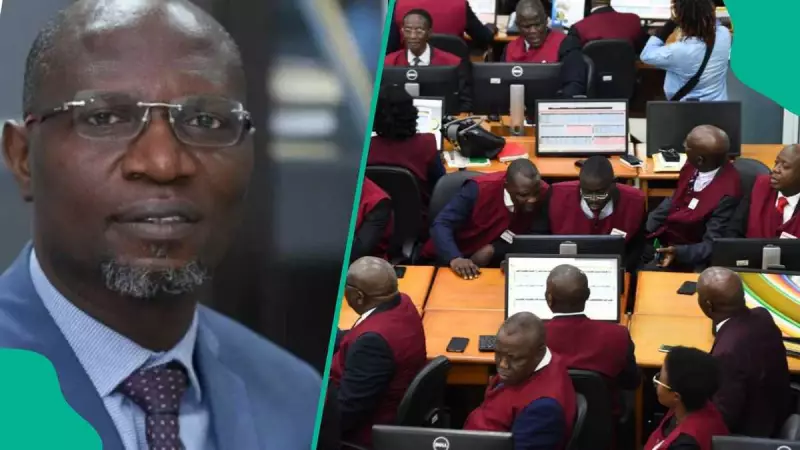
In a landmark move to fortify the Nigerian financial sector, the Securities and Exchange Commission (SEC) has unveiled a sweeping revision of the minimum capital requirements for capital market operators. The new framework, announced in a circular dated January 16, 2026, will come into full effect on June 30, 2027, giving firms an 18-month transition period.
New Capital Thresholds for Brokers, Dealers, and Asset Managers
The regulatory overhaul impacts a broad spectrum of market participants, from traditional brokers to emerging fintech firms. The SEC stated that the reforms aim to strengthen investor protection, enhance market stability, and align operators' capital with their risk profiles in a rapidly evolving financial landscape.
Under the new rules, the minimum capital for stockbrokers jumps from N200 million to N600 million. Dealers will now be required to maintain N1 billion, up from N100 million. Broker-dealers, who engage in both activities, face the most significant hike, with their capital base rising from N300 million to a substantial N2 billion.
Fund and portfolio managers will operate under a tiered system. Firms managing assets above N20 billion must hold N5 billion in capital, while mid-sized managers need N2 billion. For large asset managers overseeing more than N100 billion, a new rule mandates they keep at least 10% of their assets under management as capital.
Digital Asset Operators and Other Firms Brought Under Strict Framework
In a significant development, digital asset operators, previously in a regulatory grey area, are now fully incorporated into the SEC's formal oversight. Digital exchanges and custodians must each maintain N2 billion. Tokenisation platforms and intermediaries face requirements between N500 million and N1 billion, while robo-advisers need a minimum of N100 million.
The new capital regime extends to other critical market functions:
- Issuing houses: N7 billion for full underwriting or N2 billion for advisory-only services.
- Registrars: N2.5 billion.
- Trustees: N2 billion.
- Underwriters: N5 billion.
- Market infrastructure providers like exchanges must hold up to N10 billion.
Market Consolidation and Enhanced Investor Protection Expected
Market analysts predict the steep increases will likely trigger a wave of consolidation, mergers, and restructuring across the industry. Smaller, undercapitalised firms may be forced to exit, leading to a market with fewer but stronger operators. The SEC maintains this outcome will improve overall governance, stability, and investor confidence.
The commission also used the announcement to reiterate warnings against investment scams, specifically denying any regulatory approval for platforms like Voya Investment Management. The reforms are part of a broader push by Nigerian authorities to build a more resilient and better-capitalised financial market capable of supporting economic growth and safeguarding investors.




