Sanwo-Olu Advocates for Tax Agency Autonomy, Praises LIRS Revenue Performance
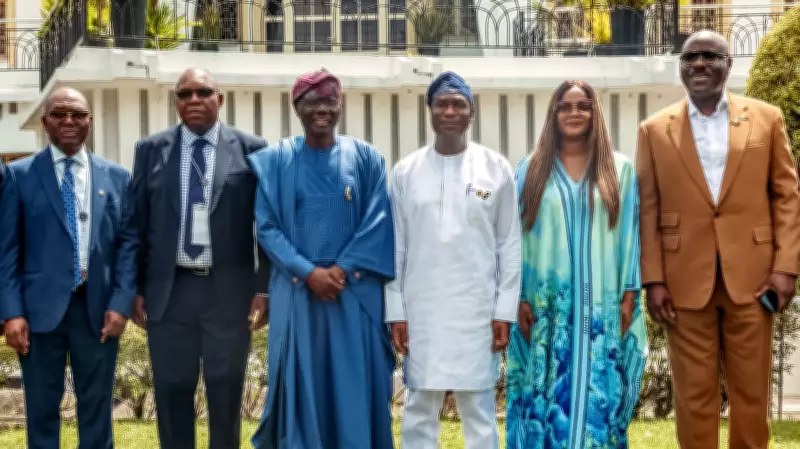
Lagos State Governor, Babajide Sanwo-Olu, has issued a strong call for increased autonomy for tax agencies nationwide, cautioning that political interference could severely hamper revenue growth and erode public trust. The governor made this appeal during a meeting at the State House, Marina, where he hosted members of the Joint Revenue Board (JRB) for its 159th session.
Commendation for LIRS and Revenue Achievements
In his address, Governor Sanwo-Olu lauded the Lagos State Internal Revenue Service (LIRS) for its pivotal role in propelling the state's economic expansion through enhanced revenue collection. He highlighted that Lagos has consistently achieved robust growth in internally generated revenue, attributing this success to strategic reforms implemented by the LIRS. Notably, such revenue now constitutes over 60 percent of the state's annual budget, underscoring its critical importance to fiscal sustainability.
The governor revealed that Lagos generated an impressive N1.3 trillion in internally generated revenue in 2024, marking a 45 percent increase compared to the previous year. He credited this achievement to sustained investments in digital tax systems, efforts to broaden the tax base, and improved engagement with taxpayers. "We can affirm that our internally generated revenues now account for well over 60 percent of our budget. This outcome is not a matter of chance; it results from years of dedicated investment in digital tax infrastructure, initiatives to expand our tax net, and fostering trust with our taxpayers," Sanwo-Olu stated.
Emphasis on Autonomy and Development Linkage
Governor Sanwo-Olu stressed that for other states to replicate Lagos's success, governors must grant revenue agencies the independence to operate with clear mandates and stable leadership. He argued that such autonomy would allow governments to fully leverage the expertise within these agencies, leading to more efficient and effective tax administration.
Furthermore, the governor emphasized that taxes collected from residents and businesses are being directly channeled into tangible infrastructure and social projects across Lagos. He cited the state as a model for effectively linking revenue generation with developmental outcomes, mentioning key initiatives funded through public revenue, including:
- The Blue and Red Rail Lines
- Road expansion projects
- Hospital upgrades
- New university establishments
Sanwo-Olu added that Lagos is actively developing a multi-modal transport system that integrates rail, water transport, and bus services, showcasing how revenue is driving comprehensive urban development.
Support from Revenue Board Officials
Ayodele Subair, Chairman of the LIRS, remarked that the JRB has become instrumental in strengthening Nigeria's tax system through improved coordination and the implementation of critical reforms. He noted that Lagos hosting the JRB meeting after a five-year interval reflects the state's significant economic stature and leadership in revenue matters.
Olusegun Adesokan, Executive Secretary of the JRB, speaking on behalf of Chairman Zacch Adedeji, commended Lagos for its exemplary revenue performance and governance reforms, describing it as a benchmark for tax administration in Nigeria. Adesokan pointed out that the state's current revenue profile is the result of sustained and consistent reforms over time.
In addition, Okon Okon, Executive Chairman of the Akwa Ibom State Internal Revenue Service, expressed gratitude to the Lagos State Government for hosting the meeting. He highlighted the positive experiences of participants, including educational visits to key projects such as the Blue Rail Line and Eko Atlantic City, which demonstrate the practical benefits of effective revenue management.