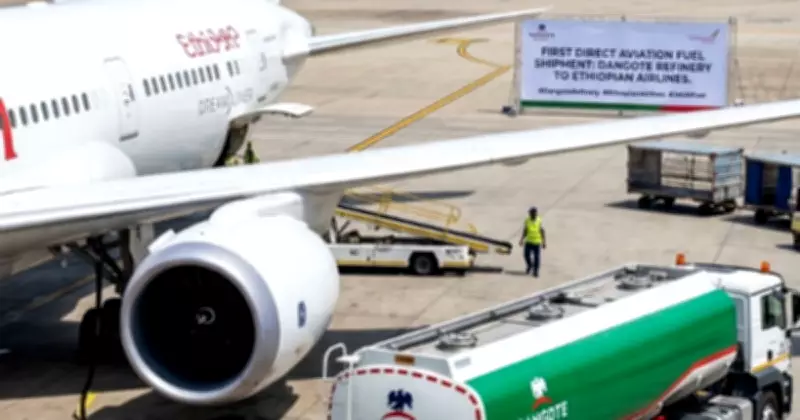
The Dangote Petroleum Refinery has announced a reduction in the price of aviation fuel to ₦1,650 per litre, down from the previous ₦1,750. This strategic move is designed to alleviate the financial burden on Nigerian domestic airlines, which had been grappling with soaring operational costs that threatened to force a suspension of flights.
Additional relief measures introduced
Alongside the price cut, the refinery has introduced a 30-day interest-free credit facility for marketers and airline operators, backed by bank guarantees. Furthermore, the company has shifted aviation fuel sales from dollar-denominated pricing to a naira-based model. These measures collectively represent the refinery's most comprehensive response to the ongoing crisis in the aviation sector.
Impact of global energy prices
The crisis stems from the ripple effects of the US-Iran conflict, which triggered a spike in global energy prices. In Nigeria, the impact on aviation fuel has been severe. According to the Airline Operators of Nigeria, the price surge was disproportionate to international trends. Jet A1 prices climbed from around ₦900 per litre before the crisis to between ₦2,700 and ₦2,900 at many outlets, with some marketers charging as high as ₦3,300 per litre.
This made aviation fuel the single largest and most unpredictable cost for domestic carriers. By late April, airlines issued a 48-hour ultimatum to the government, warning of a nationwide grounding of flights from April 30 if no action was taken. Aviation fuel typically accounts for the largest share of airline operating costs, and margins in Nigeria's domestic aviation market were already thin before the crisis.
Previous interventions
This is not the first intervention by Dangote Refinery. At the end of April, the refinery announced a gantry price of ₦1,820 per litre, which was seen as an attempt to bring transparency to the market. The new ₦1,650 price represents a further reduction, though it remains significantly higher than pre-crisis levels.
The refinery stated that these interventions are expected to lower fuel procurement costs, improve operational stability for carriers, and support efforts to moderate airfares for passengers. The fuel crisis had been quietly adding pressure to ticket prices across the country.
Whether the reduction is sufficient to fully resolve the standoff between airlines and fuel suppliers remains to be seen, but it is a meaningful development for the industry.