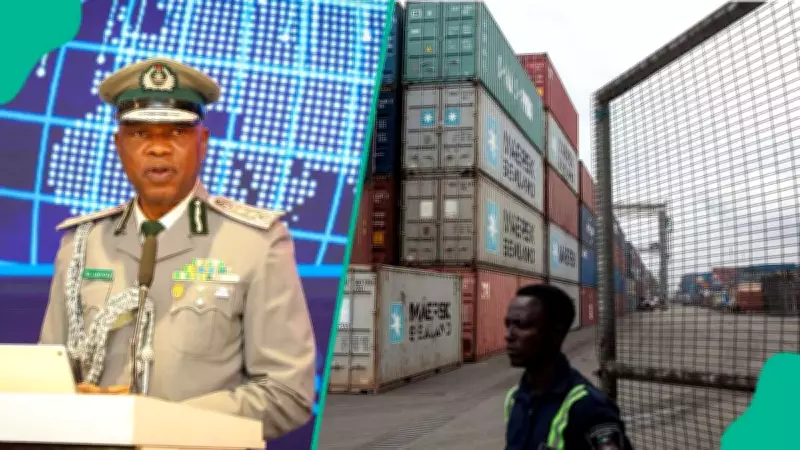
Nigeria Customs Service Unveils One-Stop-Shop for Faster Cargo Clearance
The Nigeria Customs Service (NCS) has officially launched a groundbreaking One-Stop-Shop (OSS) initiative, designed to drastically reduce cargo clearance times to just 48 hours. This strategic reform aims to streamline operations at the nation's seaports and land borders, addressing long-standing procedural bottlenecks that have hindered trade efficiency.
Centralized Digital Workflow to Enhance Efficiency
Comptroller-General of Customs, Adewale Adeniyi, announced the launch during an event in Lagos, where he was represented by Deputy Controller Timi Bomodi. The OSS platform integrates various units—including valuation, intelligence, enforcement, and compliance monitoring—into a single digital workflow. This centralized approach replaces previously fragmented processes, supported by digital tracking tools and defined escalation channels to resolve disputes more efficiently.
Adeniyi emphasized that the initiative aligns with Executive Order 001 and the Business Facilitation Act, focusing on transparency, service delivery timelines, and improved inter-agency coordination. By centralizing risk management and clearance procedures, the NCS aims to eliminate duplicate reviews and sequential inspections that have historically delayed cargo movement.
Eliminating Duplication and Reducing Compliance Costs
The new system is structured to address systemic gaps identified in internal reviews, which revealed that inefficiencies often stemmed from fragmented risk interventions rather than inspection performance. Under the OSS, multiple inspections and repeated documentation requests will be minimized, significantly reducing administrative burdens and compliance costs for traders.
Adeniyi noted that the reform is a structural solution, not a temporary adjustment, accompanied by process reengineering, officer training, and change management programs. Units now operate as integrated teams with shared performance indicators, enhancing accountability and consistency in cargo clearance procedures.
Strengthening Revenue Assurance and Transparency
Beyond speeding up clearance, the OSS initiative is expected to bolster revenue assurance through improved risk profiling, intelligence sharing, and coordinated enforcement. Digital audit trails and systematic performance monitoring will enhance transparency, while post-clearance controls will be managed by the Post Clearance Audit Unit in line with international best practices.
Adeniyi referenced global standards under the World Trade Organisation Trade Facilitation Agreement, highlighting that technology alone cannot drive reform. The deployment of OSS is part of broader efforts to upgrade systems, strengthen national competitiveness, and promote efficiency.
This launch follows the NCS's announcement of generating N7.2 trillion in revenue in 2025, attributed to tighter border controls and digital system deployments. The agency also reported over 2,000 seizures of prohibited goods valued at approximately N59 billion, underscoring its commitment to enhancing trade efficiency and security.