In the heart of Benin City, the ancient art of bronze casting continues to breathe, its fires stoked by hands that have inherited techniques centuries old. This enduring craft persists even as Nigeria engages in a global campaign to reclaim the priceless bronzes looted from the kingdom during the British Punitive Expedition of 1897.
The Living Legacy of Igun Street
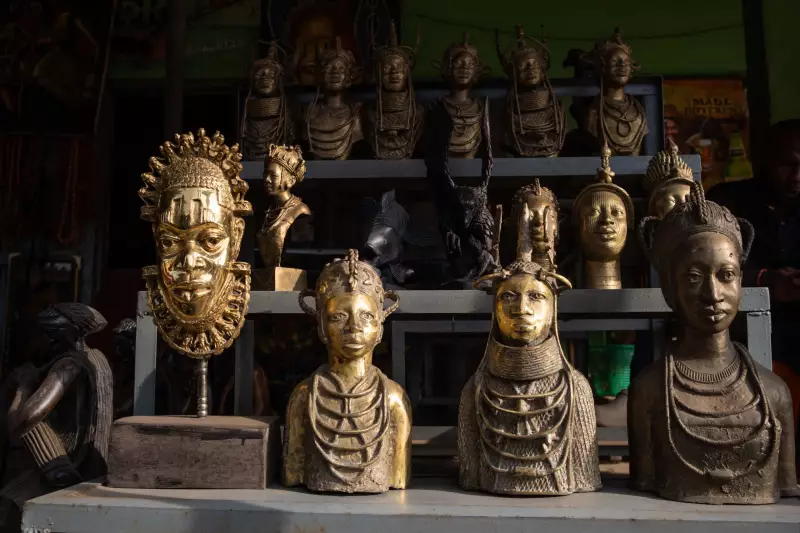
Igun Street, home to the historic Guild of Benin Bronze Casters, remains the epicenter of this traditional craft. For generations, members of this guild have passed down their expertise from father to son, creating statuettes and plaques that echo the glory of the ancient Benin Kingdom. Today, the three-kilometre street is lined with shops displaying figures of royal ancestors, crafted using methods that have seen little change over hundreds of years.
Master caster Victor Uinmwen Aduwe, 45, represents this unbroken lineage. Trained by his father from the age of six, Aduwe's skill is formidable. He proudly states he can "make anything" in bronze to satisfy diverse clientele, yet his passion lies in casting images "of our king or queen." His dedication was instrumental in a major project two years ago: the creation of a secretive, 10-metre (32-foot) statue of Queen Idia, the powerful 16th-century Queen Mother, which now overlooks a city roundabout.
Modern Challenges for an Ancient Guild
Despite its rich history, the guild faces significant headwinds. Kingsley Osarhenhen Inneh, the 65-year-old head of the guild and uncle to Victor Aduwe, acknowledges a stark reality. "Many have left for greener pastures," he laments. The guild's membership has dwindled to just 120 active casters, a shadow of its once-flourishing past when it enjoyed the patronage of the Oba of Benin.
The economic strain is severe. Inneh highlights the soaring cost of materials, noting that a kilo of brass has skyrocketed from 600 naira (40 US cents) to 8,000 naira ($5.5) in less than four years. Often, materials are now salvaged from vehicle carcasses. Inneh appeals for financial support to acquire modern equipment that could increase output and ease the physically gruelling nature of the work, which involves handling fire, lifting heavy loads, and digging under the scorching sun.
New Blood and New Interpretations
The craft also sees fresh perspectives. Matthew Mathias, 43, originally from northern Nigeria, arrived in Benin City about a decade ago. He was trained by a local caster and now considers himself an "adopted son" of the tradition. For Mathias, the fire of the forge is a metaphor for life's trials. "The fire that is coming out here is the hardship of life. If I can overcome this fire, I can be able to endure the heat of society," he reflects.
Elsewhere in the city, 32-year-old Kelly Omodamwen is charting a contemporary course. While using the same ancient lost-wax techniques, he creates minimalist sculptures inspired by local mythology and history. His goal is to tell "the same story but in simpler forms." This innovative approach has found an international audience, with his works selling in Europe and the United States, proving the global relevance of Benin's artistic narrative.
The perseverance of these artists unfolds against the backdrop of Nigeria's ongoing efforts to repatriate its cultural heritage. Museums in Britain, Germany, and the Netherlands have already returned several hundred of the famed Benin Bronzes. The work on Igun Street is more than an artisanal trade; it is a living act of cultural preservation, ensuring that the soul of the Benin Kingdom continues to be moulded in molten metal, one cast at a time.