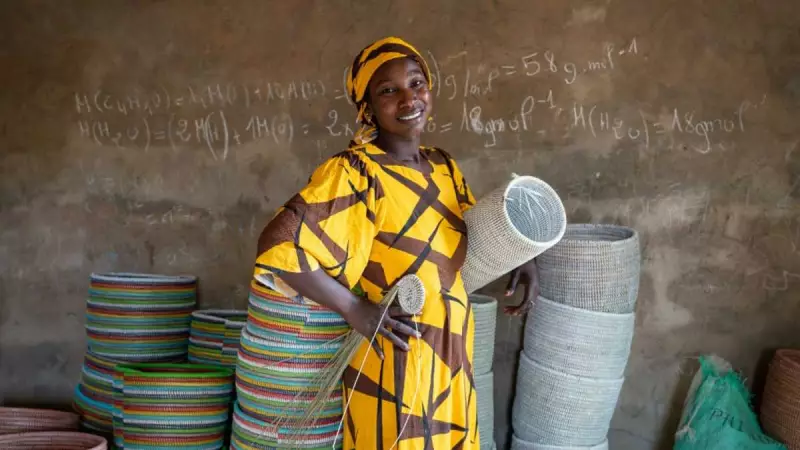
In a quiet village in northwest Senegal, the rhythmic work of generations continues under the shade of mango trees. Yet, for the women weaving the country's famous colourful baskets, a global surge in popularity has not translated into financial security.
Global Trend, Local Struggle
Khady Sene, a 35-year-old mother from Mborine village, represents a craft passed from mother to daughter. "I've been doing this work since I was born," she told AFP, weaving coiled reeds bound with vibrant plastic strips—a modern take on traditional palm fibres.
While her creations and those of her neighbours adorn homes in the United States and France, the economic reality in Senegal is stark. A large laundry-style basket might sell for 13,000 CFA francs (about $23) locally after a middleman takes a cut. The same item abroad can command over $150, with minimal profit reaching the artisans.
"Those who come to the market buy them at ridiculously low prices that don't even allow us to cover our costs," Sene explained. The situation is compounded by mass-produced imitations. Flip over a "Senegalese-style" basket in a Western store, and it may well bear a "Made in Vietnam" label.
Fighting Imitations with Innovation and Fair Pay
The discovery of Vietnamese knockoffs in 2017 shocked Fatima Jobe, a Gambian-Senegalese architect. Finding a wholesaler claiming to be the world's largest exporter of these baskets spurred her to action. "There are all these wonderful weavers who are ready to work," Jobe stated, determined to ensure Senegalese baskets are made in Senegal.
She founded Imadi, a Dakar-based shop that now collaborates with over 260 women across 15 villages, including Khady Sene. Imadi operates on a fairer model: delivering materials directly, collecting finished products, and ensuring better pay. Jobe has also implemented a no-child-labour policy and used profits to support village schools.
Jobe's designs, often in subdued colours with leather trim, have gained international acclaim, even featuring on the US reality show "Selling Sunset." Despite this success, she notes Senegal lacks the infrastructure to compete with major exporters like Vietnam on scale.
A Lifeline Amidst Economic Hardship
For many women, weaving remains a crucial, if undervalued, source of income. Fatim Ndoye, who sells baskets at a roadside stall, highlights the meagre returns: "In my opinion, baskets sell for ridiculously low prices in Senegal." She might earn only 3,000 CFA francs ($5) on a slow weekday.
This economic pressure fuels migration. Adama Fall, a 49-year-old widow and Imadi coordinator from Thiembe village, supports her family through weaving. She knows the risks of seeking opportunity elsewhere, noting that several young men from her village left via perilous Atlantic routes in pirogues; four have not been heard from in five years.
As the next generation plays nearby, crafting their own coarse baskets, the knowledge is preserved. The hope of artisans like Khady Sene is for authorities to create conditions that allow them to truly "make a living from this work," ensuring the craft's future benefits the hands that create it.