
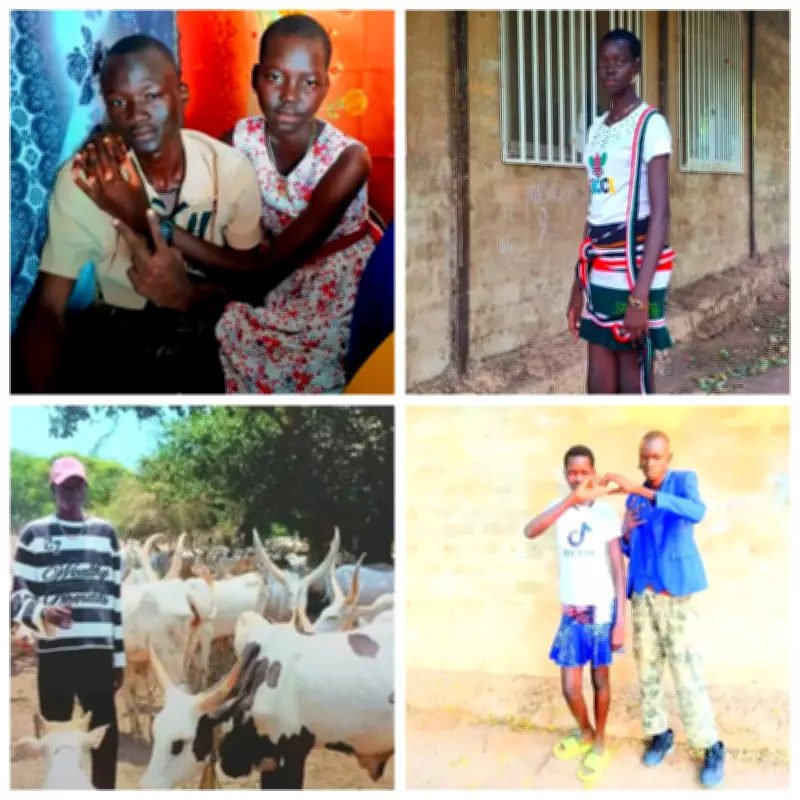
Sudanese Man's Heartbreak: 105 Cows Not Enough to Secure Bride in Tribal Marriage Dispute
A young Sudanese man, Buong Arop, has been left heartbroken after losing his childhood girlfriend to another suitor, despite possessing a significantly larger dowry of cows. In an emotional letter shared widely on social media, Arop detailed his profound disappointment and the cultural complexities that led to this painful outcome.
An Emotional Letter Reveals Deep Cultural and Personal Struggles
Buong Arop reflected on his relationship with the girl, describing it as one built on a foundation of respect and honesty. He expressed his initial hopes of uniting not just two individuals, but their respective communities: Duony Payam and Bhar-Gel of Achol Malek Payam. However, these aspirations were dashed when the girl's family chose his rival, who had 90 cows, over Arop's 105 cows, citing local tribal ties as the decisive factor.
Arop voiced his frustration at what he perceived as unfair treatment, emphasizing that he had dated the girl "respectfully and peacefully" with the intention of making her his wife. He wrote, "I told myself what's that bad thing I did to your relatives, when I have 105 cows and my so-called opponent having 90 cows, why should I choose your family to build a strong bond between two families, yet they ended up favoring a homie."
Questioning Traditional Marriage Norms and Tribal Priorities
In his letter, Arop raised poignant questions about the evolving nature of marriage in his region. He lamented, "Is marriage from this land all about home? I believed being a homie has an advantage if not my opponent would have not ended up being favored." He highlighted a shift from traditional practices where the suitor with more cows would typically win the bride, to a modern preference for tribal connections.
Arop's plan was intentional: to foster unity between the two Payams through marriage, believing it would strengthen bonds among the communities. He recounted his efforts, saying, "My plan was intentional to unite two Payams in unity... and that's very the same reason I crossed Mayath, and Cueibet to go behind the depth of Gok which is Bhargel." Despite his respectful approach, he felt mistreated "like a stranger" by the girl's family.
Heartfelt Reflections on Love, Loss, and Moving Forward
The letter delves into Arop's personal anguish, as he described love transforming from a feeling of hope and home to something fragile and risky. He wrote, "Love used to feel like hope, like home. Now it feels fragile like something I can't risk again." He shared intimate moments of silent tears and quiet despair after the relationship ended, stating, "After I just ended, I just sat there, staring at nothing like a mad man and then the tears came slowly, silent, heavy and unexpected way without my knowledge."
In a poignant conclusion, Arop chose to say goodbye, not out of a lack of love, but out of respect for the girl's family. He absolved the girl of blame, attributing the decision to her relatives' preference for tribal alignment. His final words carried a tone of resignation and goodwill: "This letter carries no expectations—only goodwill, gratitude and respect for what once was. Go live well with your in-laws. Let's count everything in God's hand... Goodbye Maan Buong."
This story, originally shared by Linda Ikeji, underscores the intricate interplay between tradition, economics, and personal emotions in Sudanese marital customs, resonating with many who face similar cultural dilemmas.