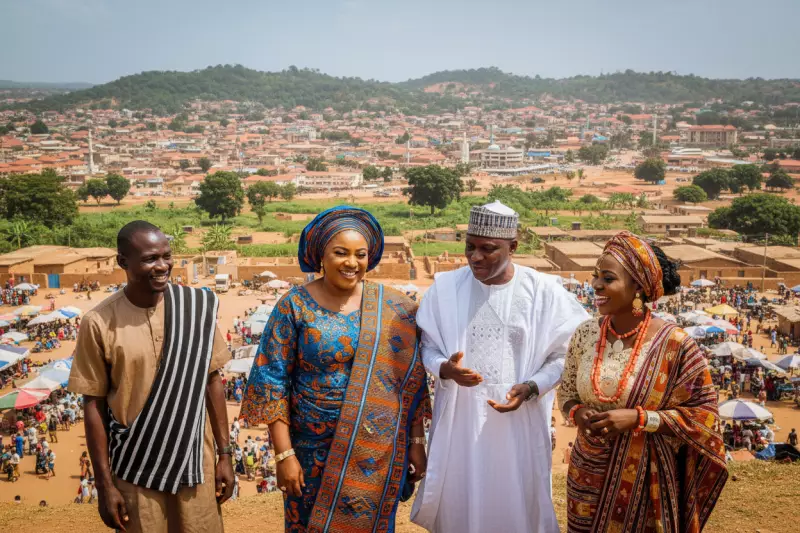
My first true understanding of Nigeria's rich cultural tapestry came at age twelve in my grandmother's Enugu parlour. My uncle introduced a friend from Kano who wore magnificent flowing agbada, spoke Hausa with northern cadence, yet seamlessly incorporated Igbo proverbs into his English stories about trading. This encounter revealed Nigeria not merely as a country but as a vibrant, living mosaic of cultures coexisting beneath one green-white-green flag.
The Statistical Reality of Nigerian Diversity
Nigeria stands as home to 371 distinct ethnic groups speaking more than 500 languages, creating one of the world's most culturally diverse nations. According to Pew Research Center findings, Nigeria ranks as the third most culturally diverse country globally, surpassed only by Chad and Cameroon. This remarkable variety of customs and traditions provides Nigeria with exceptional cultural richness that defines daily life for over 230 million people.
Historical Foundations of Cultural Pluralism
Long before British colonial administration created Nigeria in 1914 through amalgamation, this territory hosted powerful indigenous civilizations. The Hausa city-states in the north flourished as centers of Islamic scholarship and trans-Saharan trade. Yoruba kingdoms in the southwest developed sophisticated political systems with checks and balances, while Igbo-speaking communities in the southeast perfected decentralized governance models that anthropologists still study today.
These weren't isolated societies. For over a thousand years, trans-Saharan trade routes connected northern Nigeria to North Africa and the Mediterranean. Coastal kingdoms engaged with Portuguese, Dutch, and British merchants. The colonial amalgamation inadvertently created platforms for intensified interaction between different ethnic groups through civil service, educational institutions, and urban centers that became cultural melting pots.
Geographical Influence on Cultural Development
Nigeria's 923,768 square kilometers encompass dramatic geographical variations that fundamentally shaped cultural development. From the arid Sahel in the north where temperatures reach 45 degrees Celsius to the lush rainforests in the south and the cool highlands of Obudu, each environment demanded distinct survival strategies.
In the north, scarce rainfall prompted communities to develop sophisticated irrigation systems and pastoral traditions. The Fulani cultural identity revolves entirely around cattle-rearing patterns. Meanwhile, in riverine Delta areas, the Ijaw people built civilizations on water, with children learning to swim before walking. The Middle Belt showcases this geographical diversity perfectly, with Jos Plateau's temperate climate contrasting with Benue's tropical forests.
The Three Major Groups and Hundreds of Others
While Hausa-Fulani (approximately 30%), Yoruba (15.5%), and Igbo (15.2%) collectively constitute about 60% of Nigeria's population, this leaves 368 other ethnic groups comprising 40% of nearly 230 million people. That represents over 90 million Nigerians belonging to ethnic groups often overlooked in national discourse.
This diversity manifests in everyday life through linguistic variety, religious coexistence, culinary richness, and artistic expressions. Walking through any major Nigerian market, you might hear Yoruba, Igbo, Hausa, Pidgin English, standard English, and numerous minority languages within minutes. Mosques and churches frequently stand side-by-side, with neighbors of different faiths sharing meals during religious celebrations.
Preserving Nigeria's Cultural Heritage
The Nigerian government's 1988 National Cultural Policy defines culture as the complete way of life developed by people in their efforts to meet environmental challenges. This policy framework emphasizes culture as foundation for nation building, viewing languages and traditions as bridges of understanding rather than barriers.
However, preservation faces modern challenges. Some Nigerian languages spoken by only a few hundred people risk extinction as younger generations adopt English and major Nigerian languages. Urbanization disrupts traditional community structures, while globalization exerts homogenizing cultural influences.
Traditional rulers remain crucial in cultural preservation, serving as custodians of knowledge and mediating between ancient traditions and modern governance. From emirs in the north to obas in the southwest and obis in the southeast, these institutions help maintain cultural identity while enabling national unity.
Economic Implications of Diversity
Cultural diversity creates both advantages and challenges for economic development. On the positive side, localized knowledge provides natural trade advantages. Hausa merchants understand cultural nuances in Kano's markets, while Yoruba businesswomen grasp social etiquette that facilitates deals in Lagos.
Nigeria's creative industries, particularly Nollywood and music, draw directly from this diversity. The global success of Afrobeats stems from blending traditional rhythms with contemporary sounds. However, implementing national policies requires cultural translators and locally adapted strategies, multiplying costs and complexity compared to more homogeneous societies.
The Path Forward: Unity in Diversity
Nigeria's experience managing cultural diversity within a democratic framework serves as a crucial test case for multi-ethnic governance across Africa. The country's federal system, National Youth Service Corps program, and increasing inter-ethnic marriages demonstrate that unity doesn't require cultural homogeneity but rather mutual respect and equitable governance.
Building this future requires active participation from all Nigerians. Learning phrases in languages beyond one's own, challenging ethnic stereotypes, supporting cultural institutions, and advocating for inclusive policies all contribute to celebrating diversity while strengthening national unity. Nigeria's 371 ways of celebrating births, mourning deaths, creating art, and governing communities represent not a burden but a extraordinary blessing that enriches human experience.