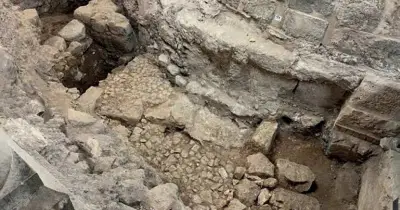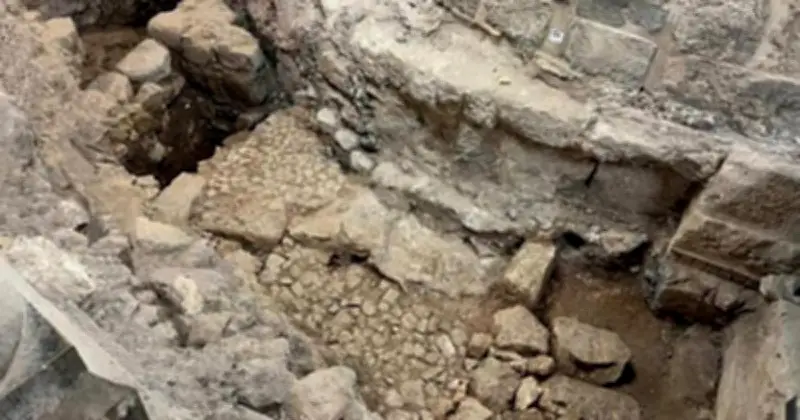
Archaeologists have uncovered an ancient Roman-era pathway beneath Jerusalem’s Church of the Holy Sepulchre, a discovery that may shed light on the landscape associated with Jesus Christ’s final journey to his crucifixion more than 2,000 years ago.
The finding, reported on Friday, October 16, 2026, follows excavations at the church, a site revered by Christians as the location of Jesus’ crucifixion, burial, and resurrection. The work was led by a team from Sapienza University of Rome as part of a broader project to investigate the church’s archaeological history and restore its flooring.
Roman street found under the apse
According to the university, the research has revealed evidence of different phases in the site’s history, including a Roman street running beneath the apse of the early Christian church. The findings are helping researchers reconstruct how the area developed before and after the establishment of the religious complex.
The archaeological mission was coordinated by Francesca Romana Stasolla, a professor at Sapienza University specialising in ancient and medieval archaeology. The work began in 2022 and involved archaeologists, historians, and specialists in other scientific fields. The team investigated different sections of the church to document remains and understand how the site changed over centuries.
Significance of the Church of the Holy Sepulchre
The Church of the Holy Sepulchre is located in Jerusalem’s Old City and has been a major Christian pilgrimage destination for centuries. Christian tradition identifies the surrounding area as Golgotha, where Jesus was crucified, and the nearby tomb as the place where he was buried.
The traditional route associated with Jesus’ final journey is known as the Via Dolorosa, meaning the “Way of Sorrows.” Pilgrims follow this route through Jerusalem’s Old City to commemorate the events leading to his crucifixion. However, identifying an ancient road does not establish that Jesus personally walked on it.
Ongoing analysis and future implications
Although the archaeological findings may help researchers understand the historical landscape, the precise route Jesus took before his crucifixion has not been conclusively established. Sapienza University said in September 2026 that the excavation phase at the Church of the Holy Sepulchre had been completed, while researchers continued analysing the recovered materials and documenting the site’s different historical phases.
The findings are expected to contribute to a better understanding of the church’s long history and the development of one of Christianity’s most significant religious sites.