Nigeria Mourns as Ladoke Akintola's Historic Ogbomoso Estate Crumbles Into Ruins
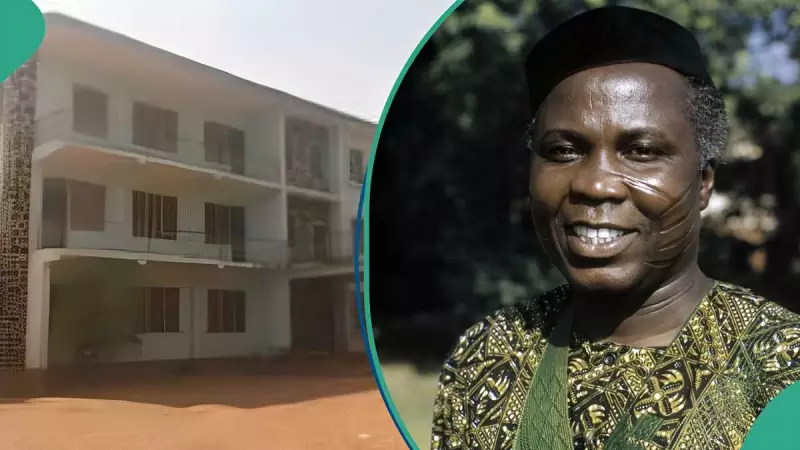
The once-magnificent estate of Chief Samuel Ladoke Akintola, former Premier of Western Nigeria and the 13th Aare Ona Kakanfo of Yorubaland, now stands as a heartbreaking symbol of neglect in Oke-Ado, Ogbomoso. What was once a bastion of political authority and cultural influence in Western Nigeria has been reduced to a decaying shell, stripped of its former grandeur through years of systematic vandalism and quiet abandonment.
Visible Decay and Systematic Looting
A recent visit to the compound revealed the shocking extent of deterioration. The residence, built by a man who shaped regional politics and Yoruba history, now bears the scars of environmental wear and calculated plundering. From the entrance, one of the twin gates has been forcibly cut open, offering a grim preview of the damage within.
The two main structures in the compound include a two-storey building and a one-storey block that have suffered extensive damage:
- Windows, louvre blades, and burglar-proof bars have been removed from most rooms
- Paint has faded dramatically while ceilings have collapsed in multiple sections
- Overgrown shrubs now block walkways that once welcomed distinguished visitors
- Fruit trees, fountains, and ornamental plants that defined the landscape are either gone or reduced to stumps
Inside the Crumbling Compound
Within the compound lie the graves of the late premier, his wife Faderera Aduke Akintola, and their son Olatokunbo Akanni Akintola. Behind the main building sits an Olympic-sized swimming pool, now completely dry and filled with debris. Its pipes have been removed, and the surrounding space has been converted into a small cassava farm.
Inside the buildings, the scene is equally distressing. Broken picture frames, cracked photographs, and scattered books litter the floors. Furniture remains covered in thick dust, frozen in place as if awaiting occupants who will never return. Toilets and kitchens have been reduced to empty shells, with all fittings and water closets stripped away, leaving only bare walls and exposed openings.
Years of Unchecked Plundering
A farmer working within the compound, Moses Adegoke, revealed that scavengers regularly struck when no one was present. Having farmed on the land for approximately four years, Adegoke explained that access was typically gained through the back fence.
"We are the ones giving the place small security when we are around to farm. But anytime we leave, we don't know what happens. We will just come back and discover that something else is missing," he said.
According to Adegoke, the situation only improved when security personnel from Ladoke Akintola University of Technology began regular patrols of the area. "It was when the Ladoke Akintola University of Technology guards started coming that we noticed nobody was entering the place again," he added.
Neighbors recalled when the estate was still active, hosting political meetings, schools, and small businesses within the compound. That vibrant activity gradually faded over time, creating the vacuum that looters eventually exploited.
LAUTECH Steps In with Restoration Plans
Chief Ladoke Akintola, assassinated during the January 15, 1966 military coup, was a lawyer, journalist, and politician who served as the last premier of Western Nigeria. His family later handed the property to LAUTECH through a lease agreement.
Yemi Adedokun, Coordinator of the Samuel Ladoke Akintola Memorial Foundation, explained that the family had repaired the property twice before transferring responsibility. "The family repaired the house twice in the past, but eventually it was given to LAUTECH," he said.
The Vice Chancellor of LAUTECH, Professor Razaq Kalilu, detailed how extensive damage had slowed redevelopment efforts. "At first, the agreement was for 10 years. But when we inspected the place, we discovered that all fittings had been removed," he revealed.
Kalilu confirmed that the lease was subsequently extended to 30 years, with renovation funds included in the university's 2026 budget. He added that security had been deployed and plans were underway to relocate the Institute of African Studies to the historic site.
A Symbol of Nigeria's Historical Preservation Challenges
The deterioration of Chief Ladoke Akintola's estate represents more than just physical decay—it symbolizes the broader challenges facing Nigeria's historical preservation efforts. As political meeting places, educational institutions, and community hubs that once thrived within the compound fade into memory, the urgent need for systematic heritage protection becomes increasingly apparent.
LAUTECH's intervention offers hope for this significant historical site. The university's commitment to restoration, coupled with enhanced security measures and strategic repurposing of the property for academic use, suggests a potential pathway for preserving Nigeria's cultural landmarks. However, the extensive damage already sustained serves as a stark reminder of what can be lost when historical sites lack consistent protection and maintenance.
As restoration efforts begin, this once-grand estate may yet reclaim its place as a symbol of Nigeria's rich political and cultural heritage, rather than remaining a monument to neglect.