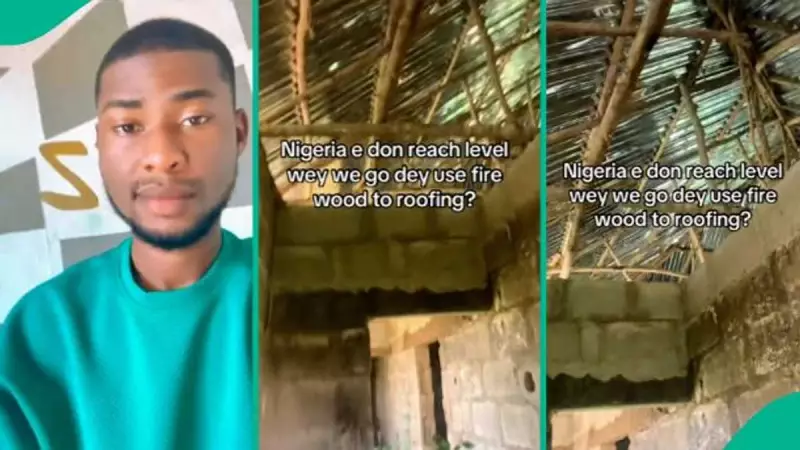
A Nigerian man has triggered widespread discussion online after sharing a video of a surprising construction method: a building roofed with pieces of firewood.
Unusual Discovery Sparks Alarm
The video, posted on TikTok by a user with the handle @hafiz on January 19, 2026, captures an unfinished building where firewood logs are joined together to form the roof, serving as a direct substitute for conventional materials like iron sheets or roofing boards. The man behind the camera expressed clear shock at the sight, captioning the clip with a question that resonated with many: "Nigeria e don reach level wey we go dey use firewood do roofing?"
Mixed Reactions Flood Social Media
The clip quickly gained traction, drawing a flood of comments from concerned and opinionated Nigerians. The primary worry for many viewers centered on safety and fire hazards, with people questioning the structural integrity and the obvious risk of using such a combustible material for roofing.
However, the conversation wasn't one-sided. Several commenters defended the practice, citing traditional knowledge and the durability of specific wood types.
Notable reactions from the TikTok comments section included:
- @kingdexterg8 argued for its longevity, stating similar wood on their family house has lasted for generations.
- @shado pointed out the wood's natural resistance to termites and its stability, though criticized the poor craftsmanship in the video.
- @Funding with Rita Laverne suggested it might be a case of cutting corners, possibly without the knowledge of an overseas-based property owner.
- @julius and @Dmj aljalil praised the material, with the latter claiming such logs are "better than all those rubbish we buy from sawmill" and were trusted by previous generations.
Broader Implications for Building Standards
This incident has inadvertently opened a public debate that goes beyond a single unusual house. It touches on core issues facing the construction sector and housing in Nigeria. The video raises critical questions about:
Adherence to modern building codes versus the use of local, traditional materials. It also highlights the economic pressures that might lead to unconventional, and potentially risky, cost-cutting measures. Furthermore, it underscores a gap in public awareness and enforcement of regulations meant to ensure the safety of buildings.
The viral moment serves as a stark reminder of the diverse realities within Nigeria's housing and construction landscape, where innovation, tradition, economic necessity, and safety concerns often collide.