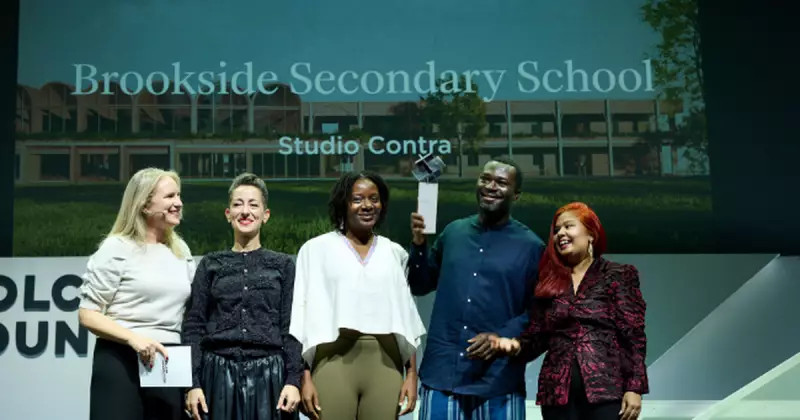
Studio Contra Makes History With Nigeria's First Holcim Prize Win
Nigerian architecture firm Studio Contra has achieved a groundbreaking milestone by becoming the first Nigerian practice to secure a major regional prize at the Holcim Foundation Awards for Sustainable Construction. This prestigious recognition places Nigeria firmly on the global map of sustainable building excellence.
Historic Achievement in Sustainable Design
The Lagos-based studio was named a 2025 Regional Winner for the Middle East and Africa region, standing out among just 20 winning projects selected worldwide. With a total prize pool of one million dollars, the Holcim Foundation Awards are widely regarded as one of the most respected global recognitions in sustainable construction, often described as the "Oscars" of the industry.
Studio Contra earned this honor for their innovative work on Brookside Secondary School in Asaba, Delta State. The project has been praised for its low-carbon design, thoughtful use of local materials, and comprehensive response to climate, community, and educational needs. This achievement represents more than just an award—it presents a transformative approach to how public buildings can be designed and constructed in Nigeria.
The Significance of Holcim Awards
The Holcim Foundation Awards is an international competition that celebrates projects shaping the future of sustainable construction. Held every two years, these awards are judged by independent juries comprising leading architects, planners, and engineers from around the world. Since their inception in 2004, the awards have maintained a consistent goal: to reward buildings that balance environmental responsibility, social impact, and economic viability.
For the 2025 edition, winners were selected by thirty-four independent jurors across five global regions, led by internationally recognized architects including Jeanne Gang, Sou Fujimoto, Lina Ghotmeh, and Kjetil Trædal Thorsen. Projects are assessed using four core objectives: creating better places, protecting the planet, supporting viable economies, and strengthening communities.
Inside Brookside Secondary School
Brookside Secondary School is designed as a twenty-building boarding campus located in Asaba, Delta State. While the layout appears calm and simple, the underlying concepts are meticulously considered. One of the project's defining features is its use of load-bearing clay bricks sourced directly from the construction site.
Instead of transporting materials from distant locations, the architects utilized the soil beneath the campus to produce bricks on-site. This innovative approach significantly reduces carbon emissions and construction costs while simultaneously supporting local production and craftsmanship.
The buildings incorporate traditional construction techniques such as brick vaults, arches, and "hit-and-miss" brickwork. These patterned walls facilitate natural airflow through the structures while providing essential shade and structural strength. Every design element serves a specific purpose, with the school employing passive cooling methods rather than relying on energy-intensive air-conditioning systems.
Thick brick walls absorb heat during daylight hours and release it gradually, while open courtyards and strategic ventilation pathways enable natural airflow. This intelligent design keeps classrooms comfortably cool while dramatically reducing energy consumption. The campus is strategically positioned near a natural brook and incorporates native plants, rainwater harvesting systems, and biodiversity-supporting landscaping.
Studio Contra's Commitment to Local Craft
Studio Contra is led by founders Olayinka Dosekun-Adjei and Jeffrey Adjei, whose professional experience spans Nigeria, the United Kingdom, Europe, and the United States. Despite their global exposure, their work maintains a strong focus on local context and long-term community impact.
For the Brookside Secondary School project, the team collaborated closely with local builders and artisans. Many of the brick-vaulting skills employed in the construction were fading from contemporary practice. By reintroducing these traditional techniques, the project has helped train workers, preserve valuable craft knowledge, and create sustainable employment opportunities.
This collaborative approach transforms construction into a participatory process rather than a top-down exercise, fostering community ownership of the educational space. The architects emphasize the project's symbolic importance for students, demonstrating to young Nigerians that high-quality, globally recognized buildings can be designed and built locally using indigenous materials and innovative ideas.
Implications for Nigeria's Building Future
Beyond the award itself, Brookside Secondary School raises crucial questions about construction practices in Nigeria. Clay brick construction offers numerous advantages including durability, fire resistance, and low maintenance requirements. Brick buildings can endure for decades without constant repairs, while their thermal mass helps regulate indoor temperatures and reduce electricity expenses.
In a nation confronting housing shortages, escalating construction costs, and climate challenges, these methods present practical alternatives to conventional approaches. These are not experimental concepts but proven techniques adapted to contemporary needs. Studio Contra's Holcim victory signals that sustainable, locally driven architecture can operate at scale and earn international respect.
For developers, policymakers, and emerging designers, this achievement demonstrates that the future of Nigerian building does not need to be imported—it can be cultivated from the ground up using local resources, skills, and innovation.