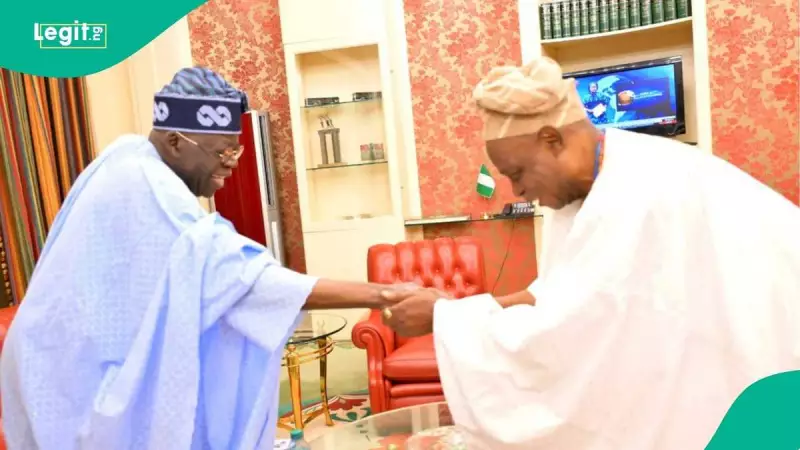
President Bola Tinubu welcomed the Olubadan of Ibadanland, Oba Rashidi Ladoja, at the presidential villa in Abuja on Friday, January 23, in a significant meeting that underscores the evolving dynamics of traditional leadership in Oyo State. The visit, confirmed through an official statement from Bayo Onanuga, the president's special adviser on information and strategy, highlights the intersection of politics and royalty in Nigeria.
Royal Leadership Rotation in Oyo State
This presidential engagement occurs against the backdrop of a notable shift in the Oyo State Traditional Council of Obas and Chiefs. Governor Seyi Makinde recently inaugurated Oba Ladoja as the chairman of this council at the House of Chiefs in Ibadan, following the passage of the Oyo State Council of Obas and Chiefs (Further Amendments) Bill, 2025 by the state assembly. This legislative move aims to fortify traditional institutions across Oyo.
Governor Makinde emphasized that the chairmanship will now rotate among three prominent monarchs: the Olubadan of Ibadan, the Alaafin of Oyo, and the Soun of Ogbomosoland. Each leader will serve a two-year term, promoting a balanced and inclusive approach to traditional governance. Oba Ladoja's tenure as chairman is set for the next two years, marking a new chapter in the council's leadership structure.
Public Reactions to the Presidential Meeting
Nigerians have expressed diverse opinions on the Olubadan's visit to President Tinubu, reflecting broader sentiments about traditional roles in contemporary politics. Social media commentary reveals a mix of respect, concern, and optimism.
One user, Omo Ogun, praised the mutual respect displayed between Tinubu and Ladoja, noting it as a contrast to perceived disrespect elsewhere. Hon. Salami Abiodun Usman commended the visit, highlighting the significance of Ibadan as Nigeria's largest city. PragmaticDB speculated that Tinubu might have special plans for Oyo State, citing recent meetings with Governor Makinde and now the Olubadan.
However, Tonnie lamented the politicization of traditional seats, arguing that monarchs now seek political favor rather than receiving traditional homage from subjects. Tunde Morakinyo expressed hope that this engagement signals upcoming developmental benefits for Oyo State, linking it to potential national projects.
Addressing Royal Tensions and Misunderstandings
The meeting also touches on ongoing royal dynamics, particularly between the Olubadan and the Alaafin of Oyo, Oba Abimbola Owoade. Earlier reports suggested tensions over the council's chairmanship, with claims that Oba Ladoja snubbed the Alaafin at a public event. Oba Ladoja clarified that this misunderstanding arose from social media misinterpretations, attributing it to his late arrival and seating protocols at the event in Ibadan.
This context adds depth to the presidential meeting, as it not only celebrates Oba Ladoja's new role but also addresses broader issues of unity and respect among traditional rulers. The rotational leadership model is seen as a step toward mitigating such conflicts and fostering collaboration.
In summary, President Tinubu's hosting of the Olubadan reflects a nuanced engagement with Nigeria's traditional institutions, set against reforms in Oyo State's royal council. Public reactions underscore the complex interplay of respect, politics, and hope for development, highlighting the enduring relevance of monarchs in shaping regional and national narratives.