Nigerian Muslim Woman Insists on Monthly Payment from Husband for Breastfeeding Duties
A Nigerian woman, Meerah Abdul, has ignited a significant conversation on social media and within family circles by declaring that she will not breastfeed her child without financial compensation from her husband. According to Meerah, who identifies as a Muslim lady, her spouse is obligated to pay her a monthly fee for the act of breastfeeding their infant. This demand extends even to the period of her pregnancy, highlighting her stance on the economic value of maternal care.
Islamic Principles and Maternal Labor Compensation
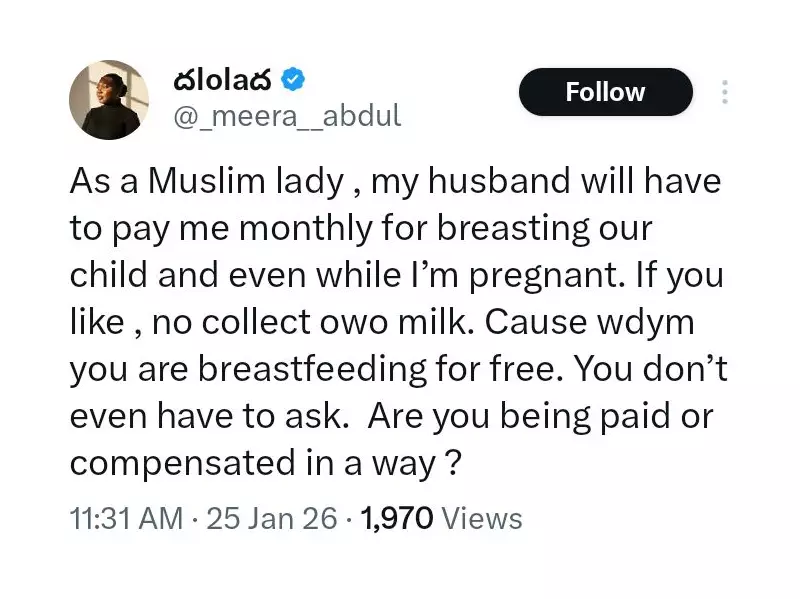
In a bold statement shared online, Meerah Abdul articulated her position clearly, writing, "As a Muslim lady, my husband will have to pay me monthly for breastfeeding our child and even while I’m pregnant." She further challenged other mothers by questioning the norm of unpaid breastfeeding, asking, "If you like, no collect owo milk. Cause wdym you are breastfeeding for free? You don’t even have to ask. Are you being paid or compensated in a way?" Her use of Nigerian Pidgin English, including terms like "owo milk" (money for milk), adds a cultural nuance to her argument, emphasizing the local context of her demand.
This declaration has resonated widely, tapping into broader discussions about gender roles, financial equity within marriages, and the interpretation of Islamic teachings regarding family responsibilities. In many Muslim communities, husbands are traditionally expected to provide for their families, but Meerah's specific call for payment for breastfeeding introduces a novel perspective on compensating women for their biological and caregiving labor.
Broader Implications for Nigerian Society
The issue raises important questions about the valuation of women's work in the home, particularly in a country like Nigeria where cultural and religious norms often shape family dynamics. Meerah Abdul's stance could influence ongoing debates about:
- Economic Empowerment: Recognizing and monetizing domestic and caregiving tasks performed by women.
- Legal Frameworks: How Islamic law and Nigerian civil law address spousal support and compensation for maternal duties.
- Social Norms: Challenging traditional expectations that women should provide breastfeeding and other care without direct financial acknowledgment.
By bringing this topic to the forefront, Meerah has not only shared a personal viewpoint but also sparked a necessary dialogue on the intersection of religion, culture, and gender economics in contemporary Nigeria. Her story, as reported by sources like Linda Ikeji on January 25, 2026, continues to generate reactions, with many weighing in on whether such payments should be normalized or remain a personal arrangement between couples.