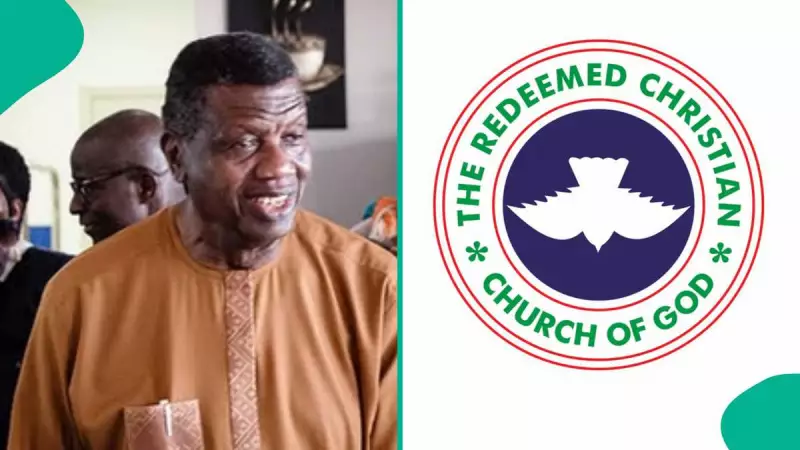
In a surprising revelation that has captured national attention, Pastor Enoch Adejare Adeboye, the General Overseer of the Redeemed Christian Church of God, has disclosed that he has participated in public protests only twice throughout his entire life.
The UNN Student Protest Experience
Speaking during a program on the RCCG Divine Encounter YouTube channel, the respected clergyman shared details about his first-ever protest experience. Pastor Adeboye revealed that his initial encounter with public demonstration occurred in 1964 while he was a student at the University of Nigeria, Nsukka, Enugu Campus.
The pastor explained the circumstances that led to his unexpected participation in the student protest. "Since I was born, I had carried placards only twice," Pastor Adeboye stated during the program. "First time, 1964 as a student of the University of Nigeria, Nsukka, Enugu Campus. I protested. I went on procession."
What made this protest particularly noteworthy was that Pastor Adeboye admitted he didn't fully agree with the protest's cause. However, the environment at the time left him with little choice. The organizing radicals ensured participation through intimidation tactics, visiting non-participants in their hostels with potentially violent consequences.
"Because the people who organised the protest are radicals. And if they say we are going on a procession and you don't join them, they come and meet you in your room or the hostel, God have mercy on you," he recalled. "So, even though I didn't quite agree with what they were protesting about, Nsukka is a bit far from Ifewara. I went to study, not to have my head broken. So when they said we go, I said yes sir, here we go."
Second Protest Against Christian Persecution
Pastor Adeboye's second protest experience came much later in his life, prompted by a different set of circumstances. This demonstration occurred when the Christian Association of Nigeria (CAN) president at the time instructed all churches to protest against the killings happening across Nigeria, particularly targeting Christians.
The Ebute Meta protest gained significant media attention, with television crews specifically covering Pastor Adeboye's participation. "The second time was some years ago, when the CAN president at that time said all churches should process round the streets where their churches are, protesting against killings going on in Nigeria; particularly against Christians," he explained.
What made this protest memorable was the personalized message Pastor Adeboye carried on his placard. "I went out, around Ebute Meta. It was in the news, if you go into the archives, you will see the television people, they came specially to cover me. And they focused on my placard," he shared. "If I knew a time like this would come, I would have kept a video. On my placard, I wrote, 'every soul is precious to God.' That's what was on my own placard and I carried it myself."
Context and Contemporary Relevance
The pastor's revelations came during a discussion about former US President Donald Trump's threat to send American troops to Nigeria. President Trump had claimed that Christian genocide was occurring in the country, prompting international concern and domestic discussions about religious persecution.
Pastor Adeboye's testimony provides valuable insight into his approach to social and political issues. His selective participation in protests demonstrates a measured approach to public demonstration, choosing to speak out only on matters of significant moral importance.
The RCCG leader's story also highlights the historical context of student activism in Nigerian universities, while his second protest experience reflects the ongoing concerns about religious violence in certain parts of the country.
With the Redeemed Christian Church of God having presence in 197 countries and territories worldwide and more than 5 million members in Nigeria alone, Pastor Adeboye's perspectives carry substantial weight within both religious and social circles.
His account serves as a reminder of the complex relationship between religious leadership, social activism, and political engagement in contemporary Nigeria, while also providing a personal glimpse into the early experiences that shaped one of Africa's most influential spiritual leaders.