A dramatic online dispute has erupted in Nigeria after a lady publicly countered a pastor's testimony, claiming he miraculously healed her mother of deafness. The incident, which unfolded on social media, has ignited conversations about authenticity and accountability within certain religious circles.
The Pastor's Claim of a Miraculous Healing
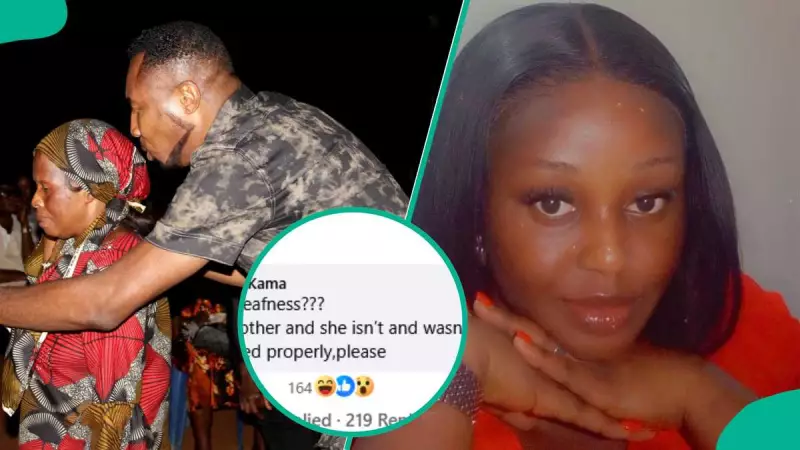
On Saturday, December 6, a pastor known as Sign Fireman took to his Facebook page to share a testimony from his Umuahia Big Miracle Invasion program. He posted pictures of a woman he had ministered to, claiming a profound miracle. According to his post, the woman had been instantly healed of deafness in her left ear after suffering for 36 years.
His caption read: "Instantly healed of 36 years deafness! DAY 1, UMUAHIA BIG MIRACLE INVASION — WITH SIGN FIREMAN. Details: The deafness was that of the left ear." The post was presented as a powerful account of divine intervention, typical of many shared from evangelical crusades across the country.
Daughter's Swift and Forceful Rebuttal
In a swift and surprising turn of events, a woman identified as Mba Amarachi Kama entered the comment section of the pastor's post to categorically deny the claim. She revealed that the woman in the photographs was her mother and stated that the entire premise of the testimony was false.
"36 years of deafness??? This is my mother and she isn’t and wasn’t deaf, ever! Let’s be guided properly, please," Amarachi wrote. She provided further clarification, explaining that her mother had only stepped forward during the program to receive prayer for a temporary pain in her left ear, not for deafness.
Amarachi strongly asserted that her mother never complained of being deaf and, crucially, never accepted any money to act or pretend to have such a condition. She emphasized that her mother was completely unaware of the Facebook post and its sensational caption. The daughter demanded that the page handler either edit the caption to reflect the truth or take the post down entirely.
Social Media Erupts with Mixed Reactions
The lady's comment sparked a flurry of reactions from other Facebook users, highlighting the divisive nature of the incident. Some commenters challenged Amarachi, questioning why she didn't refute the claim at the program if she was present and pointing out that other attendees had allegedly confirmed the mother's predicament.
One user, Jeremiah Sof, commented, "Please were you at the program, and if you were, why didn't you refute your mother's claim? Also, indigenes who know her at her market place, were around and mentioned that they knew her and her predicament."
Others expressed concern and urged caution. Pastor Franklin Chinaecherem Ekeledo advised, "Sign Fireman this is over 2 hours the daughter sent this comment here, how sure are we that the woman was not paid or mentally ill... plz let's be mindful of what we young ministers are doing here." Some demanded more proof, like a photo of Amarachi with her mother, while others cautioned about legal implications and the existence of video evidence from the event.
Broader Context of Questionable Miracles
This controversy touches on a recurring theme in Nigerian social and religious discourse. The report references a related story where a former pastor confessed to conducting fake miracles, shedding light on potential mechanisms behind such claims.
Furthermore, it recalls a recent viral incident involving Prophet Ebuka Obi of the Zion Prayer Movement Outreach. A woman who testified in his church about owning a N500 million house was later found selling drinks in Enugu, leading the prophet to deny knowing her and state she "lied against God and the altar." These episodes collectively raise significant questions about the verification of public testimonies in fast-paced religious settings.
The clash between Pastor Sign Fireman's miracle narrative and Mbah Amarachi Kama's factual correction underscores a critical tension between faith promotion and factual integrity. It serves as a public reminder of the powerful role social media now plays in holding public figures accountable, allowing direct challenges from individuals who were previously mere subjects in larger stories.