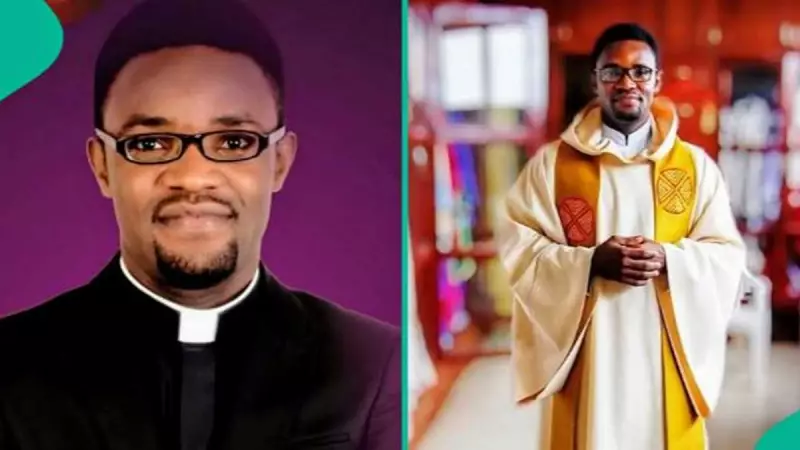
A Nigerian Catholic priest has ignited a fiery debate on social media after he strongly criticized the growing trend of participating in online prayer gatherings, labeling them as spiritually ineffective.
Priest's Blunt Condemnation of Virtual Prayers
In a detailed post on his verified Facebook account on December 4, 2025, Reverend Father Kelvin Ugwu expressed his strong disapproval of the virtual prayer sessions that attract large audiences every morning and evening. He argued that these sessions offer no real spiritual nourishment and serve primarily as dramatic performances.
Fr Ugwu claimed that such routines merely stimulate physical activity—exercising the jaws, legs, hands, and head—without fostering any genuine connection with God. He insisted that the loud declarations and continuous cries against unseen forces only deepen people's belief in imaginary threats rather than strengthening their divine relationship.
Commercial Ventures and Contradictions Exposed
The priest further alleged that many individuals leading these online sessions are running them as commercial ventures. He accused these figures of positioning themselves as spiritual solution providers while relying on fear-based messages to keep audiences engaged.
"They open shop or stage every morning and evening, then invite you to patronize them after convincing you that they have the solution to a problem they first created in your head," Fr Ugwu wrote in his post.
He also pointed out what he described as contradictions in the behavior of some popular ministers. He observed that although they regularly proclaim victory over evil forces during their sessions, they continue to surround themselves with armed security personnel and protective vehicles, which he saw as a stark contrast to their public proclamations.
Mixed Reactions from Social Media Users
The priest's post drew immediate and mixed reactions from Nigerians who flooded the comments section with diverse opinions.
One user, Rosemary, defended her participation, stating: "I am happy joining those prayers and at same time book mass steadily and attend mass. But you see some of those prayers are really edifying and are not just meeting our needs but also exceeding it."
Ekene Oliver offered a more balanced perspective, noting: "I know the Church strongly encourages solemn prayer filled with meditation... Yet, the Church does not cancel or reject spontaneous acts of worship and charismatic vocal prayer."
Another commenter, Adika Okoli, provided theological insight: "Well, demons can't be killed because they are pure spirits, no matter the way you say prayers for demons to die, they can only be driven away, not killed."
John Abah summarized his understanding of the priest's message: "What I understand from the post is that, if the prayer you join online is aimed at shouting and killing demons, then they are useless because demons are spirits and they can't die."
Fr Ugwu concluded his controversial post with a firm stance: "To be clear, you can remain in your foolishness, no wahala. But don’t say you were not told." The discussion continues to resonate across Nigerian social media platforms, highlighting ongoing conversations about faith, tradition, and modern religious practices.