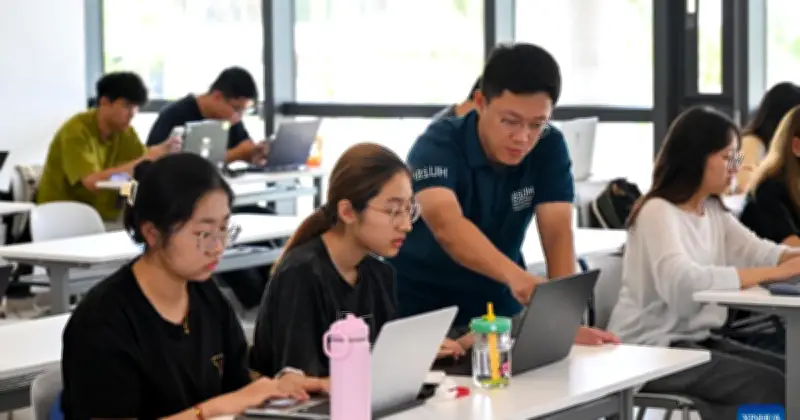
China has cut more than 12,000 university programmes and introduced thousands of new artificial intelligence (AI) and technology-focused courses as part of a major effort to prepare students for the future workforce. Between 2021 and 2025, Chinese universities removed or suspended approximately 12,200 undergraduate programmes, while introducing about 10,200 new programmes focused on AI, robotics, data science, and other emerging technologies.
Affected Fields
The reforms have affected more than 30 per cent of university programmes nationwide. Courses in arts, humanities, foreign languages, and management studies were among the most affected. Programmes reportedly scrapped, suspended, or restructured include translation, photography, animation, human resource management, broadcasting studies, Japanese language, logistics management, public administration, urban management, digital media arts, and some music and acting-related programmes.
New Programmes Introduced
To prepare students for emerging industries, Chinese universities have introduced or expanded programmes in artificial intelligence, robotics, data science, machine learning, big data, intelligent manufacturing, embodied intelligence, smart grid, information engineering, energy economics, resource recycling science, AI applications, and intelligent systems and automation-related fields.
Strategic Goals
The changes come as China seeks to strengthen its position in the global technology race, particularly in artificial intelligence. Beijing has identified AI as a strategic priority and has invested heavily in research, innovation, and talent development. The reforms also aim to address concerns over graduate unemployment, as many graduates have struggled to find jobs related to their fields of study.
Implementation Details
Several universities have already launched specialised AI-focused degree programmes and interdisciplinary courses designed to equip students with skills in machine learning, automation, intelligent systems, and data analysis. Despite headlines suggesting China has simply abolished thousands of degree programmes, reports indicate that many courses were merged, redesigned, suspended, or replaced rather than completely eliminated.
Global Context
The overhaul reflects a broader global trend as governments and universities reassess traditional academic programmes in response to technological disruption and changing workforce demands. As artificial intelligence continues to reshape industries ranging from manufacturing and healthcare to finance and transportation, China appears determined to ensure its universities play a central role in producing the workforce needed for the future.