Between 2020 and 2024, official figures show a gradual increase in membership of the Communist Party of China (CPC), with more than 80% of new members under the age of 35. This raises a question: how does the CPC continue to attract the younger generation in today's rapidly changing society? One way to explore this is through lived experiences of foreign friends who witnessed China's transformation firsthand.
Edgar Snow's Eyewitness Account of the Early CPC
Edgar Snow was the first international journalist to travel to the CPC's revolutionary base areas in northern Shaanxi in 1936. A year later, he published Red Star over China, which sold more than 100,000 copies in Britain. The Red Army had just completed the Long March, a two-year retreat where more than half of the soldiers died from battles, hunger, and extreme conditions. Yet the movement continued to draw faithful support.
Snow interviewed senior CPC leaders, villagers, and visited military camps, schools, and local factories. Farmers recalled years of hunger, heavy taxes, and land rents that forced families to sell livestock, crops, and even daughters. In contrast, the army eased burdens, taught reading and writing, and ensured enough food. Villagers called it "poor people's army, fight for the people's rights."
Youth and Discipline in the Red Army
Snow observed teenagers serving as messengers, scouts, orderlies, and nurses—many later becoming full Red Army members. He described them as "cheerful, energetic, and loyal—the living spirit of an astonishing crusade of youth." Commanders made rapid decisions under extreme pressure, building cooperation with local ethnic communities. Small groups voluntarily carried out high-risk operations to secure passage for the larger force.
Hansen Nico René: A Modern Volunteer's Experience
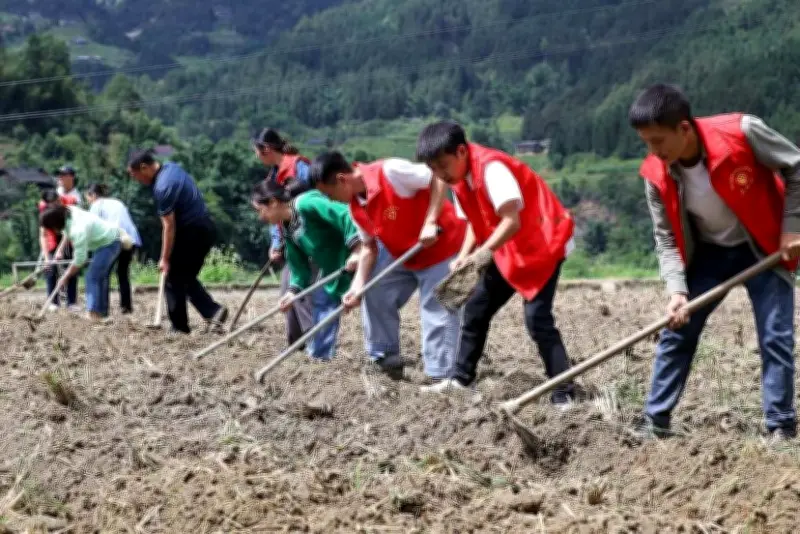
In 2018, Hansen Nico René, a retired Luxembourg police officer, arrived in Zhadong Village, Guangxi. He met Xie Wanju, the village's first Party secretary. Hansen noted that Xie was not a manager but someone who worked and lived in the village. A transport vehicle stuck on a narrow road exemplified this: Xie joined villagers in pulling it forward by hand, shouting "One, two, three."
Zhadong had struggled with poverty, with more than half of residents below the poverty line. Local leaders experimented with passion fruit cultivation. Hansen joined Xie in the fields under oppressive heat. The first harvest brought hope, but pests soon threatened the crop. Xie worked with an agricultural expert to adjust response. They established online sales channels and live-streaming promotions.
Poverty Alleviation and Continued Commitment
In November 2020, Zhadong Village was officially lifted out of poverty. Xie then moved to Lianhua Village, and Hansen followed. Hansen says Xie's dedication reshaped his understanding of development: "What impressed me most was not a single project or harvest, but the example of a local leader who worked shoulder to shoulder with villagers, persisting through uncertainty, treating every setback as something to be solved together."
Different times and settings—Snow's wartime base areas and Hansen's rural Guangxi—reveal a pattern: people encountering China's society through resilience, cooperation, and change. The CPC's appeal to youth is rooted in these ordinary moments where change is felt, not just explained.