Systemic reforms reshape Kwara’s basic education sector
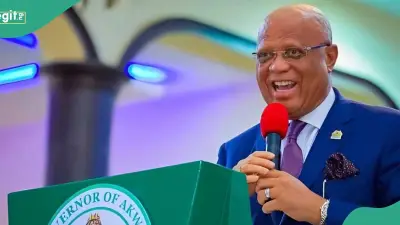
When Governor AbdulRahman AbdulRazaq took office in 2019, Kwara State’s basic education system was burdened by unpaid counterpart funding that had blocked access to federal matching grants from the Universal Basic Education Commission (UBEC). The administration quickly cleared these obligations, unlocking millions in federal intervention funds that catalyzed the rehabilitation of public schools across the state.
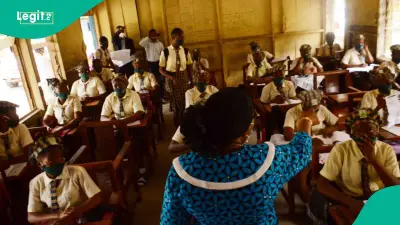
Beyond financial recovery, the government introduced transparent, merit-based teacher recruitment through Computer-Based Testing, hiring thousands of qualified educators while implementing the new national minimum wage. To ease economic pressure on families, unofficial levies imposed by school-based structures were abolished, and direct running grants were introduced to support daily school operations and maintenance.
KwaraLEARN: A flagship programme for foundational learning
Central to the reform is KwaraLEARN, which addresses the gap between school attendance and actual literacy and numeracy. The programme combines structured lesson plans, learning materials, teacher training, continuous coaching, and data-driven assessments. By 2023, over 6,000 teachers had been trained, and more than 1.2 million textbooks and digital tablets were distributed across 1,578 primary schools.
Recognizing that digital platforms cannot replace functional physical environments, the administration paired KwaraLEARN with major infrastructure upgrades. In 2025, a ₦20 billion commitment was announced for school remodelling, laboratories, libraries, and sanitation facilities. The Kwara State School for Special Needs was upgraded, and welfare support was introduced for visually impaired students at Queen Elizabeth Secondary School, reinforcing a focus on inclusive education.
National and international recognition
The scale of these interventions has drawn praise from multiple quarters. The Leadership Newspaper Governor of the Year Award highlighted the administration’s basic education interventions, UBEC funding recovery, gender inclusion, and human capital development. The Nigeria Union of Teachers commended the government’s approach to teacher welfare, merit-based recruitment, and professional development. The National Excellence Awards in Public Service (NEAPS) also recognized progress in infrastructure and human capital development.
UNICEF praised Kwara for reaching over 55,900 learners through the Nigeria Learning Passport—more than 280% above the original target of 20,000 learners. The agency attributed this achievement to the governor’s commitment to education technology and human capital development. At the global level, the structured pedagogy approach underpinning KwaraLEARN aligns with interventions highlighted by the World Bank’s Global Education Evidence Advisory Panel as cost-effective strategies for improving foundational learning.
Improved academic outcomes and global exposure
The reforms are yielding measurable results. In 2024, Governor AbdulRazaq celebrated 31 Kwara public school pupils who scored above 300 in the Unified Tertiary Matriculation Examination (UTME), led by Samuel Oluwasemilore with a score of 358. In 2025, Jimoh Abdulmalik Olayinka scored 373, ranking among Nigeria’s top performers nationwide. Beyond written exams, Kwara pupils have excelled in debating, winning the International Junior Secondary School Debate Championship in Malaysia. Each winner received ₦2 million from the governor, and other pupils have represented Nigeria at international competitions.
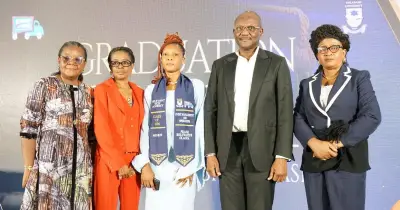
To sustain progress, the government institutionalized the Kwara State Education Trust Fund to drive public-private funding and expand opportunities for disadvantaged pupils, including scholarships for those gaining admission to Federal Unity Colleges. The establishment of the Kwara State University of Education and efforts to strengthen tertiary institutions aim to ensure a steady pipeline of trained educators and skilled professionals.
A cohesive philosophy beyond politics
These interventions reflect a cohesive philosophy: not simply renovating buildings but renovating the system; not merely deploying technology but using data to improve learning; not just increasing enrolment but ensuring every child acquires competitive skills. Education remains a continuous project, with challenges around infrastructure demands and learning poverty. Yet the evidence of a deliberate structural shift is clear. From KwaraLEARN to classroom rehabilitation, merit-based teacher recruitment to direct running grants, UBEC recovery to international recognition, Governor AbdulRahman AbdulRazaq’s agenda represents a move from fragmented fixes toward a coherent system of human capital development.
The ultimate test lies not in official bulletins or awards but in the lives of children. If a struggling reader becomes confident, a teacher gains support, a dilapidated classroom becomes safe, and a bright child from an ordinary home competes on a national or international stage, then education has moved beyond politics. It has become opportunity. That, according to public affairs analyst Kabir Olayinka, is the enduring story of Kwara’s education transformation: making quality education a foundation for every child’s future.