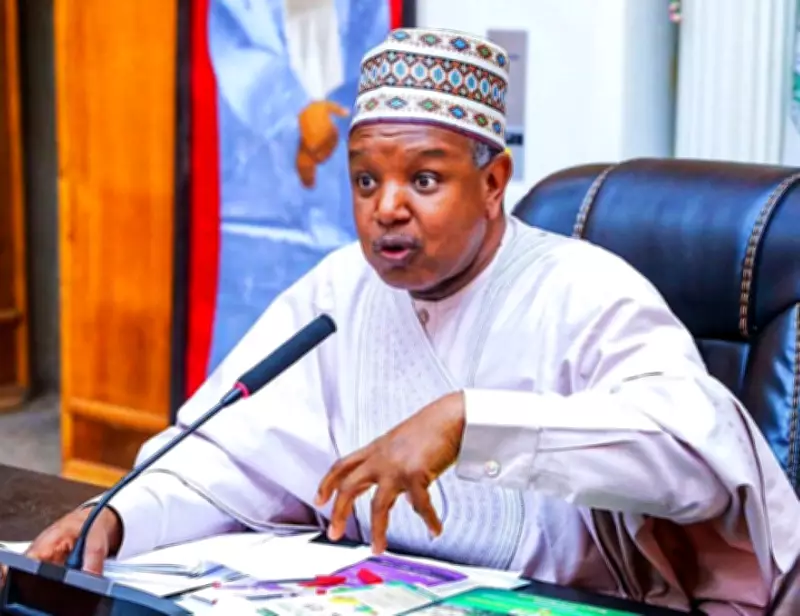
Minister Bagudu: Youth Must Grasp Conflict Drivers to End Insurgency in Nigeria
The Minister of Budget and Planning, Abubakar Atiku Bagudu, has declared that defeating insurgency and violent crime in Nigeria requires the country's youthful population to deeply understand the underlying drivers of conflict. Speaking at a workshop in Abuja to revise the first-ever National Action Plan on Youth, Peace and Security, Bagudu highlighted persistent challenges despite government efforts.
Identifying Key Factors in Violent Extremism
Bagudu pointed to convoluted and senseless religious messaging, along with a widespread lack of comprehension regarding conflict drivers, as primary reasons why violent extremism continues to thrive. He expressed concern over how AK-47 rifles and other weaponry end up in the hands of non-state actors, given that Nigeria does not manufacture such arms. This underscores the complex nature of security threats facing the nation.
Proposed Solutions Through Education and NYSC
To address these issues, the Minister advocated for utilizing the National Youth Service Corps (NYSC) as a critical platform to educate young people on both primary and secondary drivers of conflict. He emphasized that this approach aims to permanently resolve these challenges by fostering awareness from an early stage. Additionally, Bagudu recommended reviewing higher education curricula to incorporate conflict drivers, particularly within General Studies divisions, ensuring that academic institutions contribute to peacebuilding efforts.
Youth as Agents of Change
Bagudu stressed that many youths lack opportunities to reflect on peace and security, often failing to see themselves as both victims and potential actors in conflict prevention. "During my time as governor, I consistently observed that many young people could not articulate or explain the drivers of conflict in their communities," he said. "If they do not understand these drivers, or if they make assumptions about them, they cannot effectively contribute to solutions." He highlighted that peace and security are essential prerequisites for national development, urging a collective effort to enhance understanding across communities.
Role of Religious Leaders and Societal Strategy
The Minister noted the significant influence of religious leaders, whether Muslim or Christian, whose messaging can either mislead or guide communities. He aligned this with President Bola Tinubu's whole-of-society governance strategy, which recognizes that sustainable solutions require active participation from all sectors, especially young people. Bagudu encouraged youth to become agents of change through education, social engagement, sports, and civic collaboration, building trust across religious and ethnic lines to replace conflict with cooperation.
External Influences and Historical Context
Bagudu also addressed external factors such as land pressure, resource scarcity, and armed groups exploiting vulnerable areas, emphasizing that understanding these dynamics is crucial for empowering youth to prevent and resolve conflicts constructively. He praised the Search for Common Ground organization for its role in defining and communicating conflict drivers, promoting a shared understanding that fosters harmony and inclusivity in Nigeria.
Support from Other Officials
The Minister of Youth Development, Ayodele Olawande, represented by Senior Aide Tayo Olosunde, stated that the workshop provided an opportunity to assess Nigeria's progress in implementing the National Action Plan and explore ways to advance it further. He stressed the importance of finding common ground when conversations escalate into conflicts.
Permanent Secretary Dr. Maryam Keshinro, represented by Director Despan Kwarden, highlighted that the workshop is part of a framework engaging youth as vanguards of peace and security. She referenced initiatives like the Civilian Joint Task Force in Maiduguri and peace vanguards established in universities since 2008, aligning with the plan's community-based collaboration philosophy.
Forward-Looking Plans and Global Context
Saji Frelis, Global Director of Children and Youth Programmes at Search for Common Ground, noted that Nigeria was the first African country to develop a National Action Plan on Youth, Peace and Security. He described the current meeting to produce a second plan as forward-looking, emphasizing the need for an intergenerational and impact-focused approach. "Today, the world is changing rapidly, and Nigeria has another opportunity to demonstrate leadership and innovation by developing a National Action Plan that is collaborative, impact-oriented, and measurable over time," Frelis said.