Many African countries still use their colonial names, but several have changed them after independence to honor and preserve their indigenous heritage, geography, and independence. Names carry deep symbolic meaning; in Yorubaland, names are believed to shape one's destiny. Colonial rule swept across Africa in the late 19th and 20th centuries, with European powers renaming lands. Upon gaining independence, many nations shed these colonial titles, which often evoked painful memories of exploitation and foreign domination. By renaming themselves, they reclaimed their history and adopted names reflecting their own cultures and landmarks. As of 2026, here are African countries that have renamed themselves since the colonial era.
1. eSwatini (formerly Swaziland)
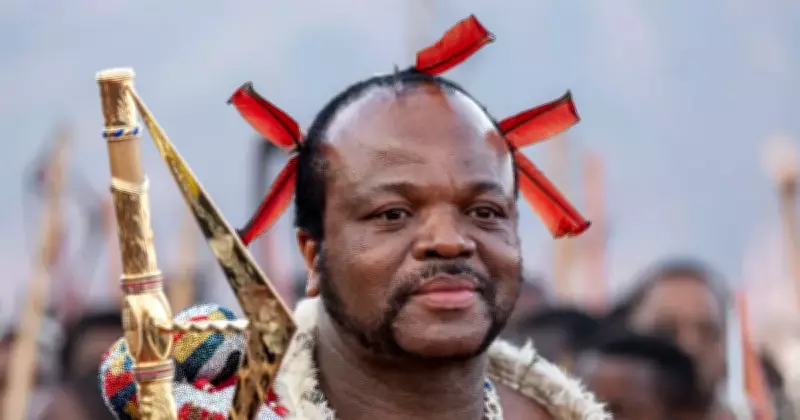
In 2018, King Mswati III officially changed the country's name from Swaziland to the Kingdom of eSwatini. The goal was to return to the original local name and prevent international confusion with Switzerland.
2. Cabo Verde (formerly Cape Verde)
In 2013, the government requested the use of the Portuguese name 'Cabo Verde' instead of the English translation, standardizing the country's official identity on the global stage.
3. Namibia (formerly South-West Africa)
Under South African administration, the country was known as South-West Africa. Upon independence in 1990, it adopted the name Namibia, inspired by the Namib Desert, a neutral choice avoiding favoritism toward any ethnic group.
4. Burkina Faso (formerly Upper Volta)
Known as Upper Volta under French rule, the country was renamed in 1984 by leader Thomas Sankara. 'Burkina Faso' combines two local languages to mean 'the land of upright and honest people.'
5. Zimbabwe (formerly Southern Rhodesia)
The colonial name 'Rhodesia' came from British imperialist Cecil Rhodes. After a long struggle for independence, the nation became Zimbabwe in 1980, named after the ancient stone city of Great Zimbabwe.
6. Benin (formerly Dahomey)
Fifteen years after independence from France, the country changed its name from Dahomey to Benin in 1975. The name represents the Bight of Benin, a body of water bordering many diverse regions.
7. Zambia (formerly Northern Rhodesia)
Zambia shed its colonial name in 1964. The new name was inspired by the Zambezi River, a major geographical landmark and vital water source.
8. Botswana (formerly Bechuanaland)
Formerly a British protectorate called Bechuanaland, the country became Botswana in 1966. The name reflects the Tswana people, the largest ethnic group.
9. Lesotho (formerly Basutoland)
When the British protectorate of Basutoland gained independence in 1966, it became Lesotho, which translates to 'the land of the Sotho people.'
10. Malawi (formerly Nyasaland)
In 1964, the British colony of Nyasaland became Malawi. The name is believed to come from the 'Maravi' empire or the word for 'flaming waters,' referring to sunsets over Lake Malawi.
11. Democratic Republic of the Congo (formerly Zaire)
This nation has seen several identity changes. It was the Belgian Congo until 1960, renamed Zaire in 1971 under Mobutu Sese Seko, and reverted to the Democratic Republic of the Congo in 1997.
12. Ghana (formerly Gold Coast)
The British named this region the Gold Coast due to rich mineral deposits. When it became the first sub-Saharan colony to gain independence in 1957, it chose Ghana to honor a powerful ancient West African empire.
13. Mali (formerly French Sudan)
In 1960, French Sudan gained independence and adopted the name Mali to link the new nation to the historic Mali Empire, a center of wealth and education.
14. Tanzania (formerly Tanganyika and Zanzibar)
Tanzania is a unique case of a name born from a merger. In 1964, the mainland (Tanganyika) and the islands (Zanzibar) joined together, combining the first three letters of each territory to create 'Tan-zan-ia.'
15. Djibouti (formerly Afars and Issas)
Before independence from France in 1977, this territory was known as the French Territory of the Afars and Issas. It was renamed Djibouti after its capital city and primary port.
16. Equatorial Guinea (formerly Spanish Guinea)
Formerly a colony of Spain, the country changed its name from Spanish Guinea to the Republic of Equatorial Guinea upon independence in 1968, highlighting its unique geography.
17. Guinea-Bissau (formerly Portuguese Guinea)
After a long war for independence from Portugal, the country became Guinea-Bissau in 1974. It added 'Bissau' (the capital) to distinguish itself from neighboring Guinea.