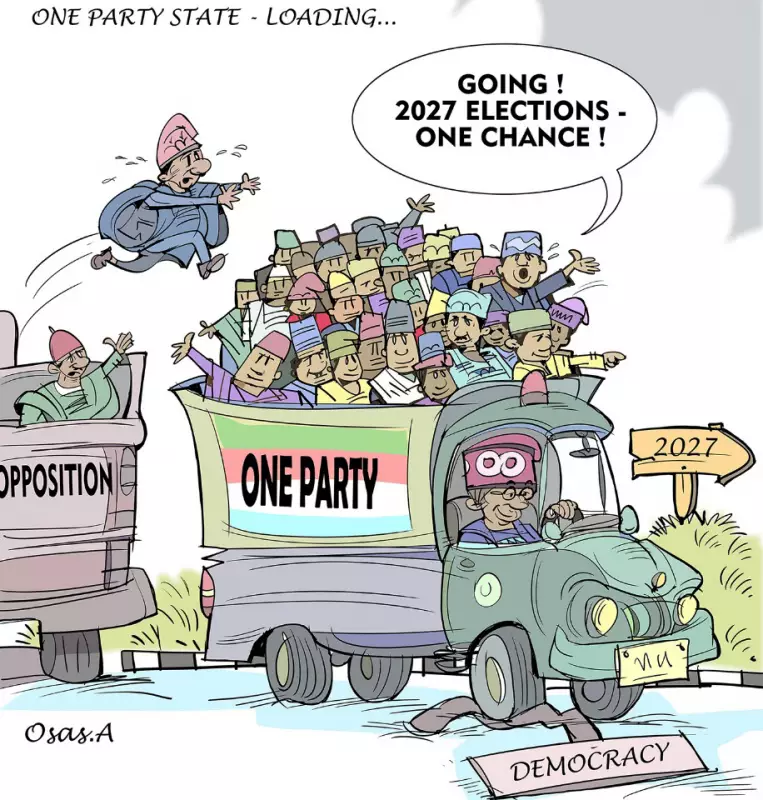
Guardian Nigeria, one of the country's leading newspapers, has once again demonstrated the power of visual journalism through its latest editorial offering, Cartoon 497. This thought-provoking piece continues the publication's long tradition of using artistic expression to comment on Nigeria's evolving social and political landscape.
The Art of Social Commentary Through Cartoons
Editorial cartoons have long served as a powerful medium for social and political commentary in Nigerian journalism. Unlike lengthy opinion pieces or complex analyses, these visual representations can instantly convey complex messages that resonate with readers across different educational backgrounds. The Guardian has consistently maintained this tradition, with Cartoon 497 representing the latest in this important lineage of visual storytelling.
The timing and placement of such cartoons within Nigeria's media landscape is particularly significant. Published in a nation where freedom of expression sometimes faces challenges, editorial cartoons provide a subtle yet effective way to critique authority and highlight societal issues. They serve as both entertainment and education, making complex political situations more accessible to the average reader.
Analyzing the Visual Language of Cartoon 497
While the specific visual elements of Cartoon 497 are best appreciated by viewing the original artwork, the cartoon follows the established conventions of quality editorial cartooning. The artist employs symbolic imagery, exaggerated features, and contextual references that would be immediately recognizable to regular readers of Nigerian newspapers.
What makes editorial cartoons particularly effective in the Nigerian context is their ability to transcend language barriers. In a country with numerous ethnic groups and languages, visual satire can communicate universal messages that might be lost in translation through written text alone. The cartoon likely addresses current events that have dominated Nigerian headlines, using metaphor and symbolism to provide commentary without explicit condemnation.
The artistic style appears consistent with The Guardian's established visual identity for its editorial cartoons. This consistency helps build reader familiarity and trust, allowing the publication to maintain its credibility while delivering sometimes controversial perspectives on national issues.
The Enduring Impact of Editorial Cartoons in Nigerian Media
Editorial cartoons represent an important aspect of Nigeria's democratic development. They provide a safety valve for societal frustrations while holding leaders accountable through satire rather than direct confrontation. This approach has proven particularly valuable in Nigeria's sometimes volatile political environment, where more direct criticism might invite unnecessary controversy.
The continued publication of such cartoons by established media houses like The Guardian demonstrates the resilience of press freedom in Nigeria. Despite various challenges facing the media industry, including economic pressures and occasional political interference, the commitment to this form of commentary shows that important voices continue to find expression through established channels.
Readers have come to expect and appreciate this form of journalism, which often provides much-needed perspective on events that might otherwise seem overwhelming or incomprehensible. The cartoon serves not just as criticism but as a form of civic education, helping citizens understand complex issues through simplified visual representations.
The tradition of editorial cartooning in Nigeria dates back to the colonial era and has evolved alongside the country's political development. Today's cartoons, including Cartoon 497, build upon this rich history while addressing contemporary concerns that affect ordinary Nigerians. They represent a bridge between the country's journalistic past and its digital future.
As Nigeria continues to navigate various challenges—from economic reforms to security concerns—the role of editorial cartoons in shaping public discourse remains crucial. They provide a unique combination of entertainment, information, and critique that few other journalistic formats can match, ensuring their continued relevance in the nation's media landscape.