Frank Edoho Issues Legal Threat Over Defamatory HIV Allegations on Social Media
Prominent media personality Frank Edoho has taken a firm stance against defamatory comments made about him on the social media platform X, formerly known as Twitter. The controversy erupted after an X user posted highly damaging and unsubstantiated claims, including allegations that Edoho is living with HIV and has infected multiple women with the virus.
Background of the Social Media Dispute
The situation began when Frank Edoho faced criticism from some X users after he advertised a betting platform. Amid the backlash, one particular user escalated the conflict by making a series of severe and defamatory statements. In a now-viral post, the user accused Edoho of being a "nuisance to society," a "wife beater," a "serial husband," and an "HIV carrier." The user further claimed that Edoho had "infected 5 women with HIV" and had numerous children he could not care for, adding a derogatory comment about antiretroviral drugs.
Frank Edoho's Strong Response
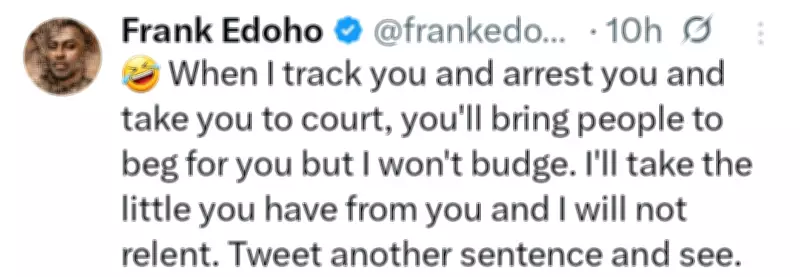
In response to these allegations, Frank Edoho did not hold back. He directly addressed the user with a stern warning, indicating his intention to pursue legal action. Edoho wrote on X, "When I track you and arrest you and take you to court, you'll bring people to beg for you but I won't budge. I'll take the little you have from you and I will not relent. Tweet another sentence and see." This statement underscores his determination to hold the individual accountable for the defamatory remarks, potentially seeking damages or other legal remedies.
Implications for Online Behavior and Defamation
This incident highlights the growing issue of online defamation and the serious consequences it can entail. In Nigeria, as in many countries, making false and harmful statements about someone, especially regarding health conditions like HIV, can lead to legal liabilities under defamation laws. Edoho's threat of legal action serves as a reminder that social media users must exercise caution and responsibility in their posts to avoid spreading misinformation and causing reputational harm.
The case also reflects the broader challenges public figures face in managing their online presence, where negative comments can quickly escalate into viral controversies. As social media platforms continue to evolve, incidents like this emphasize the need for robust measures to combat cyberbullying and defamation while protecting individuals' rights to privacy and reputation.