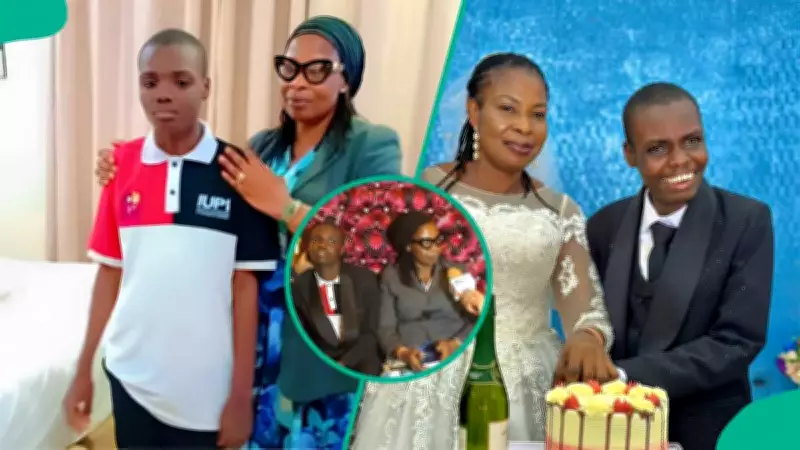
A Nigerian woman who recently married the autistic son of Apostle Chibuzor, the founder of Omega Power Ministry, has reintroduced herself in a trending video that has captured widespread attention online. The video, which surfaced on social media platforms, shows the woman being asked to introduce herself, and she confidently shares both her former name and her new name following the marriage ceremony.
Details of the Viral Video and Public Reaction
In the video, the woman explains her identity transition, highlighting the personal significance of her marriage to the autistic individual. This act has ignited a flurry of reactions across various online communities, with some users criticizing the union, while others have flooded the comments section with congratulatory messages and expressions of support for the couple.
Background on the Marriage and Omega Power Ministry
The marriage took place under the auspices of Omega Power Ministry, a prominent religious organization in Nigeria led by Apostle Chibuzor. The woman's decision to marry an autistic member of the ministry has brought attention to issues of inclusivity and acceptance within religious and societal contexts in Nigeria.
Public discourse surrounding the event has been polarized, with debates emerging about the motivations behind the marriage and the broader implications for individuals with autism in Nigerian society. Supporters argue that the union promotes love and understanding, whereas critics question the circumstances and potential exploitation.
Impact on Social Media and Online Engagement
The video has trended extensively, contributing to ongoing conversations about disability rights, marriage norms, and the role of social media in shaping public opinion. The woman's reintroduction has served as a focal point for these discussions, with many users sharing the clip to express their views and engage in dialogue.
As the story continues to unfold, it underscores the power of digital platforms in amplifying human interest stories that resonate with diverse audiences. The incident also reflects broader trends in Nigerian media, where personal narratives often intersect with social and cultural issues, prompting reflection and debate among the public.