A recent social media disclosure by a prominent Nigerian LGBTQ advocate has brought to light a personal quest that underscores the complex social pressures faced by the community. The activist revealed that a gay businessman from Anambra State is actively seeking a lesbian partner for a marriage of convenience.
The Social Media Revelation
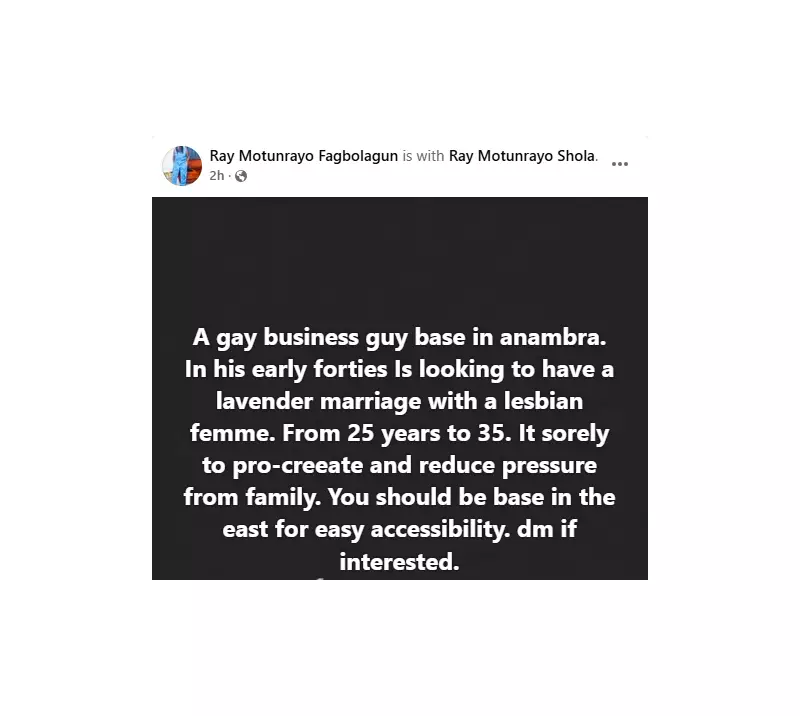
On Friday, December 5, 2025, activist Motunrayo Fagbolagun shared a detailed post on her Facebook page. She outlined the specific request from a gay male resident of Anambra State. According to her post, the man is in his early forties and is looking to enter into what is commonly termed a lavender marriage.
The primary motives cited were explicitly for procreation and to reduce immense pressure from his family. Fagbolagun specified that the ideal partner would be a lesbian femme between the ages of 25 and 35. For logistical ease, she noted a preference for the woman to be based in the eastern part of Nigeria.
Understanding the Lavender Marriage Dynamic
This arrangement highlights a stark reality for many LGBTQ individuals in Nigeria, where societal and familial expectations to marry and produce children remain intensely powerful. A lavender marriage, a union between a gay man and a lesbian woman, often serves as a facade to conform to these traditional norms while allowing both parties to live their authentic lives privately.
The businessman's request is not an isolated phenomenon but a documented strategy within communities facing similar legal and social hostility. Nigeria's Same-Sex Marriage (Prohibition) Act of 2014 imposes severe penalties, driving such relationships further underground and fostering these types of covert arrangements.
Public Reaction and Broader Implications
The Facebook post did not go unnoticed. It quickly generated significant discussion in the comments section. Notably, several women expressed interest in the proposition, indicating that the appeal for such pragmatic partnerships is mutual among some lesbians facing identical societal pressures.
This incident opens a window into the difficult compromises LGBTQ Nigerians are forced to consider. It raises critical questions about autonomy, family duty, and survival in a climate where open identification can lead to discrimination, violence, or legal prosecution. The search for a lavender marriage is, for some, a calculated response to navigate an unforgiving social landscape.
While the immediate goal is to ward off family pressure and have children, such arrangements also carry emotional and legal complexities for all involved. The story, as shared by Motunrayo Fagbolagun, continues to resonate as a poignant example of the lengths to which individuals will go to find a balance between personal truth and societal expectation.