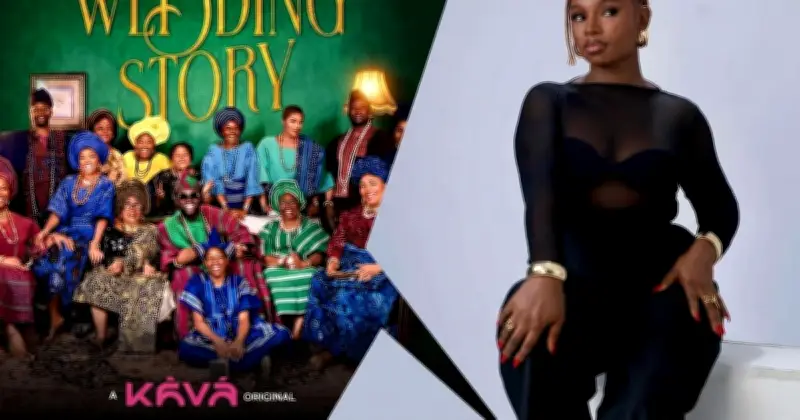
Brooks Eti-Inyene, the screenwriter behind Africa's first Kava Original, "A Mama Deola Wedding Story," has opened up about the journey of writing the film, the challenges of working solo, and her belief that Nollywood screenwriters are underpaid and underrecognized. In a recent interview, she also predicted that skit makers could soon hold significant power in the Nigerian film industry.
Writing Solo on a Large-Scale Project
Eti-Inyene spent months transforming Mama Deola, a character known from 60-second online skits, into a character capable of carrying a feature film. She described the project as one of the biggest of her career, noting that it was the first time she had written something with so many characters. Unlike a TV series, which is typically written by a team, she wrote this film alone.
"I've been writing consistently for two years, but nothing this huge," she said. "It's also huge because I'm the first person to ever write a Kava Original; the very first one released was written by me. That's a big step in my career, and it makes me feel like I'm finally headed in the right direction."

Balancing Comedy with Deeper Themes of Love and Forgiveness
The film, which began with Folagade urging viewers to take lessons from the story, balances laugh-out-loud moments with more profound messages. Eti-Inyene explained that beneath the comedy, Mama Deola's story is fundamentally about love. She aimed to present the realities of love rather than the fantasy, though she acknowledged love always has a little delusion in it.
"The theme of forgiveness (estranged people finding their way back to each other), I treated those with a lot of tenderness because I care about it," she said. "If you look closely, the two lead characters' love mattered more than the drama around them, and there's actually a second love story happening with the parents too. I hope people noticed that. I don't think love stories will ever go out of style."
A Dual Love Story and the Fight to Keep It
One aspect Eti-Inyene is particularly proud of is the dual love story. Originally, the film was only meant to focus on the young lovers—the son and his fiancée. However, she asked herself if the couple could also find a way to bring their parents back together. This idea became central to the film.
"The intention was to tell a dual love story, because when you're at a wedding, preparing for a marriage ceremony, you unconsciously reflect on your own love life," she explained. "So the parents sit back and think about their own mistakes, how they rushed things, how they projected onto each other. That's something I really fought to keep in the film, and I hope people saw it."
Discovering the Kava Original Status
Interestingly, Eti-Inyene did not know she was writing Africa's first Kava Original while she was working on it. The initial conversations were simply about creating something great. She was clear it wasn't for YouTube after the first conversation, but there were only hints that it was for a bigger platform. She learned the full scope much later as she delivered more drafts.
"When I found out, I didn't know how to react, honestly. I sit on my blessings long before I share them," she said.
Handling Criticism and Moving Forward
Despite the attention the film has received, Eti-Inyene does not read comments or reactions. She explained that she has been in the industry long enough to know that others' opinions shouldn't stop her from creating. "You take the criticism, do better, simple," she said. She finished writing the film in June, and it was released in September. By that time, she had already moved on to other projects.
"Since Mama Deola, I've written three feature films and two TV shows," she noted. "The reception, while appreciated, doesn't define what kind of writer I am."

The Reality of Screenwriting in Nigeria
Eti-Inyene was candid about the financial realities for screenwriters in Nigeria. "The reality is not getting paid enough. Screenwriters deserve a lot more money and a lot more recognition; we're central to every film but somehow always take the back seat," she said. She urged her colleagues to ask for what they are worth and not wait to be celebrated. "I would never make peace with invisibility," she added. "You will not have a film without a writer... I'm a proud screenwriter whether people recognise me or not."
Skit Makers and the Future of Nollywood
Eti-Inyene believes the future of Nollywood lies with whoever holds the money, and she predicts that could be skit makers within the next ten years. "They already have the following and the star power, and their audiences are comfortable with simple, digestible stories, which makes it easy to convert that audience into a film audience," she said. She pointed to the merging of the two worlds, with OGs acting in skits and skit makers becoming executive producers. "Is that a good thing? Maybe. It could employ a lot of people and level the playing field. But that's a whole other conversation."
Examples of this trend are already visible: Broda Shaggi has appeared in Chief Daddy and Netflix's The Griot, Mr Macaroni starred in both Ayinla and Aníkúlápó, and KieKie has featured in A Simple Lie and hosted major award shows. These cases are part of a pattern that has been building for years, making the line between skit creator and Nollywood actor increasingly blurred.
Upcoming Projects
Eti-Inyene also shared details about her current and upcoming work. She is scripting Akwa Ibom's state anniversary programme, co-writing on the upcoming Fragments for Africa Magic, and developing a short film of her own before the year ends. "There are so many things in the works," she said.