Africa Must Invest More to Curb Health Workforce Migration
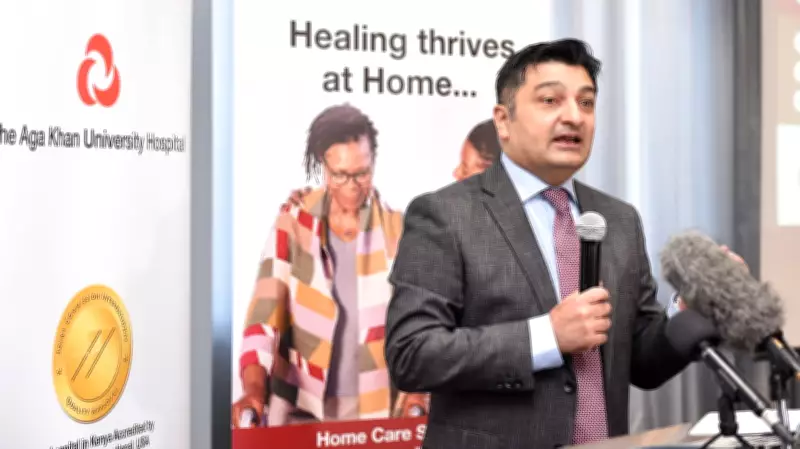
Medical brain drain remains a significant challenge across Africa, with healthcare professionals leaving for better opportunities abroad. Rashid Khalani, Chief Executive Officer of the Nairobi-based Aga Khan University Hospital (AKUH), highlights the urgent need for increased investment in health systems to reverse this trend.
Key Factors Driving Medical Brain Drain
Khalani identifies three critical elements necessary to retain doctors and nurses. First, professionals require the right tools to practice effectively. Without essential equipment like radiation oncology linacs, chemotherapy drugs, or cardiology catheterization labs, clinicians cannot deliver quality care.
Second, a supportive work environment is crucial. This includes a multidisciplinary approach with available technicians, nurses, laboratories, and radiology services. When these systems are lacking, frustration leads to departure.
Third, compensation plays a vital role. Khalani notes the stark contrast between salaries in countries like the UK, where a cardiologist might earn $10,000, versus Kenya, where it could be $2,000. Addressing these financial disparities is essential for retention.
Government Role and Investment Challenges
Khalani references the Abuja Declaration, which calls for African countries to allocate more funds to health budgets. However, he points out that no sub-Saharan African nation currently exceeds five percent in health spending. While governments express intentions toward universal health coverage, effective implementation requires ethical governance and accountability to prevent corruption and ensure funds reach their intended targets.
Increasing investment is critical, but it must be coupled with robust oversight to direct resources toward equipment, research, education, and fair salaries for medical staff.
Strategies for Retention and System Strengthening
To address retention, Khalani emphasizes the need for balanced compensation. Paying consultants competitive salaries, such as $10,000 to $20,000, increases hospital costs, making government support through social health funds or universal health coverage essential. This approach ensures doctors are fairly paid without compromising service affordability.
AKUH's Contributions to Healthcare Development
AKUH has evolved from a maternity home in 1958 to a leading tertiary institution. Today, it operates as a 300-bed teaching hospital with 3,000 full-time faculty and staff, serving approximately 700,000 patients annually across 54 outreach centers. The hospital focuses on bringing services closer to communities, reducing the need for patients to travel for basic care like CT scans or dialysis.
In 2004, AKUH transitioned into a teaching hospital, offering undergraduate and residency programs in disciplines like medicine, surgery, and anesthesia. The institution has established clinical fellowship programs to provide sub-specialized training locally, reducing the need for professionals to seek education abroad.
Ensuring Quality and Leveraging Technology
AKUH became the first hospital in the region to receive Joint Commission International accreditation in 2013, adhering to over 1,300 measurable standards. This accreditation ensures high-quality care in areas like infection control and patient safety.
Technology is central to AKUH's model. The hospital was the first in sub-Saharan Africa to acquire a PET scan and cyclotron, enhancing cancer diagnosis. Advanced imaging systems, such as 3-Tesla MRI and automated laboratories, have reduced test times from 48 hours to under eight hours.
In November 2022, AKUH implemented a $12 million electronic health record system, enabling the integration of artificial intelligence. AI is now used in X-ray imaging, radiotherapy planning, and digital microscopy, positioning the hospital at the forefront of healthcare innovation.
Research and Affordability Initiatives
AKUH actively engages in clinical research, with 17 to 18 trials involving over 500 patients. This effort ensures that pharmaceutical treatments are tested on African populations, addressing genetic differences, such as those found in Kenyan women with triple-negative breast cancer.
To improve affordability, AKUH operates a patient welfare program, allocating nearly $3 million annually to support individuals who cannot afford services. Additionally, the hospital collaborates with partners in India and the UK to localize pharmaceutical production, starting with oncology drugs in Nairobi.
Partnerships and Future Outlook
Khalani expresses openness to partnerships with institutions across Africa, including Nigeria, Uganda, and Ethiopia. He emphasizes that providing quality healthcare is costly but achievable through shared knowledge and joint programs.
While most populations require primary care, specialized services must be accessible with the right tools, doctors, and systems. Khalani concludes that these levels of care are within reach and worth fighting for, urging continued investment and collaboration to strengthen Africa's health workforce.