Kenyan Hospital Pioneers Precision Cancer Care with Genomic Data and Advanced Radiotherapy
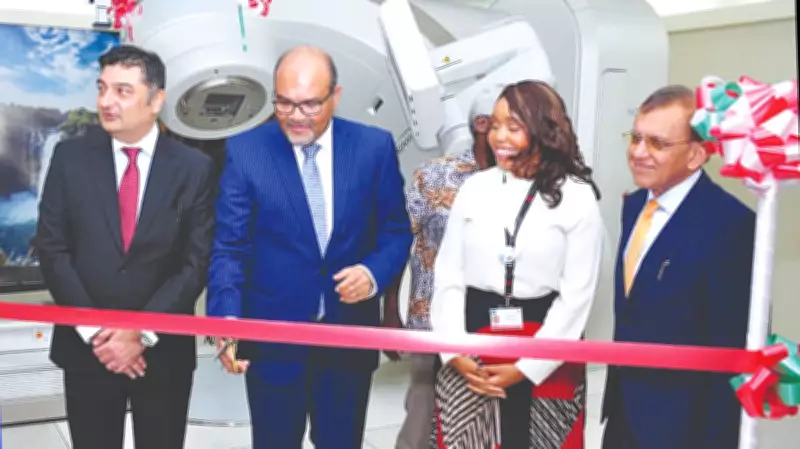
In a significant stride for African healthcare, the Aga Khan University Hospital (AKUH) in Kenya has unveiled the TrueBeam radiotherapy system, an innovation set to transform cancer treatment through precision medicine. This advanced technology enables highly accurate, image-guided therapy that targets tumours while sparing healthy tissues, thereby reducing side effects and enhancing patient recovery. The launch marks a pivotal shift toward more targeted and personalised cancer care on the continent, as part of AKUH's broader vision to establish itself as a leading centre for specialised oncology in Africa.
Addressing Africa's Growing Cancer Crisis
During a two-day media engagement in Nairobi, AKUH convened experts to showcase its capabilities in precision medicine, research, and training. However, discussions highlighted a pressing concern: Africa's cancer burden is escalating rapidly, driven by population growth, ageing, and urbanisation. According to the World Health Organisation (WHO) and the International Agency for Research on Cancer (IARC), Africa records over 1.1 million cancer cases and nearly 700,000 deaths annually, with projections indicating a near doubling by 2040. Alarmingly, about 75% of patients lack adequate care, and fewer than 30% of those needing radiotherapy can access it, resulting in a mortality-to-incidence ratio of 64%, compared to 26% in Western countries.
Beyond treatment gaps, Africa's marginal role in global research exacerbates the crisis. The continent contributes less than 4% of clinical trials despite bearing 25% of the global disease burden, limiting evidence tailored to African populations. Economically, over 500,000 Africans travel abroad yearly for medical care, costing an estimated $7 billion, reflecting infrastructure deficits and low confidence in local capacity.
Leveraging Genomic Data for Personalised Treatment
Against this backdrop, AKUH is championing precision oncology, which integrates genomic data, advanced diagnostics, and targeted therapies. Research from the hospital reveals distinct genetic profiles in African patients, including variations in tumour biology and cancer-driving mutations, raising questions about the efficacy of treatments developed with non-African data. Prof. Mansoor Saleh, Chair of Haematology Oncology, emphasised the need for large-scale tumour sequencing and locally generated genomic evidence to guide drug development and clinical decisions, moving away from a one-size-fits-all approach.
From its origins as a maternity home in 1958, AKUH has evolved into a 300-bed tertiary teaching hospital, serving 700,000 patients annually with 3,000 staff and 54 outreach centres. It conducts 2.5 million lab tests yearly, alongside numerous surgeries, underscoring its expanding regional role. Saleh outlined a multidisciplinary care model involving pathology, radiology, and oncology, where accurate diagnosis and staging are crucial for effective treatment.
Innovations in Genomics and Radiotherapy
A key component of AKUH's strategy is next-generation sequencing (NGS), which has identified differences in gene expression, such as in triple-negative breast cancer, suggesting imported treatments may be less effective. Starting July 2026, the hospital will launch a tumour sequencing programme to analyse samples and guide targeted therapies, reducing the need for sending samples abroad and lowering costs. Emerging technologies like blood-based tests for circulating tumour DNA are also being explored, though ethical concerns around genetic predisposition and insurance are addressed through controlled research.
Complementing genomics, the TrueBeam radiotherapy system, described by Dr. Angela Waweru, Section Head of Radiation Oncology, offers faster and more precise treatment. Techniques like volumetric modulated arc therapy (VMAT) allow radiation beams to conform to tumour shapes, while advanced imaging and motion management features enhance accuracy. Since July, the system has treated about 400 patients, including complex cases like prostate and brain cancers, with artificial intelligence aiding in treatment planning.
Strategic Vision and Future Challenges
Rashid Khalani, CEO of AKUH, stressed the importance of research and clinical trials to incorporate African genomic data into drug development, producing therapies better suited to local populations. He highlighted efforts to reverse medical tourism by providing high-quality care within Africa. Training programmes, including clinical fellowships, are being expanded to build a skilled workforce.
Prof. Abdirazak Shaukat, Kenya's Principal Secretary for Science, Research and Innovation, noted that cancer is the third leading cause of death in Kenya, with 42,000 new cases and 27,000 deaths annually. He called for stronger policies, increased investment, and international collaboration to expand treatment access and ensure safe technology deployment. Despite challenges like limited genetic specialists and infrastructure, AKUH's initiatives represent a hopeful step toward improving cancer outcomes across Africa.