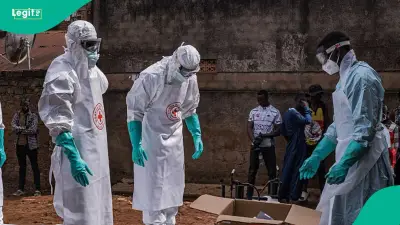
The death toll from the ongoing Ebola outbreak in the Democratic Republic of Congo has climbed to an estimated 131 fatalities, with 513 suspected cases, according to the country's health minister, Samuel Roger Kamba. This marks a significant increase from previous official estimates, which reported 91 deaths from 350 suspected infections.
Outbreak Details and Response
The outbreak is driven by the Bundibugyo strain of Ebola, which has prompted the World Health Organization to declare an international health emergency. No approved vaccine or specific treatment currently exists for this variant of the virus, which is one of the less common strains of Ebola.
“We have recorded roughly 131 deaths in total and we have around 513 suspected cases,” Kamba said during an appearance on Congolese national television. However, he cautioned that the death toll remained provisional, explaining that further investigations were required to determine whether all the suspected deaths were directly linked to Ebola.
Geographic Spread
The outbreak’s epicenter is located in Ituri province in northeastern Congo, near the borders with Uganda and South Sudan. Health officials say the region’s busy gold-mining activities and frequent cross-border movement have increased concerns about the spread of the disease.
Authorities also confirmed that suspected Ebola cases have now emerged in Butembo in neighboring North Kivu province, roughly 200 kilometers from the original outbreak zone. Another case has reportedly been identified in Goma, a major city currently under the control of the Rwanda-backed M23 militia.
Challenges in Containment
According to Kamba, delays in reporting infections within communities contributed to the spread of the outbreak. “Unfortunately, the alert was slow to circulate within the community, because people thought it was a mystical illness, and so, as a result, the sick were not taken to the hospital,” he said.
Health officials noted that laboratory testing remains limited, meaning current figures are based largely on suspected cases rather than confirmed diagnoses. Ebola outbreaks have killed more than 15,000 people across Africa over the past five decades, with the Democratic Republic of Congo repeatedly experiencing some of the continent’s deadliest epidemics.