Nigeria Advocates for New Global Framework to Manage Health Professionals' Migration
The Federal Government of Nigeria has issued a strong call for the establishment of a new global framework to manage the migration of health professionals from developing countries. This urgent appeal comes as the ongoing trend places severe strain on already fragile health systems, exacerbating crises in nations like Nigeria.
Minister Salako Highlights Critical Workforce Shortages
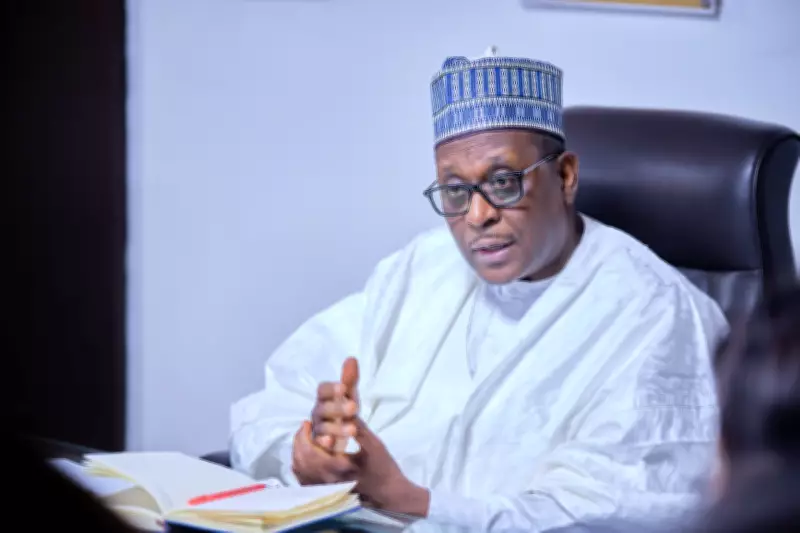
Speaking at the 2026 United Kingdom Global Health Summit held at the Royal College of Physicians, the Minister of State for Health and Social Welfare, Iziaq Salako, emphasized that Nigeria's health workforce crisis is being worsened by unregulated migration. He cited additional factors such as underfunding, infrastructure deficits, and high out-of-pocket healthcare costs. "The global health workforce crisis is not a future threat, but a present emergency," Salako declared, referencing World Health Organisation projections that indicate a global shortfall of about 10 million health workers by 2030, with the most severe gaps in sub-Saharan Africa and South-East Asia.
Salako noted that Africa, despite carrying over a quarter of the global disease burden, accounts for less than three per cent of the global health workforce and under one per cent of global health expenditure. Nigeria, as Africa's most populous nation, is at the centre of this crisis, with a physician-to-population ratio of about four doctors per 10,000 people. This figure is far below the WHO-recommended minimum of 10 per 10,000. The shortage extends across nurses, midwives, pharmacists, laboratory scientists, and other health professionals, leaving the country's workforce insufficient for its population size and disease burden.
Alarming Migration Statistics and Economic Impact
Citing a 2023 report by NOIPolls and Nigeria Health Watch, Salako disclosed that about 57 per cent of Nigerian doctors surveyed had taken concrete steps to emigrate. He added that between 2021 and 2022, approximately 13,609 Nigerian health workers migrated to the United Kingdom, making Nigeria one of the leading source countries globally. While affirming that the government would not restrict citizens from seeking better opportunities abroad, the minister stressed the need for a balanced and holistic approach to managing migration and its consequences.
"Every doctor, every nurse, every midwife who leaves Nigeria represents a substantial flight of invested public resources," Salako stated, noting that training a single physician can cost over $200,000, based on estimates by the African Union. He highlighted that Nigeria estimates the economic cost of health worker migration at over $366 million in training investments, underscoring the financial burden on source countries.
Nigeria's Domestic Initiatives and Diaspora Engagement
Salako outlined that Nigeria is pursuing a "system reset" in the health sector under the Nigeria Health Sector Renewal Investment Initiative (NHSRII). This initiative aims to move from fragmented interventions to a unified, data-driven strategy anchored on "One Plan, One Budget, and One Conversation." The government has adopted a multi-pronged approach to strengthen the health workforce, including expanding training capacity in collaboration with the National Universities Commission and the Medical and Dental Council of Nigeria.
Medical school admission capacity has increased by about 160 per cent between 2023 and 2025, with similar expansions underway in nursing, pharmacy, and laboratory science programmes. Efforts are also focused on strengthening paramedical training and implementing task-shifting strategies recommended by the WHO to optimise the roles of community health workers.
Salako highlighted the importance of engaging Nigerian health professionals in the diaspora, describing them as a critical asset rather than a permanent loss. He disclosed that seven Nigerian healthcare diaspora groups from countries including the United Kingdom, United States, Canada, Germany, Australia, and South Africa would undertake a nationwide medical mission in Nigeria between April and July, focusing on skills transfer and institutional strengthening.
Proposals for a Managed Migration Framework
The minister urged destination countries to adopt ethical recruitment standards under the WHO Global Code of Practice on the International Recruitment of Health Personnel. He proposed a managed migration framework that would include:
- Compensation for source countries to offset training investments.
- Joint training programmes to enhance local capacity.
- Circular migration pathways that allow for temporary exchanges.
- Investment in health training infrastructure in developing nations.
Salako also called for increased health financing and renewed commitment to the 15 per cent health budget target under the Abuja Declaration. He urged global partners to support innovative financing mechanisms such as health bonds, blended finance, and public-private partnerships, while integrating diaspora expertise into national and global health strategies.
He concluded by noting that the summit's theme, "Shaping Tomorrow's Health, Together," reflects the urgency of strengthening global collaboration following recent health crises that exposed deep vulnerabilities in health systems worldwide.