Ogun State's Healthcare Revolution: Transforming Lives Through Ambulances and Insurance
When healthcare comes home, it changes everything. In Ogun State, a comprehensive healthcare reform initiative launched in 2019 has been transforming lives, one family at a time, through innovative solutions like boat ambulances, expanded insurance coverage, and renovated facilities.
The 2019 Starting Point: A System in Crisis
When Governor Dapo Abiodun took office in May 2019, he inherited a healthcare system on the brink of collapse. Primary healthcare centers across the state lacked basic infrastructure, with many facilities operating without electricity or running water. Medical equipment was either broken or outdated, creating dangerous conditions for patients.
Most alarmingly, just five ambulances served over 5 million residents. Urban areas had limited emergency response capabilities, while rural communities had virtually none. Previous administrations had launched initiatives like the 2014 Community-Based Health Insurance Scheme, but execution had faltered, leaving infrastructure neglected, workers unpaid, and rural areas underserved.
Rebuilding Primary Healthcare Infrastructure
The administration focused first on fixing primary healthcare centers across communities. By October 2025, significant progress had been made:
- 75 primary health centers underwent complete renovation
- 236 facilities transitioned to digital systems
- 472 healthcare workers received training in data management and safety protocols
Beyond building improvements, the state installed solar power across all 20 local government areas, guaranteeing 24-hour electricity for healthcare facilities. Clean water systems followed, and each facility received delivery beds and ultrasound machines.
During a 2026 visit to Makun Primary Healthcare Center in Sagamu, World Bank Vice President Galina Vincelette praised the effort as "a deliberate effort to strengthen Nigeria's healthcare delivery sustainably."
Emergency Care Transformation: When Every Minute Counts
Emergency healthcare faced a fundamental problem: distance. Standard ambulances couldn't navigate narrow rural roads or cross waterways, and there weren't nearly enough vehicles to serve the population.
The fleet expanded dramatically from five vehicles in 2019 to 26 Basic Life Support ambulances by 2025, strategically positioned across three senatorial districts for 24-hour coverage. Additionally, ninety tricycle ambulances were deployed for communities with narrow or rough roads—50 purchased by the state, 30 donated by the Office of the Senior Special Assistant to the President on Sustainable Development Goals, and 10 from private donors.
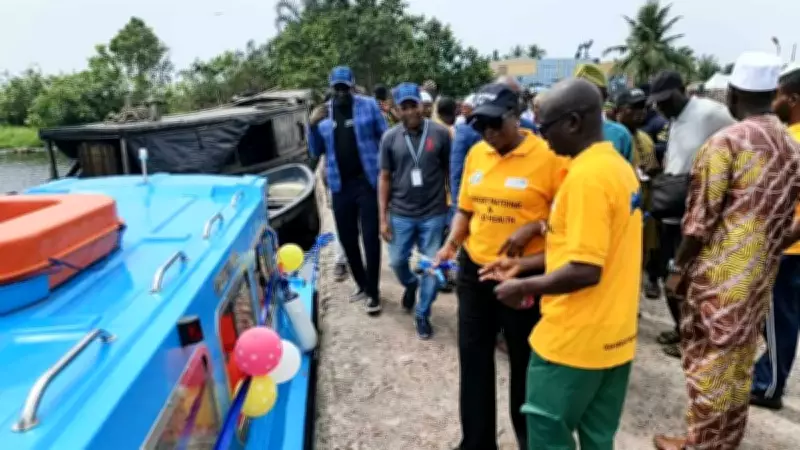
Boat ambulances now serve riverine areas, representing a crucial innovation for communities previously cut off from emergency medical services. A state emergency call center with real-time location tracking achieved a 100% success rate in managing reported emergencies in 2025. Emergency numbers 112 and 08112000033 operate continuously, with the state covering ambulance costs for enrolled residents for up to 48 hours.
Making Healthcare Affordable: The Insurance Revolution
The 2017 National Health Account showed that 76.6% of Nigerians pay out-of-pocket for healthcare, creating impossible choices between medical care and basic necessities.
The Ogun State Health Insurance Scheme directly addresses this challenge. Civil servants receive coverage for spouses and up to four children under 18. After subsidies, beneficiaries pay just N4,000 annually. Pregnant women, children under five, and residents over 70 access the scheme completely free of charge.
This insurance revolution means families who previously delayed treatment due to cost now have coverage. Chronic conditions can be managed properly, and preventive care becomes accessible to all residents.
Protecting Mothers and Children
In December 2025, Ogun State won a $400,000 healthcare leadership award, placing first runner-up in the South-West zone at the Primary Health Care Leadership Challenge Award—the second consecutive year achieving this ranking.
The Ibidero Programme removes financial barriers to maternity care. Pregnant women registering at public facilities receive free antenatal care, delivery (including Caesarean sections), and postnatal care. The state provides N5,000 to women delivering at government facilities.
The 100-bed Mother and Child Hospital in Iperu-Remo, launched by former Vice President Yemi Osinbajo in February 2023, was a collaboration between the state and federal governments. The Maternal and Newborn Mortality Reduction Innovation and Initiative (MAMII) uses evidence-based interventions and community engagement to reduce pregnancy-related deaths.
Keeping Children Healthy: Vaccination and Prevention
Every parent feels anxious when their child gets sick. Malaria, measles, and whooping cough are diseases that can be prevented but still take young lives across Nigeria.
Routine immunization programmes received significant upgrades through the World Bank-supported IMPACT Project, which ensured facilities had vaccines, trained personnel, and functioning cold chain systems. Immunization outreach now reaches remote communities, with boat ambulances deployed for emergencies also delivering vaccination campaigns to riverine populations previously cut off from regular health services.
The Bigger Picture: Building Human Capital
The World Bank's commendation highlighted healthcare's role in human capital development. Children receiving timely vaccinations grow healthier and perform better academically. Mothers surviving childbirth safely raise families and contribute economically. Workers accessing malaria treatment don't lose weeks of productivity.
When healthcare functions reliably, education improves, economic participation increases, and communities develop greater problem-solving capacity. This calculus drives sustained healthcare investment, not just saving lives today but building stronger communities tomorrow.
What Still Needs Work
Despite significant progress, challenges remain. Border communities still face geographic barriers, some rural areas need more health personnel, and specialized care often requires urban travel.
The state doubled its health budget to sustain reforms beyond donor funding, but maintaining this requires continuous political commitment and disciplined resource management. Health education gaps persist around maternal health and disease prevention, and infrastructure needs ongoing maintenance.
The difference from previous administrations lies in addressing these challenges systematically rather than ignoring them.
What This Means for Families
For Ogun Waterside communities, boat ambulances mean pregnant women can reach hospitals during labor. For parents statewide, renovated health centers mean treating childhood illnesses at nearby facilities instead of undertaking long, expensive journeys. For elderly residents, insurance means managing chronic conditions without facing impossible financial choices.
Changes show up quietly too: health workers arriving for shifts, facilities with working lights and water, available vaccines, and responsive ambulances. These represent basic healthcare system functioning that might be unremarkable elsewhere but is significant in Nigeria's context.
Looking Ahead
The Nigeria Governors' Forum award and World Bank commendation validate progress, but they aren't endpoints. The goal remains universal health coverage: every resident accessing quality healthcare regardless of income, location, or social status.
Since 2019, emergency repairs have evolved into structured reform. The focus now is on maintaining gains, expanding coverage, improving quality, and adapting to emerging challenges.
For families, the question isn't whether healthcare improved—evidence shows in renovated facilities, expanded ambulance coverage, affordable insurance, and reduced maternal mortality. The question is whether improvements will deepen and last, whether coverage will reach underserved communities, and whether quality will continue rising.
Healthcare reform ultimately means ordinary people accessing care when needed, affording it when received, and trusting the system's continuity. In Ogun State, the 2019-2026 trajectory increasingly suggests positive answers to these questions.
But trajectories aren't guarantees. They require sustained effort, continued investment, and ongoing commitment to translate into lasting change. The work continues, and for families depending on these services, that continuation matters most of all.