World Health Day Highlights Critical Funding Crisis at WHO Following U.S. Exit
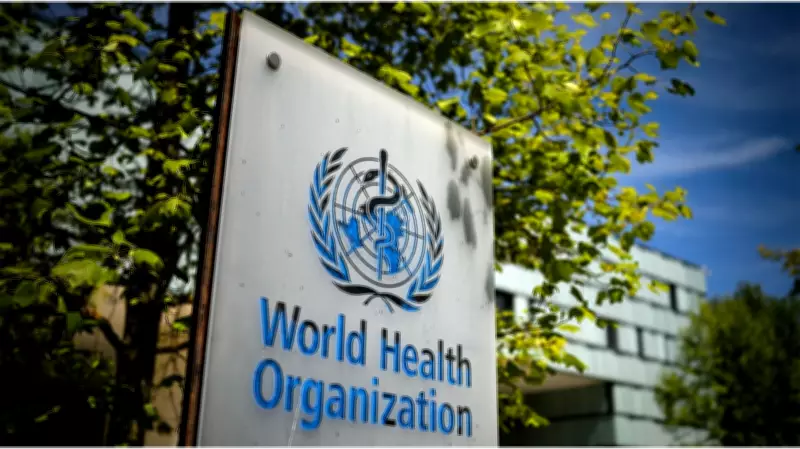
As nations commemorate World Health Day, urgent alarms are sounding over the financial stability and long-term viability of the World Health Organisation's (WHO) global health initiatives. The focal point of this crisis is an estimated $1.9 billion shortfall in the WHO's 2026-27 budget, a direct consequence of the United States' withdrawal in January 2026, which ended 78 years of American financial backing.
U.S. Withdrawal and Its Immediate Impact
The departure was set in motion by an executive order signed in January 2025 by President Donald Trump, initiating a legally mandated one-year exit process. Historically, U.S. contributions to the WHO have varied significantly, ranging from $163 million to $816 million annually over the past decade. This withdrawal has created a substantial funding gap of nearly 18 percent, severely straining the organisation's resources.
In response, countries such as Switzerland, Sweden, and Qatar, alongside private entities like the Novo Nordisk Foundation, have stepped up with additional funds. However, these efforts have not fully bridged the deficit. Notably, China has emerged as the WHO's largest funder, escalating its contribution from $39 million to a $500 million pledge in 2025.
WHO Restructuring and Budget Adjustments
To manage the loss of funding, the WHO has undergone a major restructuring. This includes cutting its executive management team and reducing departments from 76 to 34. Additionally, the organisation has shrunk its two-year budget for 2026-2027 from $5.3 billion to $4.2 billion. Despite these drastic measures, a $1.9 billion shortfall remains, as reported by Health Policy Watch.
Nigeria's Vulnerability and Call for Domestic Solutions
Nigeria is not immune to the ripple effects of this funding crisis. Stakeholders emphasize the need for the country to recalibrate its health financing model and build a more resilient system capable of withstanding external shocks while ensuring equitable access to care. Historically, Nigeria has relied heavily on external funding to sustain major public health programmes, particularly in combating HIV, tuberculosis, and malaria.
Recent global trends indicate increasing pressure on traditional donors, raising concerns about the future of such support. In a proactive move, the federal government recently approved the release of N200 billion to mitigate the impact on AIDS, Tuberculosis, and Malaria (ATM) responses.
Expert Warnings and Insights
In an interview with The Guardian, Prof. Olawale Tomori, a renowned virologist and Chairman of the Board of Biovaccines Nigeria Limited (BVNL), warned that the U.S. withdrawal from the WHO would have catastrophic consequences for an unprepared world. He highlighted that the U.S. has been the largest donor, contributing 22 percent of the WHO's $6.8 billion budget for 2024-2025, and provided nearly $1 billion in fixed and voluntary contributions in 2022-23.
Tomori stressed the dire implications, noting that the entire world, including the U.S. itself, will feel the impact. He criticized Nigeria's dependency on foreign aid, urging a shift in mindset: "We are not resource-limited or resource-handicapped. We are resource-wasteful and resource-squandering. We are not resource-constrained; we are corruption-constrained." He called for greater self-reliance in disease prevention and control.
Global and Local Consequences
Tajudeen Ibrahim, Executive Secretary of the Country Coordinating Mechanism (CCM) of the Global Fund, echoed these concerns, stating that the U.S. withdrawal would be incredibly costly for both the American people and the global community. He pointed out that the regulatory roles and global diplomacy reputation of the WHO would be negatively impacted.
Director General Dr. Tedros Adhanom Ghebreyesus announced the budget cut to $4.2 billion at the February 2025 Executive Board meeting, but funds still fall dramatically short. The deficit faced by the WHO is around $1.9 billion to deliver on its roles, with the 2025 budget alone having a deficit of about $600 million.
Impact on Healthcare Delivery and Neglected Diseases
Public health expert Godswill Iboma from Eko University of Medicine and Medical Sciences highlighted the direct consequences of declining donor support on healthcare delivery in Nigeria, particularly in the fight against neglected tropical diseases. He explained that diseases like schistosomiasis require sustained investment in social infrastructure, such as water, sanitation, and hygiene (WASH) systems.
Iboma noted that reduced funding has weakened control efforts, leading to a resurgence in some communities. Drawing on field observations in Abuja, he found that communities with access to clean water and proper sanitation recorded little to no cases, while areas lacking such facilities experienced higher infection rates.
Path Forward: Domestic Responsibility and Resilience
To address these challenges, Iboma advocated for a shift towards greater domestic responsibility and self-reliance. He urged Nigeria to adopt inward-looking strategies by prioritising local funding and reducing overdependence on foreign aid. This includes strengthening the capacity to provide essential healthcare services, investing in infrastructure, and supporting local production of basic medical supplies.
He maintained that combining domestic resource mobilisation with strategic partnerships involving the private sector and diaspora communities would position countries like Nigeria to better withstand fluctuations in external donor support while strengthening long-term health system resilience.