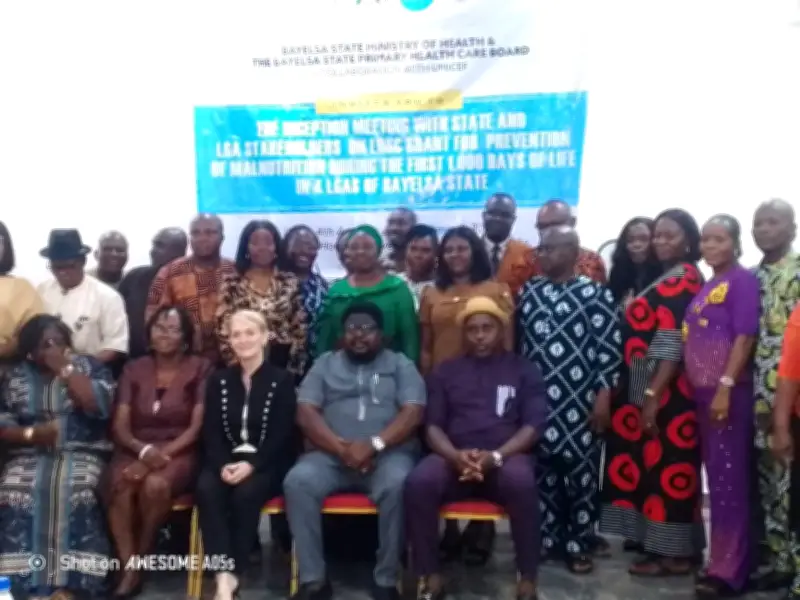
The Bayelsa State Ministry of Health, in collaboration with UNICEF and The Church of Jesus Christ of Latter-day Saints, has inaugurated a one-year project aimed at preventing malnutrition during the first 1,000 days of life. The initiative was launched in Yenagoa on Tuesday, with a focus on pregnant women and children under two years across the state.
Critical Window for Development
Speaking at the inauguration, UNICEF Chief of Field Office, Lagos, Celine Lafoucriere, said the project targets the critical period from pregnancy to a child's second birthday, when physical and brain development occur most rapidly. "That is what the first 1,000 days of life protect," she stated.
Lafoucriere explained that the intervention is designed to give every child in Bayelsa a better chance not only to survive but also to grow, learn, and reach their full potential. She cited the most recent National Demographic and Health Survey (NDHS 2024), which found that more than one in four children in Nigeria are stunted, while nearly half of pregnant women are anaemic.
Impact of Stunting
Stunting occurs when children do not receive adequate nutrition early in life, affecting both physical growth and cognitive development. Lafoucriere noted that this condition often results in poor educational outcomes and reduced economic opportunities later in life. "These are children who will struggle more in school and may struggle later to earn a living, through no fault of their own," she said.
The project aims to detect and prevent malnutrition early, ensuring that children receive the necessary nutrients during this formative period. By addressing malnutrition proactively, the initiative hopes to reduce the long-term consequences associated with stunting.
Partnership and Funding
The Church of Jesus Christ of Latter-day Saints is funding the project for one year, while the Bayelsa Government contributed N140 million and UNICEF provided a matching N140 million. Lafoucriere described the partnership as a demonstration of commitment by government and development partners to improving child nutrition and maternal health outcomes.
"UNICEF is proud to stand with Bayelsa in this work. When government takes the lead and partners follow through with real support, nutrition supplies reach children before problems take root," she said. She added that children will be weighed and measured regularly, and mothers will be shown exactly how to feed their babies by healthcare workers.
Implementation and Support
The Bayelsa State Commissioner for Health, Seiyefa Brisibe, represented by Williams Appah, executive secretary of the Bayelsa State Primary Health Care Board, commended UNICEF and The Church of Jesus Christ of Latter-day Saints for supporting the initiative. Mr Appah said the grant would cover four local government areas of the state and appealed to stakeholders to ensure that the intervention reached the intended beneficiaries.
He noted that the Bayelsa State Government had also contributed resources to support efforts aimed at eliminating child stunting and malnutrition in the state. According to him, health officials had previously supported children affected by stunted growth, but the new funding and community sensitisation would strengthen efforts to tackle malnutrition.
Community Engagement
Also speaking, the Chairman of Ogbia Local Government Area, Golden Jeremiah, commended UNICEF and The Church of Jesus Christ of Latter-day Saints for supporting the nutrition intervention programme for children. The project is expected to have a significant impact on child health in Bayelsa, with regular monitoring and follow-up to ensure that children who would normally slip through unnoticed get counted, get fed, and get followed up.
Lafoucriere expressed hope that by the end of the year, children in the state will be healthier and better fed because of the efforts initiated at the inauguration. "Somewhere in the state right now, a child is living through their first 1,000 days. They do not know this inception meeting is happening. But by the end of this year, I hope they will be healthier and better fed because of what we do here today," she concluded.