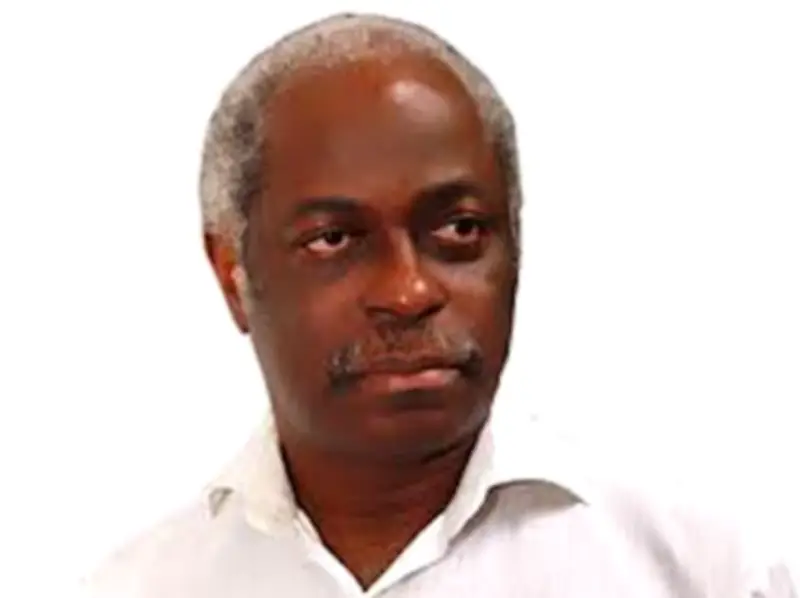
In a recent religious commentary, Femi Aribisala argues that pride is the most dangerous sin, blinding individuals to their own spiritual ignorance and preventing them from attaining true wisdom. The piece, which draws extensively on biblical scripture, contends that both the educated and uneducated can be equally ignorant of spiritual truths, and that the ultimate goal for believers is to become exactly like Christ.
The Illusion of Wisdom and the Call to Humility
Aribisala opens with a personal confession, stating, "I did not know how ignorant I was until I met the Lord." He challenges the value of formal education, suggesting that "people go to university to become even more ignorant." This assertion is grounded in a quote from 1 Corinthians 1:19-25, where God declares, "I will destroy the wisdom of the wise, and bring to nothing the understanding of the prudent." The commentary uses this scripture to argue that worldly wisdom is foolishness compared to the divine message of Christ crucified.
The author further illustrates this point by referencing Isaiah 29:11-13, which describes a sealed book that neither the literate nor the illiterate can read. This metaphor suggests that human intellect alone is insufficient for understanding God's word. Aribisala notes that "both the literate and the illiterate read the Bible, and they do not understand what they read," emphasizing that spiritual understanding requires divine intervention, not just academic ability.
Pride as the Root of Spiritual Blindness
The commentary identifies pride as the primary obstacle to spiritual sight. Aribisala explains that "proud people think they can finesse God," and this arrogance blinds them to their own condition. He references Isaiah 29:15-16, which warns against those who hide their plans from the Lord, questioning, "Who sees us?" and "Who knows us?" The passage rebukes such individuals by asking, "Shall the potter be esteemed as the clay?" This serves as a reminder of humanity's subordinate position to the Creator.
Drawing from Isaiah 6:8-11, the author describes a prophetic mandate where God instructs the prophet to "make the heart of this people dull, and their ears heavy, and shut their eyes." This is a judgment on a people who have rejected the truth. The irony, as Aribisala points out, is that even the prophets are blind, as stated in Isaiah 29:9-10: "The Lord has poured out on you the spirit of deep sleep, and has closed your eyes, namely, the prophets." This spiritual drunkenness, he argues, is both self-induced and a divine judgment.
The Famine of God's Word and the Promise of Healing
The commentary links spiritual blindness to a famine of hearing God's word, citing Amos 8:11-12, which foretells a time when people will "run to and fro, seeking the word of the Lord, but shall not find it." This scarcity is a consequence of the people's own disinterest in the truth, as God gives them the blindness they desired.
However, Aribisala declares that Jesus inaugurated a time of healing. He cites Isaiah 29:18-19, which promises that "the deaf shall hear the words of the book, and the eyes of the blind shall see out of obscurity." The path to this healing, he explains, is humility. "When we are humble, having an accurate evaluation of ourselves and a proper perspective of ourselves in relation to God and others, our lives are filled with exceedingly great joy," he writes.
The Two-Stage Healing and Final Destination
The healing process, as described in the article, is gradual. Aribisala references Mark 8:22-26, where Jesus heals a blind man in two stages: first, the man sees men as trees walking, and only after a second touch does he see clearly. This is presented as a metaphor for spiritual growth, where individuals first gain a partial understanding and then a clearer vision of Christ. The author connects this to Job's confession in Job 42:5: "I have heard of You by the hearing of the ear, but now my eye sees You."
The final destination, according to Aribisala, is to become exactly like Christ, as stated in 1 John 3:1-3: "We shall be like Him, for we shall see Him as He is." This hope, he argues, leads to purification. The commentary concludes with a call to return to the Lord, citing Hosea 6:1-3, which promises that "He has torn, but He will heal us." This is the concrete next step for believers: to pursue the knowledge of the Lord with humility, allowing Him to restore their spiritual sight and lead them to their ultimate purpose.