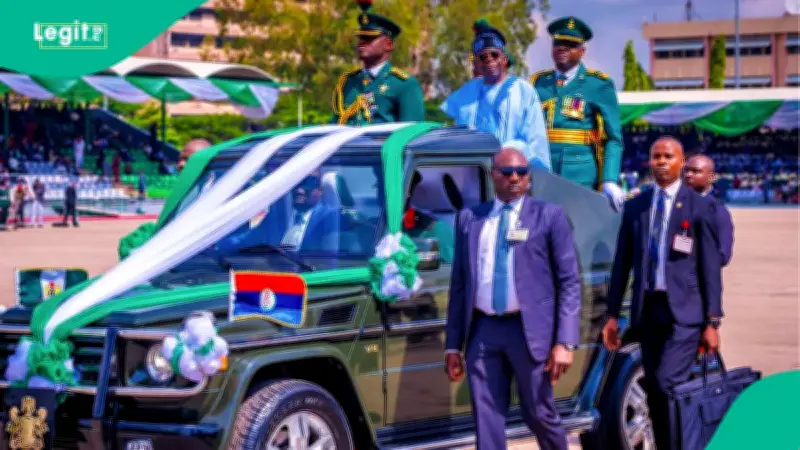
On June 12, Nigeria celebrated Democracy Day, marking 27 years of uninterrupted civilian rule. Yet, for many Nigerians, the question remains: Is democracy truly working? Barr. Jonathan Abakpa, a human rights lawyer and youth development specialist, offers a sobering reflection on the state of the nation's democracy, pointing to persistent insecurity, fear, and the gap between political promises and everyday reality.
The Essence of Democracy
Democracy, at its core, is about the will of the people—their hopes, voices, choices, and collective vision for society. Despite differing perspectives and competing ideologies, one enduring truth remains: democracy is about people. It recognizes the dignity and agency of citizens, making it the most widely accepted system of government worldwide.
Nigeria's 27-year democratic journey reflects resilience and progress, demonstrating Nigerians' determination to choose dialogue over dictatorship, ballots over bullets, and participation over exclusion. However, anniversaries are not merely for celebration; they compel us to ask whether democracy is delivering on its promises.
Youth, Trust, and Belief in Democracy
In his Democracy Day address, President Bola Ahmed Tinubu urged Nigerian youth to believe in the nation's future. While this call to optimism is powerful, belief cannot be demanded—it must be earned. Democracy thrives when citizens trust the process, see their voices reflected in governance, and feel protected by institutions. Citizens believe in democracy not just because elections are held, but because they see evidence that the system works for them.
Security: The Test of Democracy
The President rightly noted that democracy without security is a failed democracy. Yet, despite assurances, the nation continues to face kidnappings, attacks on communities, and the abduction of innocent children. These realities challenge the very promise of democracy. How can young people believe in the future when the road to school is uncertain? How can citizens participate in governance when fear dictates their movements? How can democracy flourish when survival becomes a daily struggle?
The President also recognized distinguished Nigerians with national honors, celebrating those who shaped the nation's democratic journey. But democracy grows beyond elections, political offices, and official recognition. It is sustained by countless unsung heroes.
The Quiet Heroes of Democracy
Democracy is kept alive by the young woman who refuses to surrender her dreams to discrimination, the student who studies by candlelight, the entrepreneur who perseveres despite economic shocks, the farmer who plants despite fear, the teacher who inspires despite limitations, and the health worker who serves despite inadequate resources. The men and women of the armed forces and security agencies, who often pay the ultimate price, are also heroes of democracy.
Then there is Leah Sharibu, whose story transcends politics. In the face of terror and captivity, she remained steadfast in her convictions. Her courage embodies the ideals of a Nigeria where diversity is respected and freedom of belief is protected.
What Democracy Should Truly Feel Like
The President stated that this generation's responsibility is to sustain democracy and ensure prosperity. But democracy and prosperity cannot be improved by citizens alone; government, institutions, civil society, and communities must all play their part. For young Nigerians, sustaining democracy means participating, organizing, voting, advocating, innovating, and holding leaders accountable. For the government, it means ensuring citizens can live, learn, work, and dream in safety.
Democracy is not merely the absence of military rule. It is a mother who sleeps knowing her children will return safely from school. It is a young girl who walks to class without fear. It is a farmer who tills his land without the sound of gunfire. It is a student whose ambition is greater than his anxiety. It is where hope travels farther than fear, where the ballot carries more power than the bullet, where disagreement does not become violence, where diversity is celebrated, and where every citizen can live freely and with dignity.
As Nigeria marks 27 years of uninterrupted democracy, we must celebrate how far we have come but also confront how far we still need to go. The true test of our democracy will be measured not by the number of years it survives, but by the number of lives it secures, opportunities it creates, freedoms it protects, and dreams it preserves. If young people are to believe in Nigeria, then Nigeria must become a country where believing is rewarded by evidence, not merely encouraged by words.
The task before this generation is not simply to sustain democracy but to deepen it, strengthen it, and make it meaningful for every citizen. That journey begins with ensuring that every Nigerian can move freely, speak freely, worship freely, dream boldly, and live safely. Only then can democracy truly fulfill its promise.
Barr. Jonathan Abakpa is a human rights lawyer and youth development specialist committed to advancing social justice and empowering young people through advocacy and legal reform.