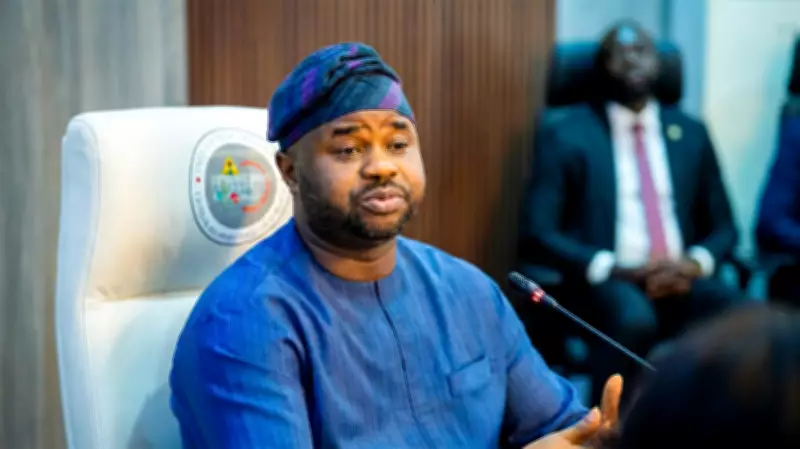
Nigeria's Adedeji Champions Africa's Fight Against Illicit Financial Flows
At a critical juncture when Africa is grappling with severe fiscal challenges, the strategic and methodical leadership of Zacch Adedeji, Executive Chairman of the Federal Inland Revenue Service (FIRS), is emerging as a beacon of hope. His approach prioritizes coordination over commotion, uniting nations, institutions, and experts to address core issues. This substance-driven style is steadily positioning Nigeria as a pivotal force in the continent's evolving revenue discourse.
Hosting Key Talks in Abuja
The recent hosting of the African Union Subcommittee on Tax and Illicit Financial Flows in Abuja underscores Nigeria's proactive stance. It signals that Nigeria is not only focused on internal reforms but is also committed to shaping a collective African response to shared fiscal problems. This move highlights a crucial recognition: Africa's fiscal security cannot be achieved in isolation, as challenges and solutions are inherently interconnected.
For decades, African countries have faced a widening gap between expenditure needs and revenue generation. Rapid population growth, infrastructure deficits, and escalating social demands have strained government finances. Concurrently, substantial funds leak out of the continent through tax evasion, aggressive avoidance, and other illicit financial flows. Conservative estimates indicate annual losses in the billions of dollars, resources that could otherwise fund essential public services like roads, schools, and healthcare.
The consequences are stark: stalled projects, weakened public services, and increased reliance on borrowing, which escalates debt burdens and limits fiscal flexibility. This vicious cycle, where revenue shortfalls lead to more borrowing, constrains national sovereignty and economic stability.
Growing Seriousness and Reforms
However, there is a notable shift in how these issues are being addressed. Tax administration is increasingly viewed not just as a technical function but as central to governance and economic stability. Effective tax systems foster trust, enhance accountability, and enable proper governmental planning, reinforcing the social contract between citizens and the state.
Across Africa, reforms are gaining momentum. Countries are digitizing systems, broadening tax nets, and tightening compliance frameworks. Technology plays a vital role, aiding revenue authorities in tracking transactions, reducing leakages, and improving efficiency. Emphasis is also placed on capacity building, data sharing, and institutional strengthening.
Nigeria is actively participating in this transformation under Adedeji's leadership. The Nigeria Revenue Service is undergoing reforms to boost efficiency, transparency, and responsiveness. Processes are being streamlined, enforcement mechanisms strengthened, and taxpayer engagement improved. The objective is to build a system capable of supporting development rather than merely keeping pace with it. Rebuilding public confidence is also a priority, as voluntary compliance increases when citizens trust that their contributions are managed effectively.
Multinational Cooperation and Political Will
Illicit financial flows are a transnational issue that no single country can resolve alone. They exploit regulatory disparities and thrive where cooperation is lacking. Multinational structures and secrecy jurisdictions complicate efforts to track and recover lost revenues. Hence, meetings like the one in Abuja are crucial, providing a platform for countries to share insights, align strategies, and agree on practical measures.
These steps include strengthening information exchange frameworks, harmonizing tax policies, and adopting common standards to detect illicit flows more effectively. African nations are also engaging more assertively with global institutions, advocating for international tax reforms that reflect their realities. This marks a departure from passive participation to confident agenda-setting, pushing for fairness in global tax systems.
Political will is another critical dimension. Technical reforms require sustained leadership commitment, and more governments are recognizing the urgency of the situation. By prioritizing revenue mobilization and tackling illicit flows, countries address immediate fiscal pressures and lay the groundwork for long-term economic resilience.
Building a Prosperous Future
Ultimately, this effort revolves around a fundamental principle: if African countries can better raise and manage their resources, they reduce dependency and expand choices. This enables investments in people, resilience against economic shocks, and pursuit of development strategies aligned with local priorities.
The Abuja meeting may not provide overnight solutions, but it points in the right direction. It reflects a growing consensus that cooperation, coordination, and consistency are essential to combat illicit financial flows. With steady leadership, practical reforms, and genuine collaboration, there is a real opportunity to retain more of Africa's wealth within its borders.
For Nigeria and the continent at large, this opportunity demands urgent and resolute pursuit. The stakes are high, but so is the potential. Sustaining current momentum could shift the narrative from loss and limitation to one of control, capacity, and shared prosperity.